Jan 9, 2025
Jan 8, 2025
The **Agrarian Revolution**, also known as the **Agricultural Revolution**, refers to the period of significant agricultural development that began in Britain in the 18th century and continued into the 19th century. This transformation was marked by several key changes and innovations:
1. **Enclosure Movement**: The consolidation of small landholdings into larger farms. This allowed for more efficient farming practices and increased agricultural productivity¹².
2. **Crop Rotation**: The introduction of new crop rotation methods, such as the Norfolk four-course system, which included rotating wheat, turnips, barley, and clover. This system improved soil fertility and increased crop yields¹².
3. **Selective Breeding**: The practice of breeding livestock for specific traits, leading to improved animal breeds that were more productive and resilient¹².
4. **Technological Advancements**: The development and use of new agricultural machinery, such as the seed drill invented by Jethro Tull, which made planting more efficient and increased crop production¹².
5. **Improved Drainage and Fertilization**: Enhanced drainage systems and the use of fertilizers helped to reclaim and improve arable land, further boosting agricultural output¹².
These changes collectively led to a significant increase in agricultural productivity, which supported population growth and urbanization. The Agrarian Revolution also laid the groundwork for the Industrial Revolution by providing the necessary food surplus and freeing up labor for industrial work.
The **Agrarian Revolution** had several significant effects on society, economy, and the environment:
1. **Increased Agricultural Productivity**: Innovations such as crop rotation, selective breeding, and new machinery like the seed drill led to higher crop yields and more efficient farming¹².
2. **Population Growth**: The increase in food production supported a growing population. In Britain, for example, the population rose from about 5.5 million in 1700 to over 9 million by 1801¹².
3. **Urbanization**: As agricultural practices became more efficient, fewer workers were needed on farms. This led to rural-to-urban migration, with many people moving to cities in search of work, contributing to the growth of urban areas¹².
4. **Industrial Revolution**: The surplus of food and the migration of labor to cities provided the necessary conditions for the Industrial Revolution. The increased productivity in agriculture freed up labor and resources that could be used in industrial enterprises¹².
5. **Economic Changes**: The Agrarian Revolution led to the development of a market-oriented agricultural economy. Farmers began producing for the market rather than just for subsistence, which contributed to the rise of capitalist farming¹².
6. **Social Changes**: The enclosure movement, which consolidated small landholdings into larger farms, often displaced small farmers and led to significant social upheaval. Many small farmers lost their land and livelihoods, which contributed to social tensions¹².
These effects highlight the profound impact of the Agrarian Revolution on the development of modern society.
Jan 6, 2025
Kwa mahitaji ya notes za chemistry zinapatikana kupitia link hizo chini
FORM ONE DOWNLOAD HERE
FORM TWO DOWNLOAD HERE
FORM THREE DOWNLOAD HERE
FORM FOUR DOWNLOAD HERE
Jan 5, 2025


Jan 4, 2025


Baraza la mitihani Tanzania Necta latangaza matokeo ya kidato cha pili 2024 na darasa la NNE kuona ingia katika Link hiyo chini
FORM TWO CLICK HERE
STANDARD FOUR CLICK HERE
The concept of "mode of production" is central to Marxist theory and refers to the way a society is organized to produce goods and services. It encompasses both the **forces of production** and the **relations of production**.
Here are the main components and types of modes of production:
1. **Forces of Production**: This includes all the elements required for production, such as land, raw materials, tools, machinery, and human labor¹.
2. **Relations of Production**: These are the social relationships that people enter into as they acquire and use the means of production. This includes relationships between workers and owners, and the distribution of the produced goods¹.
### Types of Modes of Production
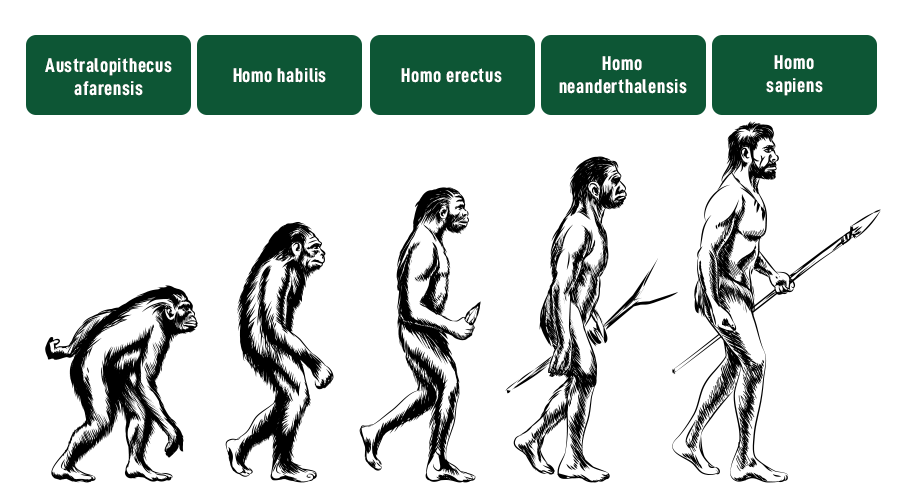
1.PRIMITIVE COMMUNALISM MODE OF PRODUCTION
Primitive communalism refers to the social and economic systems of early human societies, particularly hunter-gatherer communities, characterized by communal ownership and egalitarian social relations.
Here are some key characteristics:
1. **Communal Ownership**: Resources and property, such as land, tools, and food, were shared among all members of the community. There was no concept of private property¹.
2. **Egalitarian Social Relations**: These societies were typically egalitarian, meaning there were no significant social hierarchies or class distinctions. Everyone had equal access to resources and decision-making².
3. **Subsistence Economy**: The economy was based on subsistence activities like hunting, gathering, and fishing. People produced just enough to meet their immediate needs, with little to no surplus².
4. **Strong Kinship Ties**: Social organization was often based on kinship ties, with extended families or clans forming the basic social units³.
5. **Collective Labor**: Everyone contributed to the community's survival through collective labor. Men often hunted, while women gathered plant foods and cared for children².
6. **Lack of Formal Institutions**: There were no formal institutions like governments or markets. Social order was maintained through customs, traditions, and mutual cooperation³.
2.SLAVELY
Slavery is a system in which individuals are owned by others, depriving them of personal freedom and the right to make decisions about their own lives.
Here are some key characteristics of slavery:
1. **Ownership**: Slaves are considered the property of their owners, who have control over their lives and labor¹.
2. **Lack of Rights**: Slaves are deprived of most rights that free individuals enjoy. They are often treated as objects rather than people¹.
3. **Forced Labor**: Slaves are compelled to work without compensation. Their labor benefits their owners, who have the right to dictate the terms and conditions of their work².
4. **Coercion and Violence**: Slavery is maintained through coercion, including physical violence, threats, and psychological manipulation².
5. **Social and Legal Marginalization**: Slaves are often socially and legally marginalized, with limited or no access to legal recourse or protection¹.
6. **Hereditary Status**: In many historical contexts, the status of being a slave could be inherited, meaning children born to slaves were also considered slaves².
7. **Dehumanization**: Slaves are often dehumanized, stripped of their identity, and treated as less than human².
3.FEUDAL MODE OF PRODUCTION
Feudalism was a social, economic, and political system that dominated medieval Europe from the 9th to the 15th centuries.
Here are some key characteristics of feudalism:
1. **Hierarchical Structure**: Feudal society was highly hierarchical, with the king or emperor at the top, followed by powerful nobles, knights, and at the bottom, peasants or serfs¹.
2. **Land Ownership**: Land was the main source of wealth and power. The king granted large estates (fiefs) to nobles in exchange for military service and loyalty².
3. **Vassalage**: Nobles, or lords, would grant portions of their land to vassals (lesser nobles or knights) in return for military service and other duties. This relationship was formalized through ceremonies of homage and fealty¹.
4. **Manorial System**: The economic structure of feudalism was based on the manor, a self-sufficient estate controlled by a lord and worked by peasants. The peasants provided labor and a portion of their produce to the lord in exchange for protection and the right to live on the land².
5. **Decentralized Power**: Political power was decentralized, with local lords exercising significant control over their territories. The king's authority was often limited and dependent on the support of powerful nobles².
6. **Military Obligations**: Feudalism was characterized by a system of mutual military obligations. Vassals were required to provide military service to their lords, and in return, they received protection and land¹.
7. **Legal and Judicial Authority**: Lords had judicial authority over their vassals and peasants, administering local justice and resolving disputes within their domains².
4.CAPITALISM MODE OF PRODUCTION
Capitalism is an economic system characterized by private ownership and the free market.
Here are some key characteristics of capitalism:
1. **Private Ownership**: Individuals and businesses own property and the means of production. This includes land, factories, and machinery¹.
2. **Capital Accumulation**: Wealth is accumulated by individuals or businesses who invest in productive activities. This capital is then used to generate more wealth¹.
3. **Free Markets**: Economic decisions are made through the interaction of supply and demand in the market. Prices are determined by competition among businesses².
4. **Profit Motive**: The primary goal of businesses is to generate profit. This drives innovation, efficiency, and economic growth².
5. **Competition**: Businesses compete with each other to attract customers and maximize profits. This competition leads to better products and services at lower prices¹.
6. **Minimal Government Intervention**: In a capitalist system, the government's role is limited to enforcing laws and regulations that protect property rights and maintain market order².
7. **Wage Labor**: Most people earn their living by working for others in exchange for wages. The labor market operates based on supply and demand².
8. **Consumer Sovereignty**: Consumers have the freedom to choose what products and services to buy, influencing what businesses produce¹.
5. SOCIALISM MODE OF PRODUCTION
- Socialism is an economic and political system based on collective ownership of the means of production.
- In a socialist system, all legal production and distribution decisions are made by the government. The government also determines all output and pricing levels and supplies its citizens with everything from food to healthcare.
2.Socialism is against exploitation and degradation of workers by employers in factories and other areas of work.socialism does not allow exploitation of man by man but call distribution of labour according to the work done.
3.Classless society.socialism agitates for the end of exploitative social of the have and have-nots to create society where members are equal to allow equal sharing of wealth.
4.It agitates for improvement of living conditions of all people in society including the poor peasants, workers and general public
5.Socialism focuses on the growth of workers movements and transforming them into instruments social political and economic change.The aim is to form a strong proletariat class that would be used as a weapon to overthrow.
Jan 3, 2025


The **slave trade** refers to the historical practice of capturing, selling, and transporting enslaved people. One of the most infamous examples is the **transatlantic slave trade**, which took place from the 16th to the 19th centuries. This trade involved the forced transportation of between 10 million and 12 million Africans to the Americas¹².
Key aspects of the transatlantic slave trade include:
1. **Triangular Trade**: European ships traveled to Africa to trade goods for enslaved people, transported them across the Atlantic (the Middle Passage), and then returned to Europe with goods produced by slave labor, such as sugar, tobacco, and cotton¹³.
2. **Middle Passage**: This was the harrowing journey across the Atlantic Ocean, where enslaved Africans were packed into ships under brutal conditions. Many did not survive the voyage¹².
The **slave trade** was driven by several key factors:
1. **Economic Demand**: European colonies in the Americas required a large labor force to work on plantations and in mines. The indigenous populations were decimated by disease and conflict, creating a labor shortage that was filled by enslaved Africans¹².
2. **Profitability**: The slave trade was highly profitable for European traders and African intermediaries. Enslaved people were exchanged for goods such as guns, textiles, and alcohol, which were then sold for significant profit¹³.
3. **Colonial Expansion**: European powers, particularly Spain, Portugal, Britain, France, and the Netherlands, expanded their colonies in the Americas, increasing the demand for labor to cultivate cash crops like sugar, tobacco, and cotton¹².
4. **Technological Advancements**: Improvements in shipbuilding and navigation made long sea voyages more feasible, facilitating the large-scale transportation of enslaved people across the Atlantic¹³.
5. **Racial Attitudes**: Europeans developed racial ideologies that justified the enslavement of Africans. These attitudes dehumanized Africans and portrayed them as suitable for enslavement²³.
6. **Legal and Religious Factors**: European laws and religious doctrines often supported or did not oppose slavery. Some religious groups justified slavery through interpretations of religious texts²³.
These factors combined to create a system that perpetuated the transatlantic slave trade for centuries, with devastating effects on African societies and lasting impacts on global history.
The **slave trade** had profound and long-lasting effects on both Africa and the wider world. Here are some of the key impacts:
1. **Depopulation**: The transatlantic slave trade led to the forced migration of millions of Africans, significantly reducing the population in many regions. This depopulation had severe social and economic consequences¹².
2. **Economic Disruption**: The slave trade disrupted traditional economies and societies in Africa. Many communities were destabilized as young and able-bodied individuals were taken away, leading to a decline in agricultural and economic productivity¹².
3. **Political Instability**: The demand for slaves fueled conflicts and wars among African states and communities. Leaders and warlords often engaged in raids and warfare to capture people for sale, leading to widespread violence and instability¹³.
4. **Cultural Impact**: The forced migration of Africans led to the spread of African cultures, traditions, and knowledge to the Americas. This cultural exchange influenced music, cuisine, religion, and other aspects of life in the Americas²⁴.
5. **Economic Benefit for Europe and the Americas**: The slave trade generated significant wealth for European traders and American plantation owners. The labor of enslaved Africans was crucial for the production of cash crops like sugar, tobacco, and cotton, which were vital to the economies of the colonial powers¹³.
6. **Long-term Economic Underdevelopment**: Studies have shown that regions heavily involved in the slave trade are among the poorest today. The extraction of human resources and the resulting social and economic disruption have had lasting negative effects on development²³.
7. **Human Cost**: The human suffering caused by the slave trade was immense. Enslaved people endured brutal conditions during capture, transport, and enslavement. The legacy of this trauma continues to affect descendants of enslaved people¹⁴.
These effects highlight the extensive and enduring impact of the slave trade on global history and contemporary societies.
The abolition of the slave trade was influenced by a combination of economic, social, political, and moral factors. Here are some of the key factors:
1. **Economic Changes**: The profitability of the slave trade and slave-based economies began to decline. Industrialization in Europe created a demand for wage labor rather than slave labor, and new economic models emerged that did not rely on slavery³.
2. **Humanitarian and Moral Arguments**: The rise of humanitarian and moral opposition to slavery played a significant role. Religious groups, particularly the Quakers, and other abolitionists condemned slavery on ethical grounds and campaigned vigorously for its end².
3. **Abolitionist Movements**: Organized abolitionist movements, such as the British Abolitionist Movement led by figures like William Wilberforce, raised public awareness and lobbied governments to end the slave trade².
4. **Political Changes**: Political shifts, such as the American Revolution and the Haitian Revolution, highlighted the contradictions between the ideals of liberty and the practice of slavery. These events inspired and pressured other nations to reconsider their stance on slavery¹.
5. **Legal and Legislative Actions**: Key legal cases, such as the Somerset case in Britain, set precedents that challenged the legality of slavery. Legislative actions, including the British Slave Trade Act of 1807 and the U.S. Act Prohibiting Importation of Slaves in 1808, were crucial steps towards abolition¹².
6. **International Pressure**: Countries that abolished the slave trade exerted diplomatic pressure on others to follow suit. Britain, for example, used its naval power to enforce anti-slavery laws and treaties¹.
These factors collectively contributed to the eventual abolition of the transatlantic slave trade and the broader movement towards ending slavery worldwide.
Jan 2, 2025