Dec 18, 2024

DICTATORSHIP GOVERNMENT
Published from Blogger Prime Android App
dictatorship government** is a form of government where absolute power is concentrated in the hands of a single leader or a small group¹². This type of government is characterized by the lack of effective constitutional limitations on the ruler's authority². Dictators often maintain their power through force, intimidation, and the suppression of civil liberties².

Dictatorships can take various forms, such as military dictatorships, one-party states, or personalist regimes¹. They often use propaganda to sustain public support and may hold elections to create a facade of legitimacy, though these elections are typically not free or fair¹.

Dictatorships often arise due to various factors, including political, social, and economic conditions. Here are some reasons why dictatorships might emerge or persist:

1. **Political Instability**: In times of political chaos or instability, a strong leader might seize power, promising to restore order and stability¹.
2. **Economic Hardship**: Severe economic problems can lead people to support a dictator who promises economic reforms and improvements¹.
3. **Weak Institutions**: In countries with weak political institutions, it is easier for a single leader or a small group to take control and maintain power².
4. **Cultural Factors**: In some societies, there might be a historical or cultural acceptance of authoritarian rule, making it easier for dictators to gain and hold power².
5. **Military Influence**: Military coups often lead to dictatorships, as military leaders take control of the government³.
6. **Propaganda and Control**: Dictators often use propaganda to maintain their image and control over the population, suppressing dissent and opposition³.
7.**Economic reform.fascist government carried out significant economic reforms to create self-- sustaining economics of the countries win mass support and prepare for war against enemies.
8.**Outbreak of the second world war; The fascist state were the member of aggressive alliance of the axis powers which fought against the alliance power of Britain,France,Russia and USA
9.**Controlled the spread of communism;All fascist system were ant-communism.They suppressed communist parties and persecuted their leaders and followers
10.**Spread of dictatorship and racist system in the World; Many government adopted totalitarianism and racist policies in emulation of the fascist regime in Italy,Germany and Japan
11.***Weakness of the League of Nations; The dictatorship government stressed an nationalism higher than the internationalism of the League of Nations
12.**Formation of aggressive alliance; Fascist government entered into alliance which each other to meet their common agenda mainly two notable alliance were formed.The name-Berlin pact(axis) of Italy and Germany in 1936 and ant-cinvinted pact of Italy,Germany and Japan which formed the name-Berlin.Tokyo(Italy-Germany, Japan axis in 1937.

While dictatorships can sometimes bring short-term stability or rapid decision-making, they often lead to human rights abuses, lack of political freedoms, and long-term instability³.

Dictatorships can have profound and varied effects on a country and its people. Here are some key impacts:

1. **Suppression of Civil Liberties**: Dictatorships often limit freedoms such as speech, assembly, and the press. This suppression can stifle dissent and prevent citizens from expressing their views².

2. **Human Rights Violations**: Many dictatorships are marked by human rights abuses, including arbitrary arrests, torture, and extrajudicial killings².

3. **Economic Impact**: The economic effects of dictatorships can vary. Some dictatorships may achieve rapid economic growth through centralized control, while others may suffer from corruption and mismanagement, leading to economic decline¹.

4. **Political Stability**: Dictatorships can bring short-term political stability by eliminating political opposition. However, this stability is often fragile and can lead to long-term instability if the dictator is overthrown².

5. **Social Control**: Dictatorships often use propaganda and control over education and media to maintain their power and influence public opinion².

6. **Innovation and Efficiency**: In some cases, dictatorships can implement policies quickly without the delays of democratic processes. This can be beneficial in emergencies but can also lead to poorly considered decisions¹.

While dictatorships can sometimes bring about certain short-term benefits, they often do so at the cost of personal freedoms and long-term stability. 
RUSSIAN REVOLUTION IN 1917
Published from Blogger Prime Android App
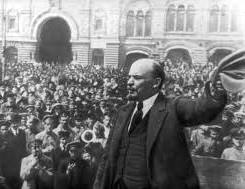
In 1917, Russian underwent two great revolutions.
The first was in February (march) overthrow Tsar Nicholas II and completely ended the Tsar regime and set up a moderate provisional government of Prince Lvay and Alexander Kerensky.
The second was in October (November) which replaced the provisional government by the Bolsheviks led by Vladimir I Lenin

THE SITUATION IN RUSSIA BEFORE THE REVOLUTION
(i) Russian lived under despotic rule of Tsars
(ii) Russia was largely feudal
(iii) Russia had a small industrial based and most of the industries were foreign owned
(iv) Lack of basic education
(v) Influence of church
(vi) Russia had a small middle class
(vii) Russians were subjected to heavy taxation majority
(viii) The Tsarina, Alexander had more influence in state affairs.
(ix) Peasant had at least been given land after the emancipation of serfs of 1860.

CAUSE OF THE RUSSIAN REVOLUTION
(i) Despotic rule of Tsars regime
(ii) The Russia feudal system
(iii) Industrialization of Russia
(iv) The Russian-Japanese war of 1904-1905
(v) The Blood Sunday 1905
(vi) The impact of the World War I
(vii) Person weakness of Tsar Nicholas II
(viii) The leadership role of Lenin was a known
(ix) The failure of the provisional government

EFFECT OF THE REVOLUTION ON RUSSIA 
(i)End of Tsadom
(ii) Establishment of the first socialist state
(iii) Russians withdrawal from the war
(iv) Civil war
(v) The Bolsheviks government made new economic policies and plans for development
(vii) Formation of the Union of Soviet Socialist Republic(USSR)
(viii) The socialist encourage Atheism in Russia
(ix) Great education and Cultural advanced
(x) Isolation of Russia by the Capitalist power

IMPACT OF RUSSIAN REVOLUTION IN AFRICA 
(i) Boost to liberation movement
(ii) Rise of African socialism
(iii) The Cold War
(iv) Spread of Marxism in Africa
(v) Single party state
(vi) Provisional of Aid
(vii) Encouraged formation of works movement
(viii) Encourage forceful regime change in Africa state

IMPACT OF RUSSIAN REVOLUTION IN THE WORLD 
(i) Establishment of the first socialist state in the World
(ii) Emergence of Russia as a World power
(iii) Spread of communism in the World
(iv) Division of the World into two rival group
(v) Contributed to the rise of dictatorship regime in Italy and Germany
(vi)The revolution was a blow to imperialism 

Dec 17, 2024

Proper way for saving money
Published from Blogger Prime Android App
Here is the proper way for saving you money so you can follow this strategie
Saving money can be a rewarding habit that helps you achieve your financial goals. Here are some effective strategies:

1. **Create a Budget**: Track your income and expenses to understand where your money is going. This helps you identify areas where you can cut back.

2. **Set Savings Goals**: Whether it's for an emergency fund, a vacation, or a big purchase, having clear goals can motivate you to save more.

3. **Automate Savings**: Set up automatic transfers from your checking account to your savings account. This way, you save without even thinking about it.

4. **Cut Unnecessary Expenses**: Review your subscriptions and memberships. Cancel those you don't use regularly. Also, consider cooking at home more often instead of dining out.

5. **Shop Smart**: Look for discounts, use coupons, and compare prices before making purchases. Buying in bulk can also save money in the long run.

6. **Pay Off Debt**: High-interest debt can eat into your savings. Focus on paying off debts as quickly as possible to free up more money for saving.

7. **Use Cashback and Rewards Programs**: Take advantage of credit card rewards, cashback apps, and loyalty programs to get a little extra back on your purchases.

8. **Energy Efficiency**: Save on utility bills by using energy-efficient appliances, turning off lights when not in use, and insulating your home properly.

9. **DIY When Possible**: For minor repairs or projects, consider doing it yourself instead of hiring someone. There are plenty of tutorials online to help you.

10. **Review Your Insurance Policies**: Shop around for better rates on insurance policies. Sometimes, bundling different types of insurance can save you money.

These tips can help you build a solid financial foundation and reach your savings goals more effectively¹²³. Do you have any specific savings goals in mind?


COLONIAL ECONOMY

COLONIAL ECONOMY

 A colonial economy refers to the economic system established by colonial powers in their colonies. This system was designed to benefit the colonizing country by exploiting the resources and labor of the colonized region. Here are some key aspects:

Colonial economies were primarily based on the extraction and export of natural resources and agricultural products. Here are some key aspects:


1. **Agriculture**: Colonies often focused on cash crops like sugar, tobacco, cotton, and coffee. These crops were grown on large plantations using enslaved labor¹.


2. **Mining**: Precious metals like gold and silver were extracted, especially in Latin American colonies¹.


3. **Trade**: Colonies were integral parts of global trade networks, exporting raw materials to the colonizing countries and importing manufactured goods².


4. **Labor Systems**: The economy relied heavily on forced labor, including slavery and indentured servitude².


5. **Monopolies and Mercantilism**: Colonial powers often established monopolies and controlled trade to benefit the mother country, following mercantilist policies³.


The goals of colonial economies were primarily driven by the interests of the colonizing powers. Here are some key objectives:


1. **Resource Exploitation**: Colonies were seen as sources of valuable resources such as gold, silver, spices, and later raw materials like cotton and rubber³. The extraction and export of these resources were crucial for the economic benefit of the colonizing country.


2. **Market Expansion**: Colonies provided new markets for the manufactured goods of the colonizing country. This helped in expanding trade and increasing profits for the colonizers².


3. **Agricultural Production**: Large tracts of land in the colonies were converted into plantations to produce cash crops like sugar, tobacco, and coffee. These crops were then exported to the colonizing country³.


4. **Labor Utilization**: Colonies often relied on forced labor, including slavery and indentured servitude, to maximize production and reduce costs².


5. **Strategic Control**: Establishing colonies also allowed European powers to exert strategic control over important trade routes and territories¹.


These goals collectively aimed to enhance the wealth and power of the colonizing nations at the expense of the colonized regions.


Is there a specific aspect of the colonial economy you are particularly interested in?


These elements combined to create economies that were heavily dependent on the exploitation of both natural resources and human labor.

### Key Features

1. **Resource Extraction**: Colonies were often rich in natural resources, which were extracted and exported to the colonizing country. This included minerals, agricultural products, and other raw materials².

2. **Labor Systems**: The colonial economy relied heavily on various forms of labor, including:

   - **Enslaved Labor**: Many colonies used enslaved people to work on plantations and in mines².

   - **Indentured Servitude**: In some regions, indentured servants were used, where individuals worked for a set number of years in exchange for passage to the colony².

3. **Monoculture**: Colonies often focused on the production of a single cash crop or resource, making their economies highly dependent on global market prices².

4. **Trade Control**: The colonizing country controlled trade, ensuring that the colony's exports went primarily to the colonizer and that the colony imported goods from the colonizer².


### Impact on Colonies

- **Economic Dependency**: Colonies became economically dependent on the colonizing country, often lacking diversified economies².

- **Infrastructure Development**: While some infrastructure was developed, it was usually designed to facilitate resource extraction and export rather than to benefit the local population².

- **Social and Economic Inequality**: The colonial economy often led to significant social and economic inequalities, with wealth concentrated in the hands of a few².


### Examples

- **British India**: Focused on the production of cotton, tea, and opium for export².

- **West Indies**: Known for sugar plantations worked by enslaved Africans².

- **Latin America**: Spanish colonies focused on silver and gold mining².

The colonial economy had profound and lasting effects on the colonized regions. Here are some key impacts:


### Economic Impacts

1. **Drain of Wealth**: Colonies experienced a significant outflow of financial resources to the colonizing countries. This included profits from resource extraction, taxes, and other forms of economic exploitation³.

2. **Expropriation of Land**: Large areas of land were taken from indigenous populations and used for plantations, mining, and other colonial enterprises³.

3. **Control Over Production and Trade**: Colonizers controlled the production and trade of goods, often focusing on cash crops or minerals for export, which made colonies dependent on the global market³.

4. **Exploitation of Natural Resources**: Extensive extraction of natural resources often led to environmental degradation and depletion of resources³.

5. **Infrastructure Development**: While some infrastructure was developed, it was primarily designed to facilitate resource extraction and export rather than to benefit the local population³.


### Social and Political Impacts

1. **Social Inequality**: The colonial economy created significant social and economic inequalities, with wealth concentrated in the hands of a few, often European settlers or local elites collaborating with the colonizers¹.

2. **Disruption of Local Economies**: Traditional economies were often disrupted, leading to a loss of local industries and crafts¹.

3. **Labor Exploitation**: The use of forced labor, including slavery and indentured servitude, was widespread, leading to severe human rights abuses¹.

4. **Cultural Changes**: Colonial rule often imposed new cultural norms and practices, leading to the erosion of indigenous cultures and traditions¹.


### Long-Term Consequences

1. **Economic Dependency**: Many former colonies remained economically dependent on their former colonizers, with economies still focused on exporting raw materials and importing finished goods¹.

2. **Underdevelopment**: The focus on resource extraction and cash crops often left colonies with underdeveloped industrial sectors and infrastructure¹.

3. **Political Instability**: The arbitrary borders drawn by colonial powers and the legacy of exploitation have contributed to ongoing political instability and conflict in many regions¹.


These impacts have shaped the economic and social landscapes of former colonies, influencing their development trajectories long after the end of colonial rule.

The colonial economy had profound and lasting effects on both the colonized regions and the colonizing countries. Here are some key impacts:


1. **Economic Exploitation**: Colonies were primarily used for the extraction of resources and agricultural products, which were exported to the colonizing countries. This led to the depletion of natural resources and the exploitation of local labor¹.


2. **Infrastructure Development**: While colonial powers did invest in infrastructure such as roads, railways, and ports, these developments were primarily aimed at facilitating the extraction and export of resources rather than benefiting the local population³.


3. **Economic Inequality**: Colonialism contributed to significant economic disparities. Wealth was concentrated in the hands of a few, often foreign, elites, while the majority of the local population remained impoverished¹.


4. **Disruption of Local Economies**: Traditional economies and social structures were often disrupted or destroyed. Local industries and crafts were undermined by the import of cheap manufactured goods from the colonizing countries².


5. **Introduction of Cash Crops**: The focus on cash crops for export often led to the neglect of food crops, resulting in food insecurity and dependency on imported food².


6. **Labor Exploitation**: The colonial economy relied heavily on forced labor systems, including slavery and indentured servitude, which had devastating social and human costs¹.


These effects have had long-term consequences, contributing to ongoing economic challenges and inequalities in many former colonies.


Dec 16, 2024

Dec 13, 2024

MALARIA

MALARIA

Published from Blogger Prime Android App
Malaria ni ugonjwa wa kuambukiza unaosababishwa na vimelea vya Plasmodium na huenezwa kwa binadamu kupitia kuumwa na mbu wa kike wa jenasi Anopheles¹². Hapa kuna maelezo muhimu kuhusu malaria:

### Sababu
- **Vimelea**: Vimelea vya Plasmodium, hasa *Plasmodium falciparum* na *Plasmodium vivax*, ndiyo vinavyosababisha malaria¹.
- **Uenezi**: Ugonjwa huu huenezwa kupitia kuumwa na mbu wa kike wa Anopheles aliyeambukizwa¹.

### Dalili
- **Dalili za Awali**: Homa, baridi, kuumwa kichwa, na maumivu ya misuli, ambazo huanza kuonekana kati ya siku 10 hadi 15 baada ya kuambukizwa².
- **Dalili Kali**: Uchovu mkubwa, kuchanganyikiwa, kifafa, shida ya kupumua, na kushindwa kwa viungo. Bila matibabu, malaria inaweza kusababisha kifo².

### Kinga
- **Kuepuka Kuumwa na Mbu**: Tumia vyandarua vilivyotiwa dawa, dawa za kuua wadudu, na kuvaa nguo ndefu².
- **Dawa za Kinga**: Kuchukua dawa za kuzuia malaria, hasa unapokuwa unasafiri kwenda maeneo yenye malaria².

### Matibabu
- **Dawa za Malaria**: Dawa kama vile chloroquine, quinine, na artemisinin-based combination therapies (ACTs) hutumika kutibu malaria².
- **Utambuzi wa Mapema**: Matibabu ya haraka ni muhimu ili kuzuia matatizo na vifo².

Malaria ni tatizo kubwa la kiafya, hasa katika maeneo ya kitropiki na yanayokaribia tropiki kama Tanzania. Ni muhimu kuchukua hatua za kinga na kutafuta matibabu haraka ikiwa unashuku una malaria kwa kwenda katika vituo vya afya
Meaning of Malaria

Meaning of Malaria

Published from Blogger Prime Android App
Malaria is a serious and sometimes fatal disease caused by parasites that are transmitted to humans through the bites of infected female Anopheles mosquitoes². Here are some key points about malaria:

### Causes
- **Parasites**: The disease is caused by Plasmodium parasites. There are five species that can infect humans, with *Plasmodium falciparum* and *Plasmodium vivax* being the most dangerous².
- **Transmission**: It is primarily spread through mosquito bites, but can also be transmitted through blood transfusions, organ transplants, or from mother to child during birth².

### Symptoms
- **Early Symptoms**: Fever, chills, headache, and muscle aches, typically appearing 10-15 days after being bitten².
- **Severe Symptoms**: Severe fatigue, confusion, seizures, difficulty breathing, and organ failure. Severe cases can lead to death if not treated promptly².

### Prevention
- **Avoiding Bites**: Use insect repellent, sleep under insecticide-treated bed nets, and wear long-sleeved clothing².
- **Medications**: Antimalarial drugs can be taken to prevent infection, especially when traveling to areas where malaria is common².

### Treatment
- **Antimalarial Drugs**: Medications such as chloroquine, quinine, and artemisinin-based combination therapies (ACTs) are used to treat malaria².
- **Early Diagnosis**: Prompt treatment is crucial to prevent complications and death².

Malaria is a significant health issue, especially in tropical and subtropical regions. It's important to take preventive measures and seek medical attention if you suspect you have malaria.

Dec 12, 2024

TOURISM

TOURISM

Published from Blogger Prime Android App
Tourism is the activity of traveling for pleasure, recreation, or business, and it involves the commercial provision of services to support such travel. It can be domestic (within one's own country) or international, and it plays a significant role in the global economy¹².

### Key Aspects of Tourism:
1. **Economic Impact**: Tourism generates revenue, creates jobs, and stimulates the development of infrastructure. It can significantly contribute to a country's GDP.
2. **Types of Tourism**:
   - **Leisure Tourism**: Traveling for relaxation and enjoyment.
   - **Business Tourism**: Traveling for work-related purposes.
   - **Cultural Tourism**: Exploring cultural heritage, arts, and traditions.
   - **Ecotourism**: Traveling to natural areas to conserve the environment and improve the well-being of local people.
   - **Medical Tourism**: Traveling to receive medical treatment.
3. **Sustainable Tourism**: Focuses on minimizing the negative impacts of tourism on the environment and local communities while promoting conservation and sustainable practices¹².

### Importance of Tourism:
- **Economic Growth**: Tourism can boost economic growth by attracting foreign exchange and investment.
- **Cultural Exchange**: It promotes cultural understanding and exchange between people from different backgrounds.
- **Environmental Awareness**: Sustainable tourism can raise awareness about environmental conservation and the importance of protecting natural resources¹².
Tourism has a wide range of effects, both positive and negative, on various aspects of society and the environment. Here are some key impacts:

### Positive Effects:
1. **Economic Growth**: Tourism generates revenue, creates jobs, and stimulates the development of infrastructure. It can significantly contribute to a country's GDP¹.
2. **Cultural Preservation**: Tourism can promote cultural awareness and help preserve local traditions and heritage. For example, the Masai Mara in Kenya benefits from tourism by maintaining cultural practices².
3. **Infrastructure Development**: Income from tourism can be used to develop local infrastructure and services, such as roads, airports, and healthcare facilities².
4. **Environmental Conservation**: Sustainable tourism can help protect natural features and wildlife by generating funds for conservation efforts².

### Negative Effects:
1. **Environmental Damage**: Tourism can lead to environmental degradation, including pollution, deforestation, and wildlife disruption¹.
2. **Cultural Erosion**: The influx of tourists can sometimes lead to the loss of local culture and traditions as areas become more westernized².
3. **Economic Disparities**: Often, the profits from tourism do not benefit local communities as much as they should. Large international companies may take a significant share of the revenue².
4. **Social Issues**: Tourism can lead to overcrowding, increased crime rates, and higher costs of living for local residents¹.

Balancing these effects requires careful planning and management to ensure that tourism benefits local communities and the environment while minimizing its negative impacts. 

Dec 5, 2024

WOMEN EMPOWERING

WOMEN EMPOWERING

Published from Blogger Prime Android App
Women's empowerment is a multifaceted concept that involves granting women the freedom and power to make their own decisions and pursue their goals. It encompasses breaking down societal, economic, and political barriers that have historically restricted women's roles and opportunities¹².

Key aspects of women's empowerment include:

1. **Education and Literacy**: Providing access to education and literacy programs helps women gain the knowledge and skills needed to participate fully in society.
2. **Economic Empowerment**: Ensuring women have control over resources, assets, and income, which allows them to manage risks and improve their well-being¹.
3. **Health and Well-being**: Addressing issues like reproductive health, access to healthcare, and protection from violence and exploitation².
4. **Political Participation**: Encouraging and supporting women's involvement in political processes and leadership roles².
5. **Social Awareness**: Raising awareness about gender equality and challenging traditional gender roles and stereotypes¹.

Empowering women not only benefits individuals but also enhances the quality and quantity of human resources available for development, leading to better economic and social outcomes for communities and nations¹².

Empowering women involves a combination of individual actions, community efforts, and policy changes. Here are some effective ways to empower women:

1. **Education**: Ensure that girls and women have access to quality education. This includes not only primary and secondary education but also higher education and vocational training¹.

2. **Economic Opportunities**: Support women in gaining financial independence through job opportunities, equal pay, and access to credit and financial services. Encouraging entrepreneurship and supporting women-owned businesses can also make a significant impact².

3. **Healthcare Access**: Provide comprehensive healthcare services, including reproductive health services, maternal care, and mental health support. Ensuring women have access to these services is crucial for their overall well-being².

4. **Legal Rights**: Advocate for laws and policies that protect women's rights and promote gender equality. This includes laws against gender-based violence, discrimination, and ensuring women's rights to property and inheritance¹.

5. **Mentorship and Role Models**: Encourage mentorship programs where experienced women can guide and support younger women. Highlighting successful female role models can inspire and motivate others².

6. **Community Support**: Create safe spaces and support networks for women to share their experiences, learn from each other, and build solidarity. Community programs that focus on women's empowerment can be very effective².

7. **Awareness and Advocacy**: Raise awareness about gender equality and women's rights through campaigns, workshops, and media. Advocacy efforts can help change societal attitudes and norms that hinder women's empowerment¹.

8. **Technology and Innovation**: Leverage technology to provide women with new opportunities for learning, working, and connecting with others. This includes access to the internet, digital literacy programs, and online platforms for business and education².

By taking these steps, we can create an environment where women are empowered to reach their full potential and contribute meaningfully to society.


UMASKINI NI NINI

UMASKINI NI NINI

Published from Blogger Prime Android App
Umaskini ni hali ya ukosefu wa mahitaji ya msingi ya binadamu kama vile chakula, maji salama, huduma za afya, mavazi, na makazi kutokana na kukosa uwezo wa kuvinunua¹. Kuna aina mbili kuu za umaskini:

1. **Umaskini uliokithiri**: Hii ni hali ambapo mtu hana uwezo wa kukidhi mahitaji ya msingi kabisa ya maisha.
2. **Umaskini linganishi**: Hii ni hali ya kuwa na rasilimali chache au kipato cha chini ikilinganishwa na watu wengine katika jamii au nchi¹.

Umaskini unaweza kusababishwa na mambo mbalimbali kama vile ukosefu wa ajira, elimu duni, ufisadi, na sera za kiuchumi zisizo na usawa¹². Kupunguza umaskini ni moja ya malengo makuu ya taasisi nyingi za kimataifa kama vile Umoja wa Mataifa na Benki ya Dunia¹.

Umaskini una athari nyingi mbaya kwa watu binafsi na jamii kwa ujumla. Hapa ni baadhi ya athari kuu za umaskini:

1. **Afya Duni**: Watu wanaoishi katika umaskini mara nyingi hawana uwezo wa kupata huduma bora za afya, lishe bora, na mazingira safi, hivyo wanakabiliwa na magonjwa mbalimbali.

2. **Elimu Duni**: Watoto kutoka familia maskini mara nyingi hawana fursa ya kupata elimu bora kutokana na ukosefu wa ada, vifaa vya shule, na mazingira mazuri ya kujifunzia.

3. **Ukosefu wa Ajira**: Umaskini unaweza kusababisha ukosefu wa ajira au ajira zisizo na kipato cha kutosha, hivyo kuendeleza mzunguko wa umaskini.

4. **Uhalifu na Vurugu**: Ukosefu wa rasilimali na fursa unaweza kusababisha watu kujiingiza katika vitendo vya uhalifu na vurugu kama njia ya kujikimu.

5. **Kukosa Makazi**: Watu maskini mara nyingi hawana uwezo wa kumudu makazi bora, hivyo wanaishi katika mazingira duni au hata kuwa wasio na makazi kabisa.

6. **Kukosa Heshima na Hadhi**: Umaskini unaweza kusababisha watu kukosa heshima na hadhi katika jamii, hivyo kuathiri hali yao ya kisaikolojia na kijamii.

Kupunguza umaskini ni muhimu kwa maendeleo endelevu na ustawi wa jamii.

Kuna njia mbalimbali za kuepukana na umaskini ambazo zinaweza kusaidia watu binafsi na jamii kwa ujumla. Hapa ni baadhi ya njia hizo:

1. **Elimu Bora**: Elimu ni silaha muhimu katika kupambana na umaskini. Kupata elimu bora husaidia watu kupata ujuzi na maarifa yanayohitajika kwa ajira bora na kujiajiri⁴.

2. **Kuongeza Fursa za Ajira**: Serikali na sekta binafsi zinaweza kuunda fursa zaidi za ajira kwa kuwekeza katika viwanda, kilimo, na sekta nyingine zinazoweza kutoa ajira nyingi².

3. **Mikopo na Mitaji**: Kutoa mikopo nafuu na mitaji kwa wajasiriamali wadogo na wa kati kunaweza kusaidia watu kuanzisha na kukuza biashara zao, hivyo kuongeza kipato na kupunguza umaskini².

4. **Kuboresha Miundombinu**: Uwekezaji katika miundombinu kama barabara, umeme, na maji safi unaweza kusaidia kuboresha maisha ya watu na kuongeza fursa za kiuchumi².

5. **Afya Bora**: Kutoa huduma bora za afya kwa wote kunaweza kusaidia kupunguza gharama za matibabu na kuongeza uwezo wa watu kufanya kazi na kujipatia kipato³.

6. **Kujenga Uwezo wa Kifedha**: Kuelimisha watu kuhusu usimamizi wa fedha, akiba, na uwekezaji kunaweza kusaidia watu kupanga na kutumia rasilimali zao kwa ufanisi zaidi¹.

7. **Kukuza Kilimo**: Kilimo bora na cha kisasa kinaweza kuongeza uzalishaji wa chakula na kipato kwa wakulima, hivyo kupunguza umaskini vijijini².

8. **Kujenga Mitandao ya Kijamii**: Kusaidia watu kuunda mitandao ya kijamii na vikundi vya ushirika kunaweza kuongeza ushirikiano na kusaidiana katika shughuli za kiuchumi².