Mar 5, 2025

TANZANIA ZOOS

TANZANIA ZOOS

                 TANZANIA ZOO 
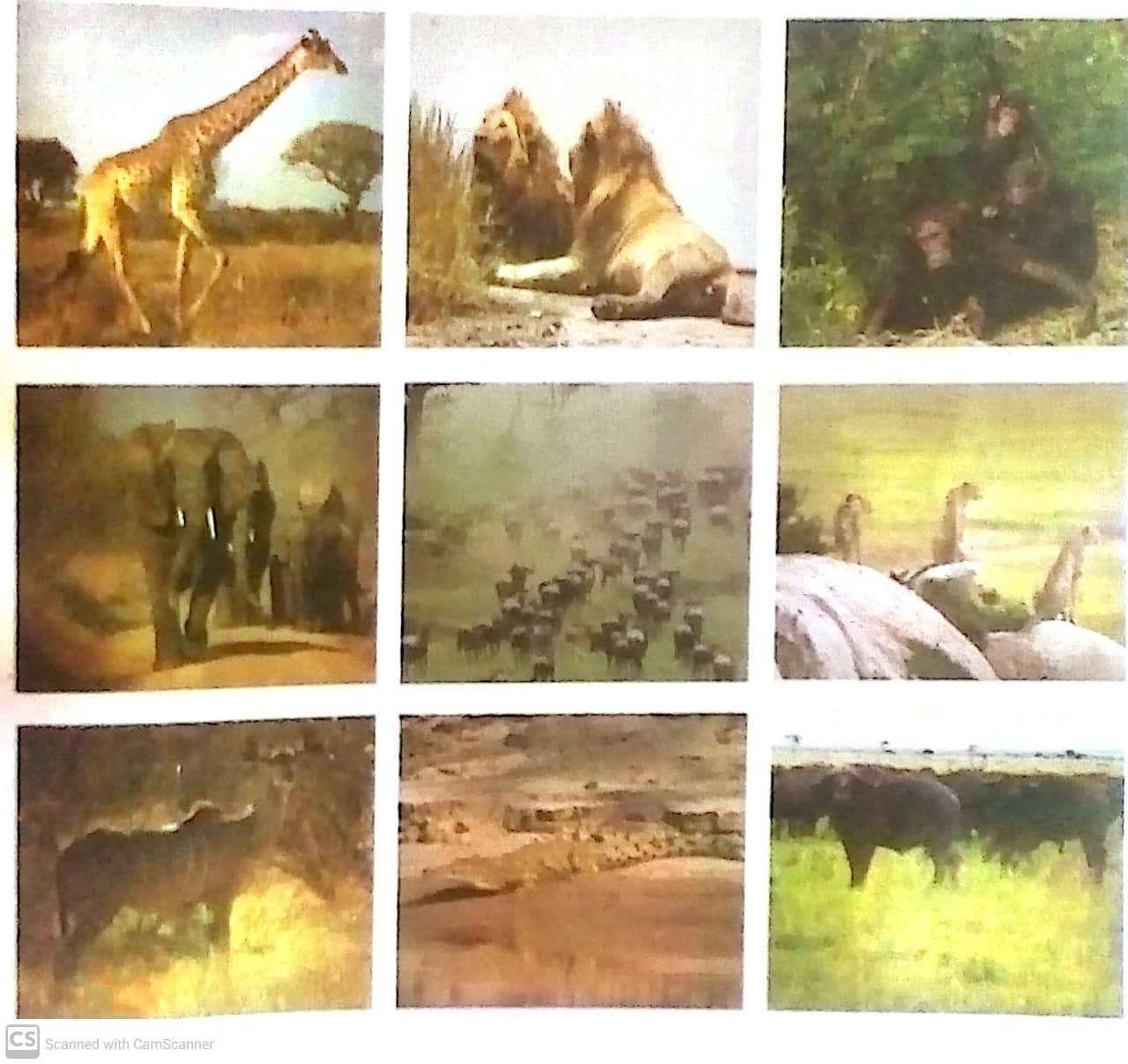
 Tanzania is fortunate to have many zoos. About 38 percent of Tanzania's land is reserved for zoos. These parks have many different kinds of animals that are a great resource for Tanzanians. Our parks have all the five largest animals in the world. These animals are lions,elephants,rhinos,leopards and buffaloes. Other animals found inTanzanian zoos are giraffes, hippos, gazelles, zebras, cheetahs, crocodiles, monkeys, hyenas, foxes, wolves, wild boars, blind people, donkeys and other small animals.
 Some of the animals present in the parks and zoos in Tanzania.
Published from Blogger Prime Android App
 In these parks there are many birds with attractive colors. There are also colorful butterflies and many kinds of insects. Tourists visit our zoos to see animals, birds and butterflies.

  METHODS OF MAINTENANCE OF ZOO PARKS 
 1. Development and implementation of policies and laws for the sustainable use of zoos
 2. The existence of enough wildlife professionals to manage zoos and provide education on animal conservation to communities near zoos
 3. There should be effective protection of wildlife against poachers
 4. Existence of plans for the best use of land to avoid the interaction of land use. For example, animal parks and human use such as agriculture and breeding.

Mar 4, 2025

HOW WE CAN HELPS OTHERS IN OUR SOCIETY

 Helping others can take many forms, and the best approach often depends on the needs of those around you and your own skills and resources. Here are some ways you can help:


Volunteer: Offer your time to local charities, shelters, or community organizations. This could involve serving meals, tutoring, or participating in cleanup efforts.


Listen: Sometimes, people just need someone to talk to. Being a good listener can provide emotional support and make a significant difference in someone's life.


Share Skills: If you have expertise in a particular area, consider teaching others. This could be anything from cooking and gardening to coding and financial literacy.


Offer Emotional Support: Reach out to friends or family members going through tough times. A simple message or a phone call can show you care.


Donate: If you have the means, consider donating money, clothes, or other goods to those in need.


Advocate: Support causes that aim to help others, whether through awareness campaigns, fundraising, or joining organizations that align with your values.


Be Kind: Small acts of kindness, like holding the door open or complimenting someone, can brighten someone’s day.


Mentor: Offer guidance to someone who may benefit from your experience, whether in a professional setting or personal development.


Create Community: Organize events or groups that bring people together, fostering a sense of belonging and support.


Educate Yourself: Understanding the challenges faced by others can help you be more effective in your efforts to help.


Every small action counts, and your willingness to help can inspire others to do the same!

Mar 1, 2025

WHY AFRICA CALLED A BLACK CONTINENT


Why Africa is sometimes called the "Black Continent," the term has historical and cultural origins. However, it has been used in different ways, some of which are outdated or problematic. Here are a few perspectives on why Africa has been referred to this way:

  1. Racial Association – Africa is home to a large population of Black people, particularly in sub-Saharan Africa. This has led some to use "Black Continent" in reference to the majority of the population’s skin color.

  2. Historical Ignorance – In the 19th and early 20th centuries, European explorers and colonizers referred to Africa as the "Dark Continent" because they knew little about its interior. This term reflected their ignorance rather than the reality of Africa's rich and diverse civilizations.

  3. Geographical and Environmental Factors – Some interpretations suggest that "black" could be linked to Africa’s dense forests, volcanic soils, or even the darkness of night in regions with minimal artificial light.

  4. Symbolic Meanings – Some use the term metaphorically to describe Africa’s struggles with colonialism, poverty, and conflict, though this is an oversimplification and does not represent the continent’s full reality.

Today, the term "Black Continent" is not commonly used because it carries colonial and racial connotations. Africa is a diverse continent with rich cultures, histories, and achievements that go beyond such labels.

                       Msomihuru

JINSI YA KUSAIDIA WENGINE KATIKA JAMII
Kusaidia wengine ni njia nzuri ya kujenga jamii nzuri na yenye mshikamano. Hapa kuna baadhi ya njia za kusaidia wengine:

Kutoa Msaada wa Kifedha: Ikiwa una uwezo, unaweza kusaidia watu walio katika mahitaji kwa kutoa msaada wa kifedha au kuchangia katika miradi ya kijamii.

Kutoa Wakati Wako: Kujitolea katika shughuli za kijamii au mashirika yasiyo ya kiserikali yanaweza kuwa na athari kubwa. Wakati wako unaweza kusaidia katika shughuli kama vile usambazaji wa chakula au elimu.

Kushiriki Ujuzi: Ikiwa una ujuzi maalum, unaweza kufundisha wengine. Hii inaweza kuwa katika masuala ya elimu, ujuzi wa kazi, au hata sanaa.

Kutoa Msaada wa Kisaikolojia: Kuwa na mtu wa kuzungumza naye ni muhimu. Unaweza kusaidia kwa kusikiliza na kutoa ushauri wa kisaikolojia kwa wale wanaohitaji.

Kujitolea Katika Miradi ya Jamii: Ushiriki katika miradi ya kuendeleza jamii kama vile kupanda miti, usafi wa mazingira, au kujenga nyumba kwa ajili ya wasio na makazi.

Kusaidia Katika Nyumba au Shule: Unaweza kusaidia watoto katika masomo yao au kusaidia wazee na watu wenye ulemavu katika kazi za nyumbani.

Kuendeleza Uelewa na Elimu: Kuwaelimisha wengine juu ya masuala muhimu kama afya, mazingira, na haki za binadamu ni njia nzuri ya kusaidia jamii.

Kutoa Hifadhi au Msaada wa Kisheria: Ikiwa unajua sheria, unaweza kusaidia watu katika mchakato wa kisheria au kuwapa ushauri.

Kila hatua, hata ndogo, inachangia katika kuboresha maisha ya wengine. Kumbuka, kusaidia wengine kunaweza pia kukusaidia wewe mwenyewe kwa kuleta furaha na kuridhika.

Feb 28, 2025

FAMILIA ISIYO NA MALENGO INAWEZA KUKUMBWA NA NINI?


Familia isiyo na malengo inaweza kukumbwa na matatizo mbalimbali, ikiwa ni pamoja na: 

 1. Ukosefu wa Maelewano – Bila malengo ya pamoja, kila mtu anaweza kuwa na mwelekeo wake binafsi, jambo linalosababisha migogoro na kutokuelewana. 
 2. Matatizo ya Kifedha – Bila mipango ya kifedha, familia inaweza kushindwa kusimamia matumizi, kuwekeza, au kujiandaa kwa dharura, hivyo kusababisha madeni na ugumu wa maisha. 
 3. Malezi Duni ya Watoto – Watoto wanaolelewa katika familia isiyo na malengo wanaweza kukosa mwongozo mzuri wa maisha, jambo linaloweza kuathiri maendeleo yao kielimu, kitabia, na kimaadili. 
 4. Kukosa Maendeleo – Familia inaweza kusalia katika hali ya kutoridhisha kwa sababu hakuna mipango ya kujiboresha au kufanikisha mambo muhimu kama elimu, biashara, au ujenzi wa maisha bora. 
 5. Kuvunjika kwa Familia – Bila malengo ya pamoja, upendo na mshikamano wa kifamilia unaweza kudhoofika, na hatimaye kusababisha migogoro mikubwa au hata kuvunjika kwa familia. 6. Msongo wa Mawazo na Mfadhaiko – Wanakaya wanaweza kujikuta wakikabiliwa na msongo wa mawazo kwa sababu ya maisha yasiyo na mwelekeo, hali inayoweza kuathiri afya yao ya kiakili na kimwili. 
 7. Uhusiano Mbaya na Jamii – Familia isiyo na malengo inaweza kujikuta ikikosa heshima na ushawishi ndani ya jamii, kwani haiwezi kushiriki kikamilifu katika maendeleo ya kijamii au kusaidia wengine. Ni muhimu kwa familia kuweka malengo ya muda mfupi na mrefu ili kuhakikisha maendeleo, mshikamano, na maisha bora kwa wanakaya wote.
                     Msomihuru

Feb 27, 2025

VULCANICITY/VOLCANISM
What is vulcanicity/volcanism?
*Is the process where by molten material (magma) are forced into the earth crust or onto the surface.
*Is the process where by molten material are both intruded into the earth crust or extruded onto the earth surface.

INTRUSIVE FEATURES (INTRUDED, ONTO)
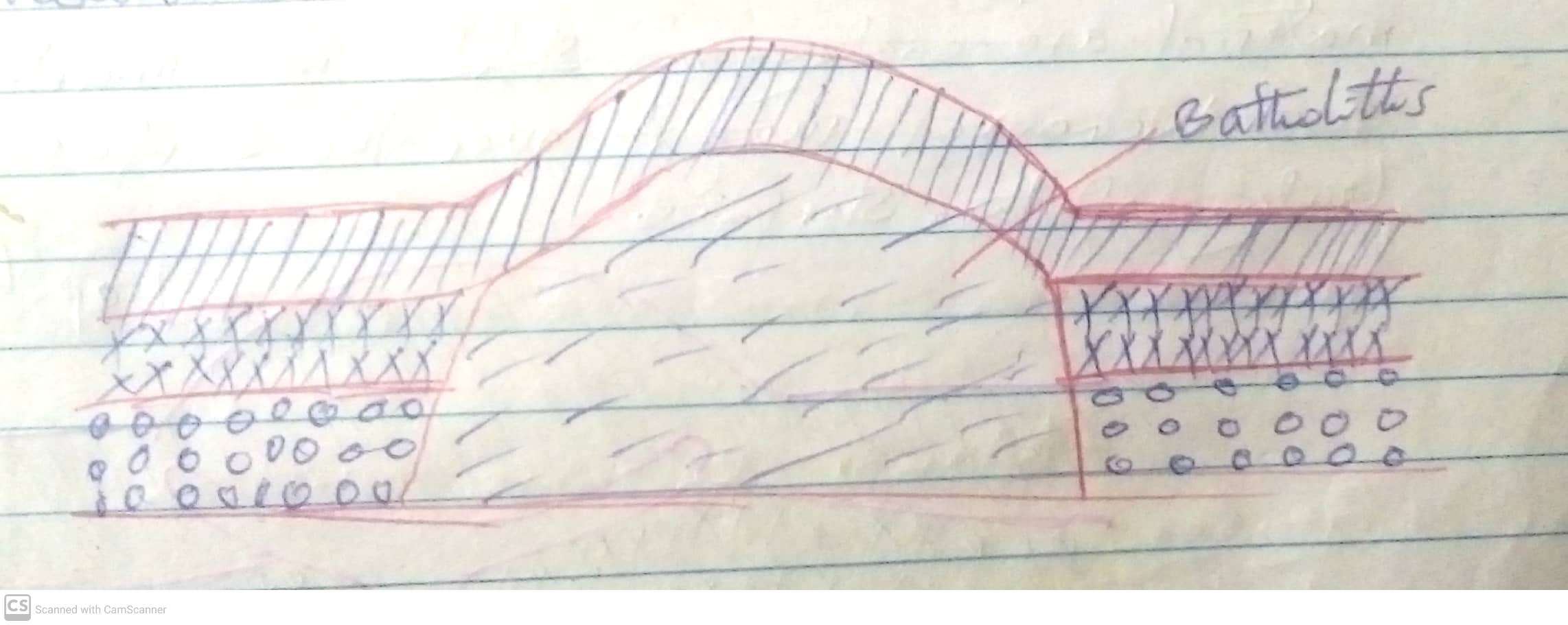
1.BATHOLITHS
Is the large mass of magma which occur after accumutation of molten material from the base of mountain.
Published from Blogger Prime Android App

2.DYKES
Are formed when the molten material (magma) are cooling and solidifying across the bedding plane.
Published from Blogger Prime Android App
3.SILL
Are formed when the molten material are cooling and solidifying horizontal along the bedding plane.

Published from Blogger Prime Android App
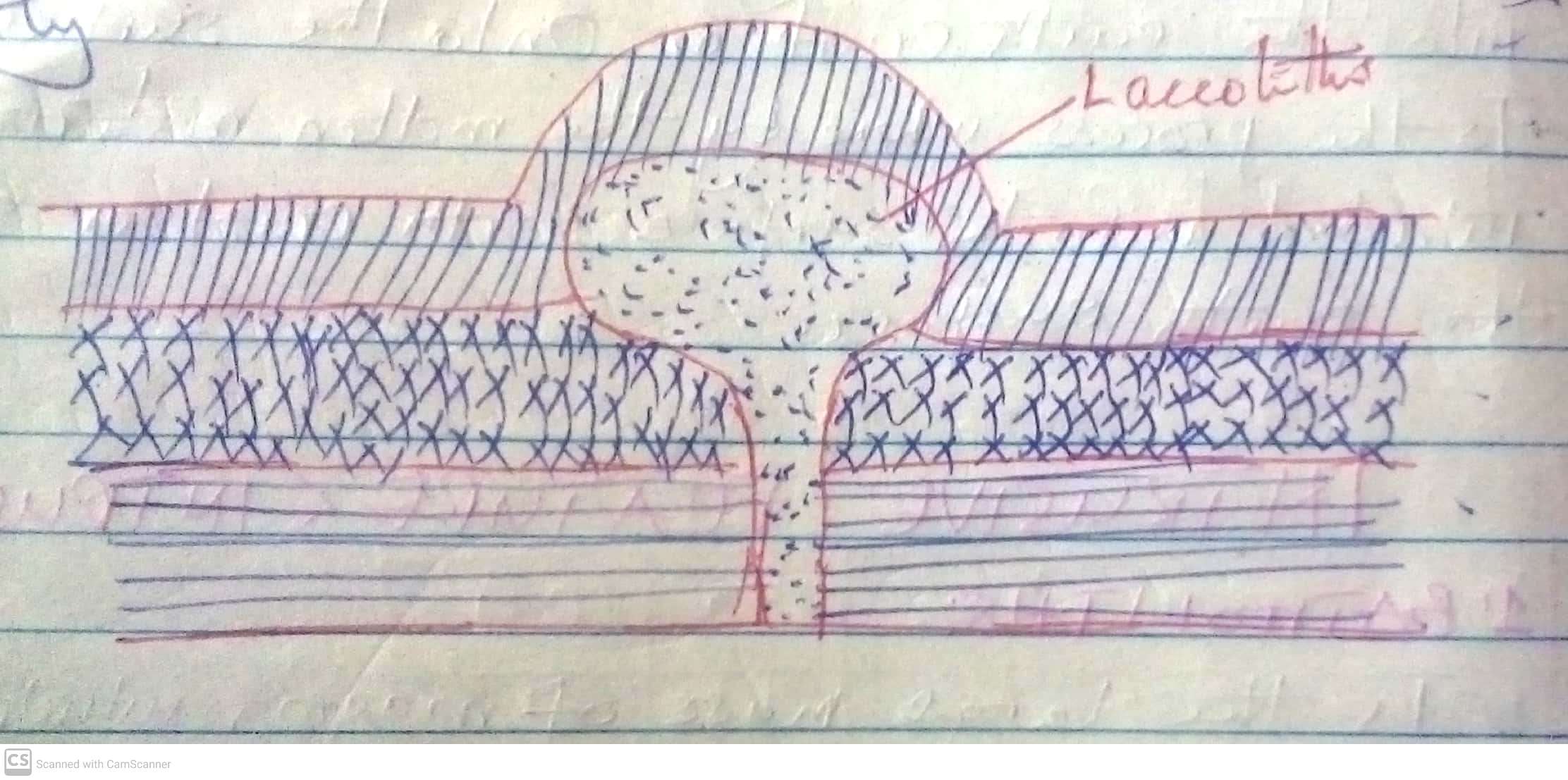
4.LACCOLITHS
Is a dome shape like a mushroom which occur when the molten material are cooling and solidifying overly.
Published from Blogger Prime Android App
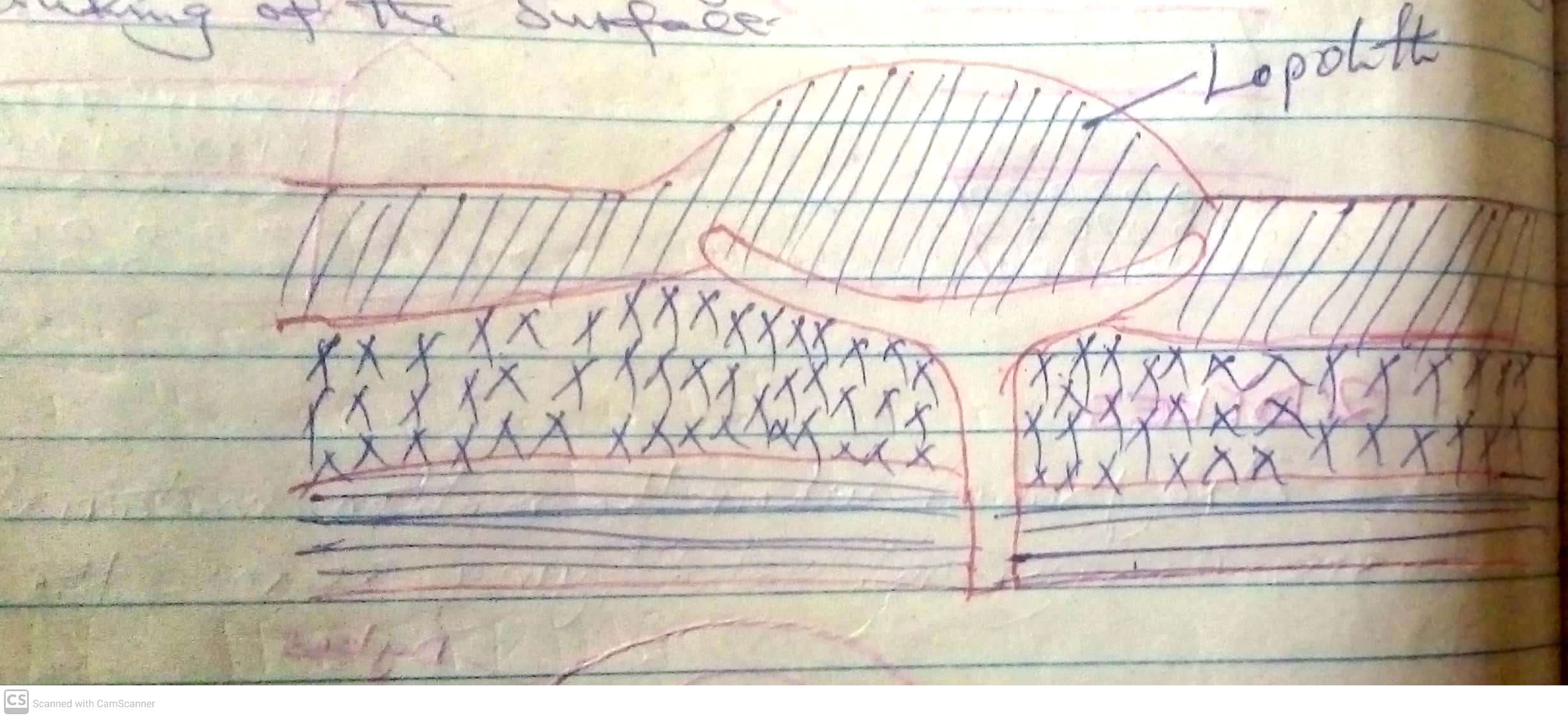
5.LOPOLITH
Is a shape like soucer which formed when the molten material are increased weight over the surface causing linking of the surface.
Published from Blogger Prime Android App

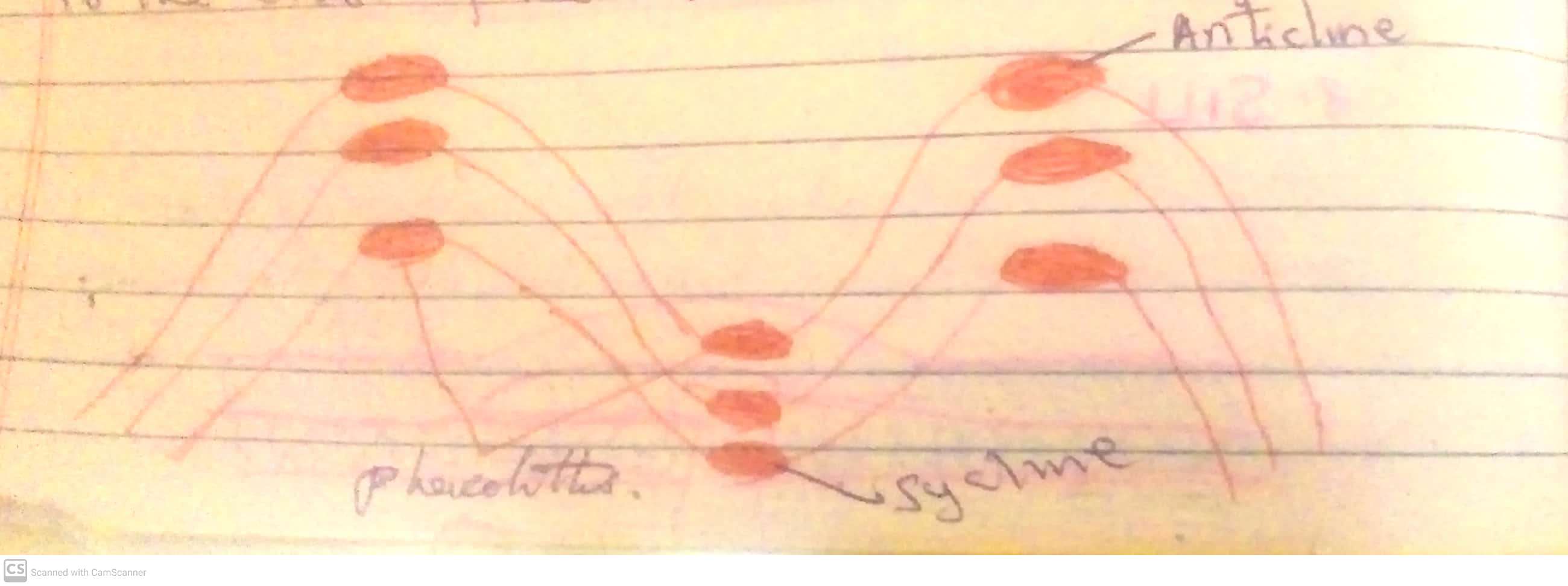
6.PHACOLITH
Is a lense like structure which formed when the molten material or igneous rock are cooling and solidifying to the crust of the anticline or to the bottom of syncline.
Published from Blogger Prime Android App
EXTRUSIVE FEATURES (ONTO, EXTRUDED)
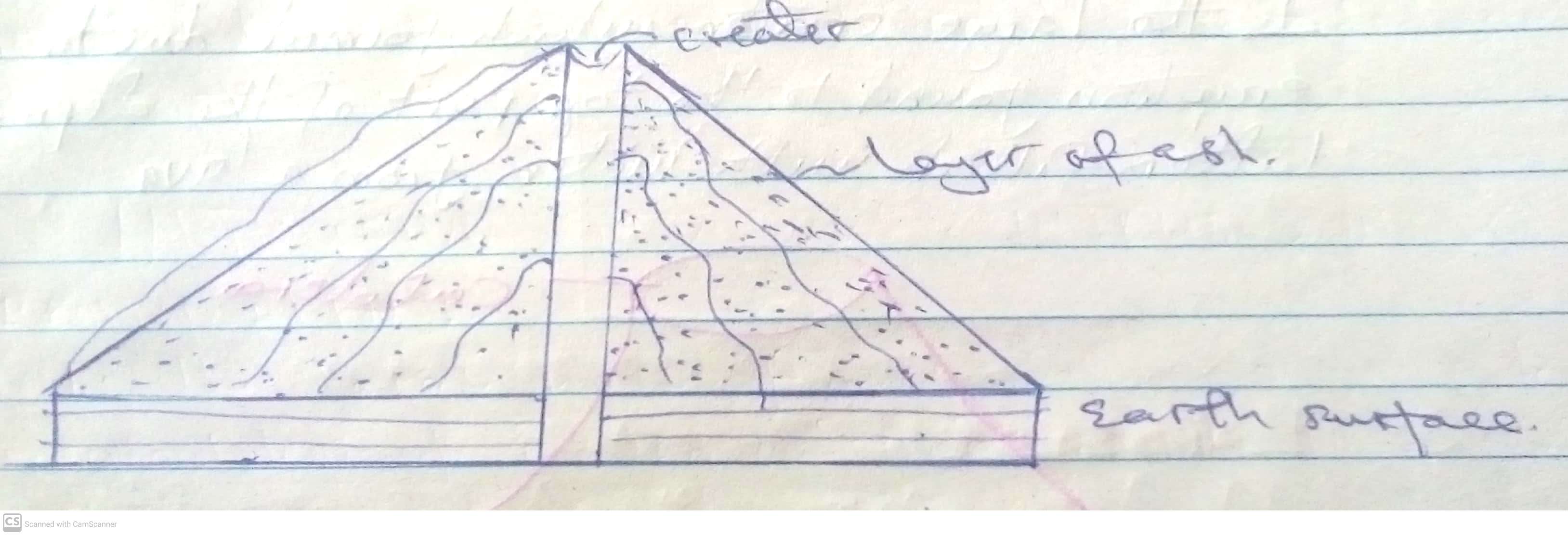
1.ASH AND CINDER CONE

It formed when the molten material (Magma) are violencely eject forced out due to high pressure and mixed with ash and cinder.
Published from Blogger Prime Android App
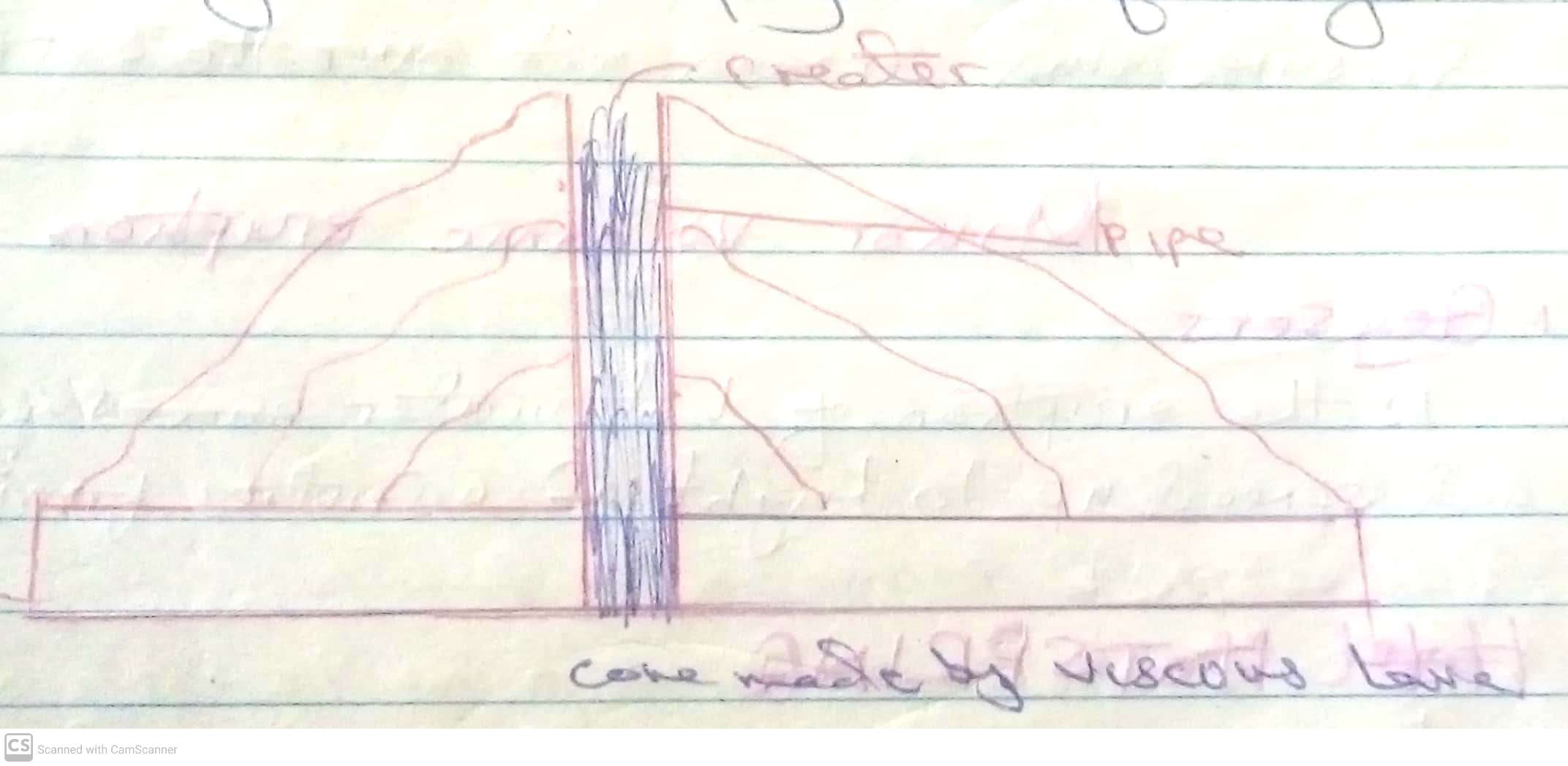
2.LAVA CONE
It occur when the lava are liquid or viscous usually produce gentle or slopely cone for large area.
Published from Blogger Prime Android App
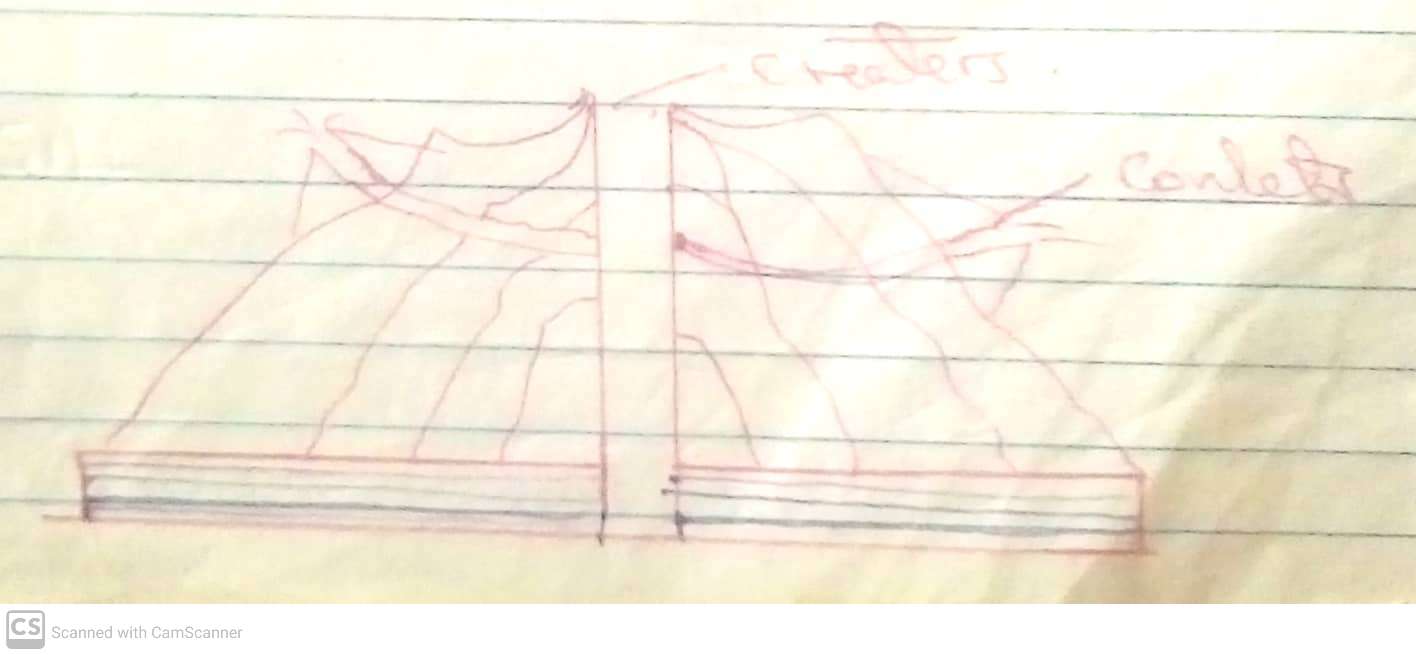
3.COMPOSITE CONE
Are formed alternate layer of lava and ash after eruption of great violent and forming a small conlets.
Published from Blogger Prime Android App
4.CREATER
Is the vent on the top part when lava is spread out.

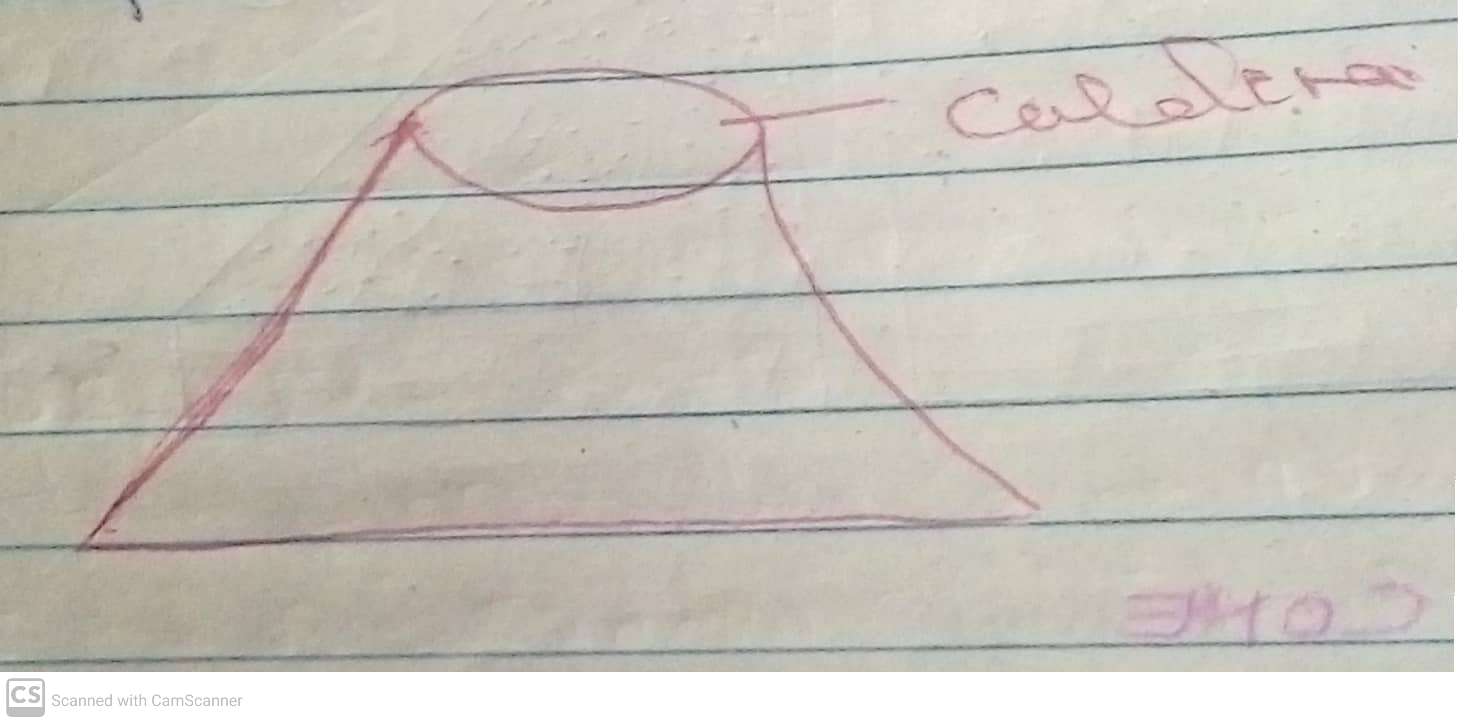
5.CALDERA
Is the large creater which formed due to strong eruption found to the top part of the depression may latter filled with water from a lava.
Published from Blogger Prime Android App
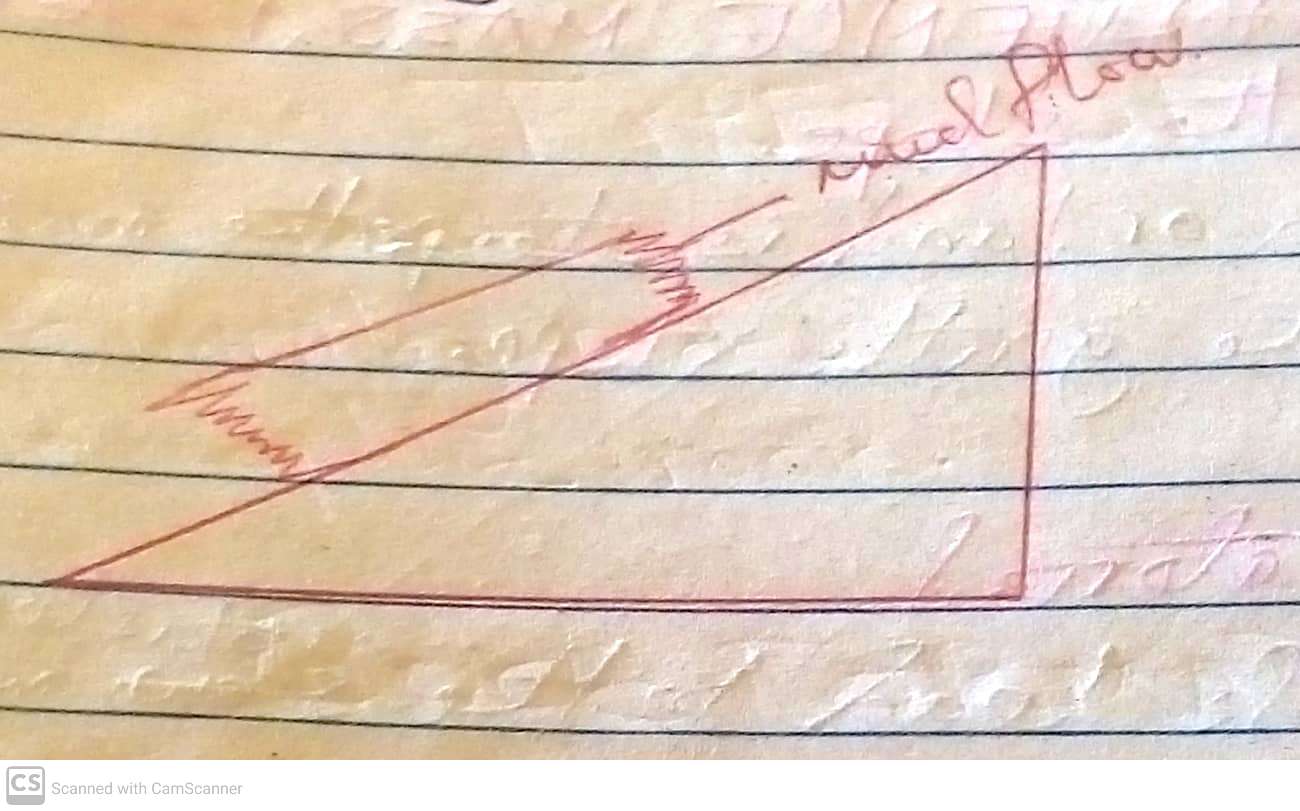
6.LAVA FLOW
Formed when lava flow out quickly through fissures and spread out over the surrounding country.

Minor volcanic eruption
1.GEYSERS
Is the eruption of hot water and superheated water and spread up to height of 45 meters from the earth surface.
2.HOTSPRING
Is the eruption of hot water without any explosion.

Feb 25, 2025

MPANGO WA UFUNDISHAJI WA SOMO LA SAYANSI NA TEKNOLOJIA MADA YA USANISINURU

Mpango wa Somo: Usanisinuru

Darasa: Sita
Muda: Dakika 40
Mada: Usanisinuru
Somo: Sayansi na Techolojia

Malengo ya Somo:

  • Kuelewa dhana ya usanisinuru: Wanafunzi wataweza kufafanua usanisinuru na kueleza umuhimu wake kwa mimea na viumbehai wengine.
  • Kutambua viambato muhimu katika usanisinuru: Wanafunzi wataweza kutaja na kuelezea majukumu ya maji, dioksidi kaboni, mwanga wa jua, na klorofili katika mchakato wa usanisinuru.
  • Kufanya jaribio rahisi la kuonyesha usanisinuru: Wanafunzi watafanya jaribio la kuona jinsi mwanga unavyoathiri usanisinuru katika majani ya mimea.

Vifaa Vinavyohitajika:

  • Ubao mweusi, chaki, na dasta
  • Mchoro au kielelezo cha mchakato wa usanisinuru
  • Majani mabichi ya mmea (kama ya spinachi)
  • Maji safi
  • Glasi au vikombe vya plastiki vinavyopitisha mwanga
  • Chanzo cha mwanga (jua au taa ya umeme)
  • Karatasi na kalamu za wanafunzi

Hatua za Somo:

  1. Utangulizi (Dakika 5):

    • Maswali ya kuchochea fikra:
      • Nani anapika chakula chenu nyumbani?
      • Je, mmea hupata chakula chake wapi?
      • Mmea hutumia nini kutengeneza chakula chake?
    • Tangazo la somo: Eleza kwamba leo watajifunza jinsi mimea inavyotengeneza chakula chao kupitia mchakato uitwao usanisinuru.
  2. Maelezo ya Dhana (Dakika 10):

    • Fasili ya usanisinuru: Eleza kuwa usanisinuru ni mchakato ambao mimea hutumia mwanga wa jua, maji, na dioksidi kaboni kutengeneza chakula (glukosi) na kutoa oksijeni.
    • Viambato muhimu:
      • Maji: Hutoka kwenye udongo kupitia mizizi.
      • Dioksidi kaboni: Hutoka hewani kupitia matundu madogo kwenye majani yanayoitwa stomata.
      • Mwanga wa jua: Hutoa nishati inayohitajika kwa mchakato.
      • Klorofili: Pigmenti ya kijani kwenye majani inayonyonya mwanga wa jua.
    • Mchoro wa mchakato: Onyesha mchoro wa usanisinuru ukionyesha viambato vinavyoingia na kutoka.
  3. Shughuli ya Kivitendo (Dakika 15):

    • Jaribio la kuonyesha usanisinuru:
      • Hatua:
        1. Chukua majani mabichi na uyajaze kwenye glasi au kikombe cha plastiki kilichojaa maji.
        2. Weka glasi moja kwenye mwanga wa jua moja kwa moja na nyingine mahali penye kivuli.
        3. Waache kwa muda wa dakika 10-15.
        4. Waombe wanafunzi waangalie mabadiliko, kama vile mabadiliko ya rangi au mabadiliko mengine kwenye majani.
      • Majadiliano:
        • Waulize wanafunzi ni nini walichogundua kuhusu majani yaliyo kwenye mwanga na yale yaliyo kwenye kivuli.
        • Eleza kwamba mwanga wa jua ni muhimu kwa usanisinuru na kwamba bila mwanga, mimea haiwezi kutengeneza chakula chao.
  4. Hitimisho (Dakika 5):

    • Muhtasari: Rudia kwa ufupi mchakato wa usanisinuru na umuhimu wake.
    • Maswali ya kujitathmini:
      • Je, ni viambato gani vinavyohitajika kwa usanisinuru?
      • Kwa nini mwanga wa jua ni muhimu kwa mimea?
      • Ni nini kinachotokea ikiwa mmea haupati mwanga wa kutosha?
  5. Kazi ya Nyumbani:

    • Waombe wanafunzi wachore mchoro wa usanisinuru na waeleze kwa maneno yao wenyewe jinsi mchakato unavyofanyika.

Marejeleo:

  • Mpango wa Somo wa Darasa la 6 Sayansi Asilia na Teknolojia, WCED ePortal.
  • Mpango wa Somo kuhusu Usanisinuru, EduCere Centre.

Mpango huu wa somo unalenga kuwasaidia wanafunzi kuelewa na kuthamini mchakato wa usanisinuru na umuhimu wake katika maisha ya kila siku.

Kwa mawasiliano: Whatsapp no 0768569349

THE HISTORY OF MOUNT KILIMANJARO

Mount Kilimanjaro, the highest mountain in Africa at 5,895 meters (19,341 feet), is a volcanic mountain located in Tanzania. It consists of three volcanic cones: Kibo (the highest and dormant), Mawenzi, and Shira (both extinct).

Geological History

Kilimanjaro formed around three million years ago due to volcanic activity caused by the shifting of the East African Rift. Shira was the first to erupt and later collapsed, forming a plateau. Mawenzi and Kibo followed, with Kibo remaining dormant, potentially capable of future eruptions.

Human and Cultural History

  1. Indigenous Peoples: The Chagga people, who live near the mountain, have known of Kilimanjaro for centuries. They developed agriculture on its fertile lower slopes and had legends about the mountain’s snow and spirits.
  2. European Discovery: While local populations always knew about Kilimanjaro, it was "discovered" by Europeans in the 19th century. In 1848, the German missionary Johannes Rebmann was the first European to record seeing its snow-capped peak, which was initially dismissed as a myth.
  3. First Ascent: In 1889, Hans Meyer (a German geographer) and Ludwig Purtscheller (an Austrian mountaineer) became the first recorded people to reach the summit of Kibo, now called Uhuru Peak.
  4. Colonial and Post-Colonial Eras: Kilimanjaro was part of German East Africa before becoming British-controlled Tanganyika after World War I. When Tanganyika gained independence in 1961 and later merged with Zanzibar to form Tanzania in 1964, Kilimanjaro became a national symbol.

Modern Importance

  • Tourism and Climbing: Kilimanjaro is a popular trekking destination, attracting thousands of climbers each year. Unlike many high peaks, it requires no technical climbing skills.
  • Climate Change: Kilimanjaro’s glaciers are rapidly shrinking due to global warming. Some studies predict they may disappear within a few decades.
  • Cultural and National Significance: The mountain is a powerful symbol for Tanzania and Africa, representing endurance and freedom. The peak, "Uhuru" (Swahili for "freedom"), commemorates Tanzanian independence.


FORCES THAT AFFECT THE EARTH
MASS WASTING OR MOVEMENT
What is Mass wasting?
Refer to the movement of debris or loose material from weathering or bedrock down a slope.

FACTORS INFLUENCE MASS WASTING
1. Steepness of the slope
If the area or land is steeper the movement will be faster than the gentle slope
2. Weight of material
Light material lead to the faster movement than heavy material.
3. Amount of water in the material.
When there are alot of water movement will be slow than many water movement will be great.

TYPES OF MASS WASTING MOVEMENT
1. Soil creep
Is steady downward movement of soil on all sloping land
*Rain water lubricates soil particles and enable than to slide over each other. Is the slow movement but it can cause tree,fance and electrical polls are tilted down the hill
Published from Blogger Prime Android App

2.Mud flow
Is the movement of clay containing an excessive amount of water behave as a plastic mass moving as a thicky viscous fluid
Published from Blogger Prime Android App
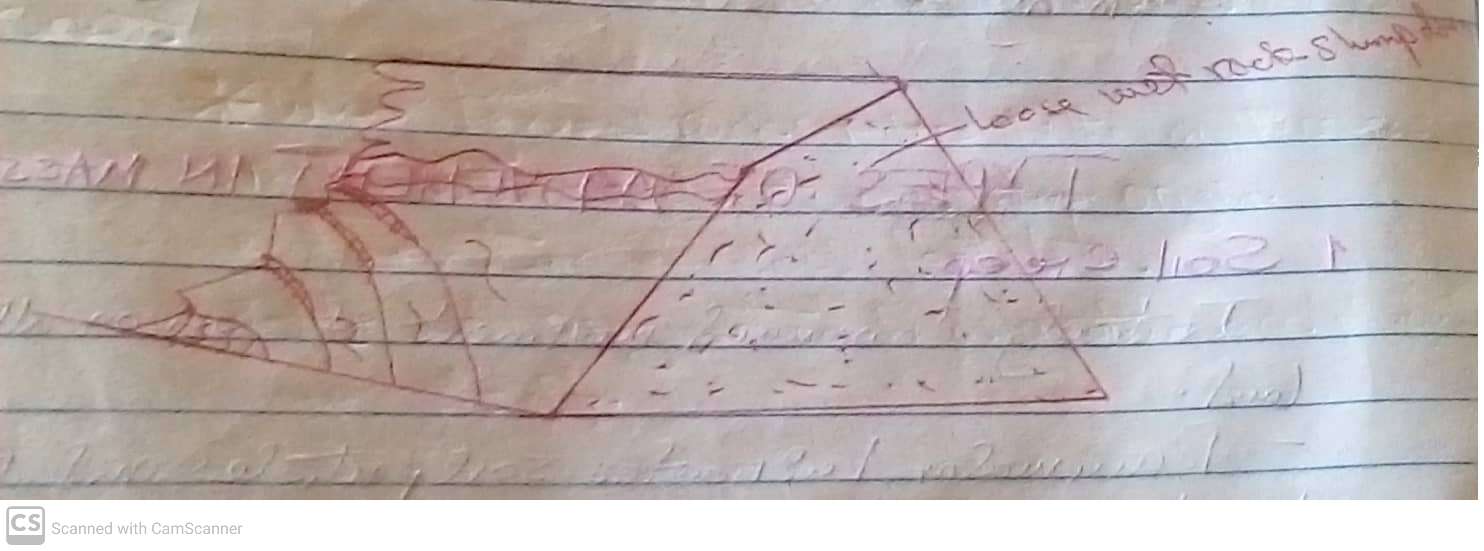
3. Land slide
It take place when large quantities of loosen rock and soil sudden slide together down the steeper slope.
Published from Blogger Prime Android App
4. Rock fall
Is the falling of mass of rock from a steep cliff this is most rapid of all eg.Mwanza
Published from Blogger Prime Android App
EFFECT OF MASS WASTING MOVEMENT
1. Formation of fertility soil
2.Tourist attraction
3.Land degradation eg.soil erosion
4.Damage of property
5.Loss of life
6.Creation of rocks

WEATHERING

WEATHERING

What is weathering?
Weathering is the physical or chemical disintegration of rock at the earth surface. Weathering can be classified into three type.

TYPES OF WEATHERING
1. Mechanical weathering
2. Chemical weathering
3. Biological weathering

1. MECHANICAL WEATHERING (PHYSICAL)
Is the physical disintegration and reduction in the size of the rock without changing their chemical composition. Example exfoliation, temperature change.

2. MECHANICAL WEATHERING
Is the decomposition or weakness of the rock through chemical process to form residual material example. Oxidation
*Oxidation is reaction of iron element with water and to form rust then reddis the disintegration of rock itself.

3. BIOLOGICAL WEATHERING
Is the disintegration or decay of rock and minerals caused by chemical or physical agent of organism.
Example: Rock disintegration by plant or root growth and acidic secretion.
  • Plant penetrate into cracks and crevices of rock and cause the rock split or break into smaller particles through chemical weathering
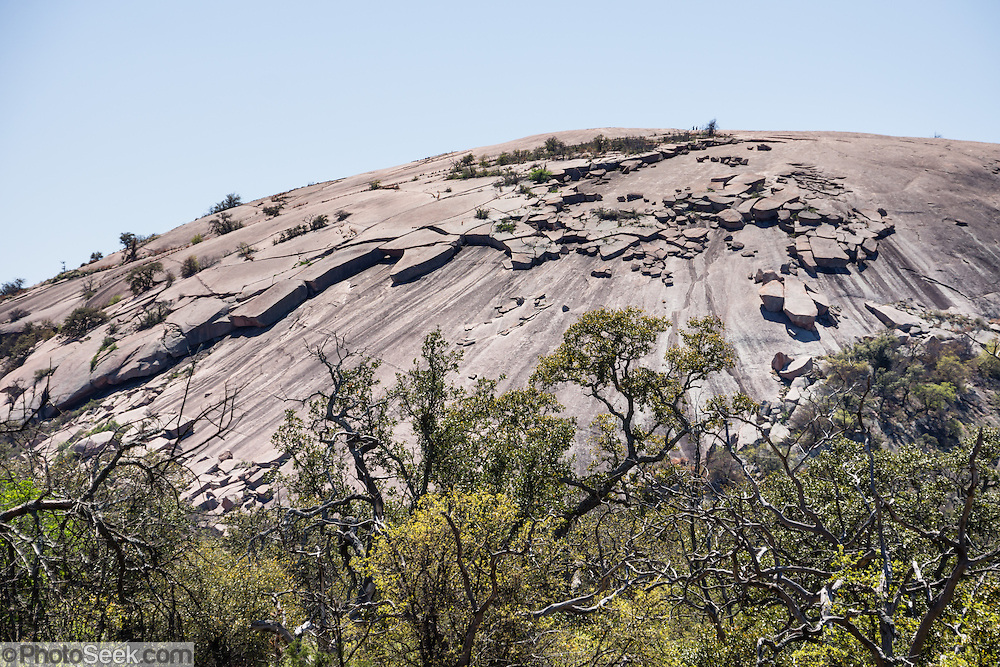
NB: Exfoliation is a pelling off the outer layer of the rock.It can occur both slowly or rapidly as a form of mass wasting.Large rock characterized by exfoliation is called exfoliation dome.
Published from Blogger Prime Android App
  • Erosion:is the physical removal and transportation of weathered material by water,wind,ice, gravity
  • Deposition (deposit):is the process by which weathered land eroded material are laid down or place in location that is from different from their source.
IMPORTANT OF WEATHERING
1. Source of land fertility
2. Tourist attraction
3. Creation of new features of rock

EFFECT OF WEATHERING
1. Damage of property
2. Loss of life(death)

DIFFERENTIAL WEATHERING
  • Rate are controlled by the type of weathering process and rock material
  • Harder rock typically weather slower than soft rock in the same environment
  • The differences in the rate of weathering due to rock type or other characteristic is called differential weathering
FEATURES FORMED UNDER WIND EROSION
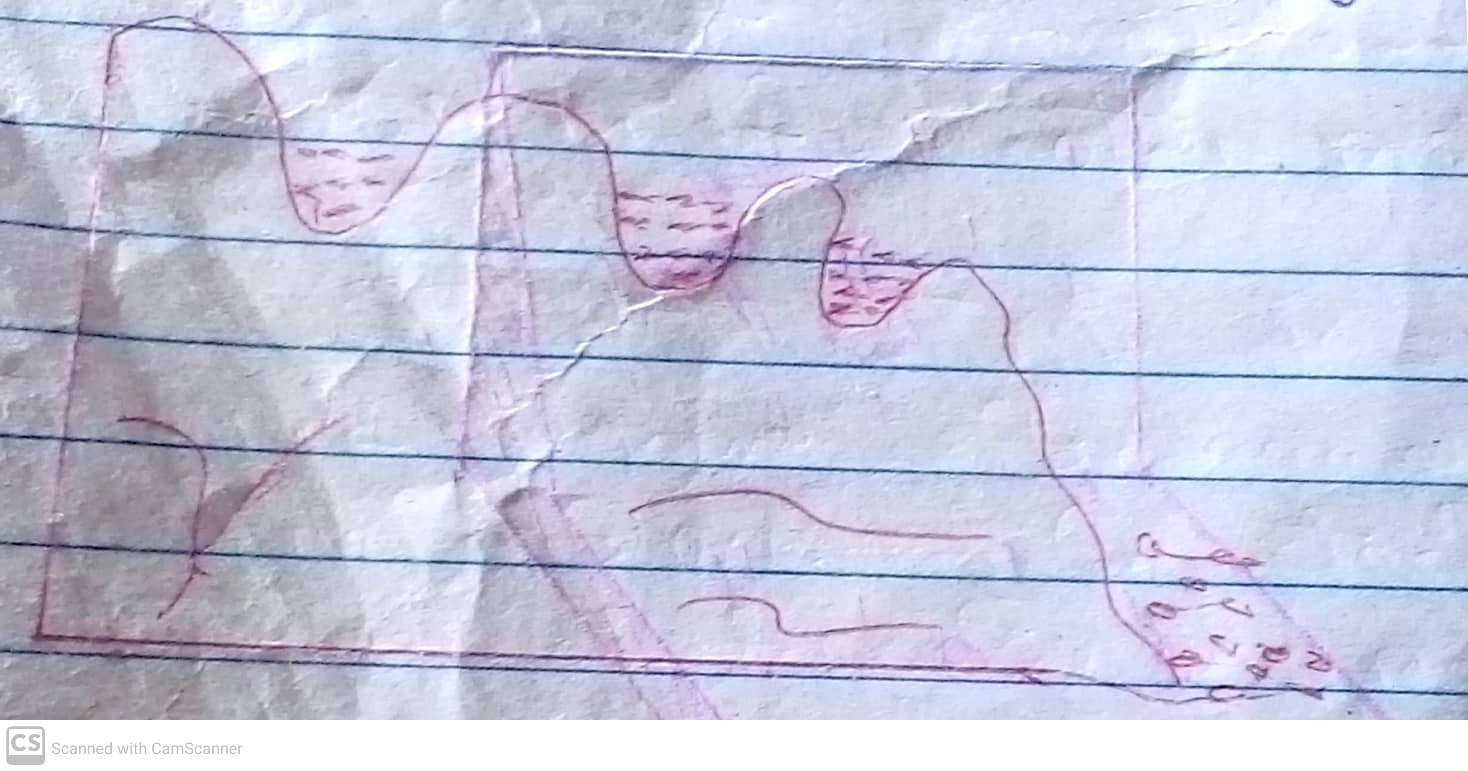
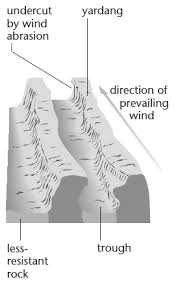
1. YADANGS: Yardangs are fascinating geological formations sculpted by wind erosion, typically found in desert environments. 
Published from Blogger Prime Android App
Here are some key points about yardangs:

### **Formation Process**
- **Wind Erosion**: Yardangs are formed by the persistent action of wind erosion. The wind carries particles that abrade the softer rock, leaving behind the harder, more resistant material.
- **Shape**: They are characterized by their elongated shape and steep sides, often aligned parallel to the prevailing wind direction.

### **Types and Sizes**
- **Mega-Yardangs**: These can be several kilometers long and hundreds of meters high, found in arid regions with strong winds.
- **Meso-Yardangs**: Generally a few meters high and 10 to 15 meters long, commonly found in semiconsolidated playa sediments.
- **Micro-Yardangs**: Only a few centimeters high, formed in softer materials.

### **Examples**
- **Qaidam Desert, China**: Known for its extensive yardang fields.
- **Mojave Desert, USA**: Another region where yardangs are prominently found.

### **Significance**
- **Geological Indicators**: Yardangs provide valuable information about past climatic conditions and wind patterns.
- **Tourist Attractions**: Their unique shapes and formations make them popular spots for tourists and photographers.

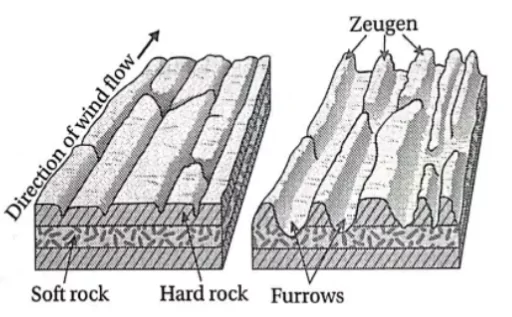
2. ZEUGENS: Zeugens are fascinating geological formations found in desert environments, created by the combined action of wind erosion and weathering. 
Published from Blogger Prime Android App
Here are some key points about zeugens:

### **Formation Process**
- **Differential Erosion**: Zeugens form when layers of hard rock overlay softer rock. Wind erosion and weathering processes erode the softer rock more quickly, leaving behind ridges of the harder rock.
- **Ridge and Furrow Landscape**: This differential erosion creates a landscape of alternating ridges (zeugens) and furrows.

### **Characteristics**
- **Height and Length**: Zeugens can vary in height, sometimes reaching up to 30 meters, and can be several meters long.
- **Shape**: They often have a flat, table-like appearance due to the erosion of the softer rock beneath the harder cap rock.

### **Examples**
- **Sahara Desert**: Zeugens are commonly found in the Sahara Desert, where the harsh desert winds and temperature fluctuations contribute to their formation.
- **Namib Desert**: Another region where zeugens are prominently found.

### **Significance**
- **Geological Indicators**: Zeugens provide valuable information about past climatic conditions and wind patterns in desert regions.
- **Tourist Attractions**: Their unique shapes and formations make them popular spots for tourists and photographers.

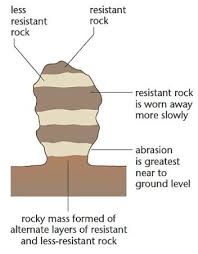
3. ROCK PEDESTAL:A rock pedestal, also known as a mushroom rock, is a naturally occurring rock formation that looks like a tall, thin column with a wider top, resembling a mushroom. These formations are the result of differential weathering and erosion processes.
Published from Blogger Prime Android App

### **Formation Process**
1. **Differential Weathering**: The rock pedestal forms when the softer rock at the base erodes faster than the harder rock on top. This differential weathering occurs due to the varying resistance of rock layers to weathering agents like wind, water, and temperature changes.
2. **Erosional Forces**: Wind abrasion and water erosion play significant roles in shaping the pedestal. The wind carries particles that abrade the softer rock at the base, while water runoff can further erode the lower parts.
3. **Stability**: The harder, more resistant rock at the top protects the softer rock beneath it from weathering, creating the distinctive mushroom shape.

### **Examples**
- **The Yardangs**: Found in desert regions, these elongated rock formations are often accompanied by rock pedestals.
- **Goblin Valley State Park, Utah**: Known for its numerous mushroom rock formations, shaped by wind and water erosion.

### **Significance**
- **Geological Indicator**: Rock pedestals provide valuable information about the geological history and environmental conditions of the region where they are found.
- **Tourist Attractions**: These unique formations are often popular tourist spots, attracting visitors and photographers.

Rock pedestals showcase the power of natural erosional processes and stand as striking features in various landscapes around the world.