Wednesday, March 05, 2025

VITU GANI VINASABABISHA BINADAMU KUZEEKA

Kuzeeka ni mchakato wa asili unaotokana na mchanganyiko wa sababu za kibaolojia, kijeni, na kimazingira. Sababu kuu zinazosababisha kuzeeka ni:

1. Uharibifu wa DNA

  • Kadri muda unavyosonga, DNA zetu hupata uharibifu kutokana na mambo kama mionzi, sumu, na makosa yanayotokea wakati wa kugawanyika kwa seli. Hili husababisha mwili kushindwa kujirekebisha ipasavyo.

2. Kupungua kwa Telomeres

  • Telomeres ni sehemu za mwisho za kromosomu ambazo hupungua kila wakati seli zinapogawanyika. Zinapokuwa fupi sana, seli hushindwa kugawanyika tena na hivyo kuzeeka.

3. Kujikusanya kwa Uharibifu wa Seli

  • Seli hukusanya kasoro na sumu mwilini, kama vile radikali huru (free radicals), ambazo husababisha uharibifu wa protini, mafuta, na DNA ndani ya seli.

4. Kupungua kwa Ufanisi wa Mifumo ya Mwili

  • Kadri mwili unavyozeeka, mifumo kama kinga, homoni, na usafishaji wa sumu mwilini hupungua ufanisi wake, hivyo kufanya mwili uwe dhaifu na rahisi kushambuliwa na magonjwa.

5. Mabadiliko ya Homoni

  • Viwango vya homoni kama vile estrogen na testosterone hupungua na kusababisha mabadiliko katika mwili kama kupungua kwa nguvu za misuli, ngozi kulegea, na mifupa kuwa dhaifu.

6. Athari za Mazingira na Mtindo wa Maisha

  • Ulaji mbovu, ukosefu wa mazoezi, uvutaji sigara, unywaji wa pombe kupita kiasi, na msongo wa mawazo huchochea kuzeeka haraka kwa kuchangia uharibifu wa seli.

Kwa kifupi, kuzeeka ni matokeo ya mwingiliano wa sababu nyingi za ndani ya mwili na mazingira ya nje. Hata hivyo, maisha yenye afya, chakula bora, na mazoezi vinaweza kusaidia kuchelewesha mchakato huu.

                              Msomihurutz

Tuesday, February 04, 2025

CELLS
Cells are the basic structural and functional units of all living organisms. They are often referred to as the "building blocks of life." 

Here are some key points about cells:

1. **Types of Cells**: Cells can be broadly classified into two main types:
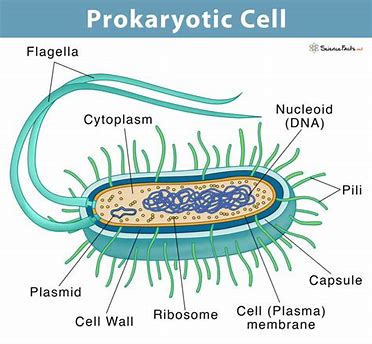
   - **Prokaryotic Cells**: These cells lack a true nucleus and membrane-bound organelles. Examples include bacteria and archaea.
Published from Blogger Prime Android App

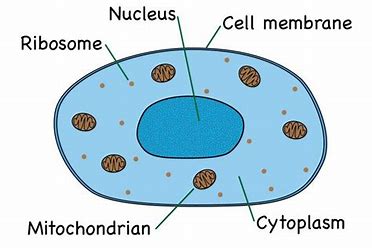
   - **Eukaryotic Cells**: These cells have a true nucleus and membrane-bound organelles. Examples include animal cells, plant cells, fungi, and protists.An animal cell is a type of eukaryotic cell that contains various organelles, each with specific functions.

 Here are the main components of an animal cell:

1. **Cell Membrane**: A flexible, semi-permeable barrier that surrounds the cell, controlling the movement of substances in and out of the cell.

2. **Cytoplasm**: A gel-like substance inside the cell that contains the organelles and is the site of various metabolic processes.

3. **Nucleus**: The control center of the cell, containing DNA and responsible for regulating gene expression and cell division.

4. **Nucleolus**: Located within the nucleus, it is involved in the production of ribosomes.

5. **Ribosomes**: Tiny organelles that are the site of protein synthesis, either floating in the cytoplasm or attached to the endoplasmic reticulum.

6. **Endoplasmic Reticulum (ER)**: A network of membranes involved in protein and lipid synthesis. It comes in two forms:
   - **Rough ER**: Studded with ribosomes and involved in protein synthesis.
   - **Smooth ER**: Lacks ribosomes and is involved in lipid synthesis and detoxification.

7. **Golgi Apparatus**: A stack of membranes that modify, sort, and package proteins and lipids for storage or transport out of the cell.

8. **Mitochondria**: The powerhouse of the cell, responsible for producing energy (ATP) through cellular respiration.

9. **Lysosomes**: Contain digestive enzymes that break down waste materials and cellular debris.

10. **Centrioles**: Involved in cell division, helping to organize the mitotic spindle.

11. **Cytoskeleton**: A network of protein filaments that provide structural support, help maintain the cell's shape, and facilitate movement.

12. **Vesicles**: Small membrane-bound sacs that transport substances within the cell.

Published from Blogger Prime Android App

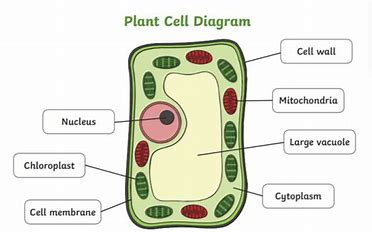
A plant cell is a type of eukaryotic cell that has unique structures and functions compared to animal cells. Here are the main components of a plant cell:

1. **Cell Wall**: A rigid outer layer that provides structure, support, and protection. It is primarily composed of cellulose.

2. **Cell Membrane**: A semi-permeable barrier just inside the cell wall that controls the movement of substances in and out of the cell.

3. **Cytoplasm**: The gel-like substance within the cell that contains organelles and is the site of various metabolic processes.

4. **Nucleus**: The control center of the cell that contains DNA and regulates gene expression and cell division.

5. **Nucleolus**: Found within the nucleus, it is involved in the production of ribosomes.

6. **Chloroplasts**: Organelles that contain chlorophyll and are the site of photosynthesis, converting sunlight into chemical energy.

7. **Mitochondria**: The powerhouse of the cell, responsible for producing energy (ATP) through cellular respiration.

8. **Vacuole**: A large, central sac that stores water, nutrients, and waste products. It also helps maintain turgor pressure, keeping the cell rigid.

9. **Endoplasmic Reticulum (ER)**: A network of membranes involved in protein and lipid synthesis. It comes in two forms:
   - **Rough ER**: Studded with ribosomes and involved in protein synthesis.
   - **Smooth ER**: Lacks ribosomes and is involved in lipid synthesis and detoxification.

10. **Golgi Apparatus**: A stack of membranes that modify, sort, and package proteins and lipids for storage or transport out of the cell.

11. **Ribosomes**: Small organelles that are the site of protein synthesis, either floating in the cytoplasm or attached to the rough ER.

12. **Plasmodesmata**: Channels between plant cell walls that allow for transport and communication between cells.

13. **Peroxisomes**: Organelles that contain enzymes for breaking down fatty acids and detoxifying harmful substances.

14. **Cytoskeleton**: A network of protein filaments that provide structural support, help maintain the cell's shape, and facilitate movement.
Published from Blogger Prime Android App


2. **Structure of Eukaryotic Cells**: Eukaryotic cells have a complex structure with various organelles, each performing specific functions. Key components include:
   - **Nucleus**: Contains the cell's genetic material (DNA) and controls cell activities.
   - **Mitochondria**: The powerhouse of the cell, responsible for producing energy (ATP) through cellular respiration.
   - **Endoplasmic Reticulum (ER)**: A network of membranes involved in protein and lipid synthesis. It includes rough ER (with ribosomes) and smooth ER (without ribosomes).
   - **Golgi Apparatus**: Modifies, sorts, and packages proteins and lipids for transport.
   - **Lysosomes**: Contain digestive enzymes that break down waste materials and cellular debris.
   - **Ribosomes**: Sites of protein synthesis.
   - **Cytoplasm**: A gel-like substance that fills the cell and contains organelles.
   - **Cell Membrane**: A semi-permeable barrier that controls the movement of substances in and out of the cell.
   - **Cytoskeleton**: A network of protein filaments that provide structural support and facilitate movement.

3. **Functions of Cells**: Cells perform various functions essential for life, including:
   - **Metabolism**: Chemical reactions that provide energy and build cellular components.
   - **Growth and Reproduction**: Cells grow, divide, and replicate their genetic material.
   - **Response to Stimuli**: Cells can sense and respond to changes in their environment.
   - **Homeostasis**: Cells maintain a stable internal environment.

4. **Specialized Cells**: In multicellular organisms, cells differentiate into specialized types with distinct functions. Examples include nerve cells, muscle cells, blood cells, and skin cells.

5. **Cell Division**: Cells reproduce through processes such as mitosis (for growth and repair) and meiosis (for sexual reproduction
THE CONCEPT OF BIOLOGY
Biology is the scientific study of life and living organisms, encompassing their structure, function, growth, evolution, distribution, and taxonomy. It's a vast and diverse field that explores all aspects of life, from the molecular level to entire ecosystems.

 Here are some key areas within biology:

1. **Cell Biology**: The study of cells, their structure, function, and processes. It includes the study of cell division, cell signaling, and cell metabolism.

2. **Genetics**: The study of heredity and variation in organisms. It involves understanding how traits are passed from one generation to the next through genes.

3. **Ecology**: The study of interactions between organisms and their environment. It looks at ecosystems, biodiversity, and the impact of human activity on the natural world.

4. **Evolutionary Biology**: The study of the origins and changes in the diversity of life over time. It involves understanding natural selection, adaptation, and speciation.

5. **Physiology**: The study of the functions and mechanisms in living organisms. It covers various systems within organisms, such as the nervous, circulatory, and respiratory systems.

6. **Anatomy**: The study of the physical structure of organisms. It includes the examination of organs, tissues, and cells.

7. **Microbiology**: The study of microorganisms, including bacteria, viruses, fungi, and protozoa. It explores their roles in health, disease, and the environment.

8. **Botany**: The study of plants, including their physiology, structure, genetics, ecology, distribution, and classification.

9. **Zoology**: The study of animals and their behavior, physiology, classification, and distribution.

10. **Biochemistry**: The study of the chemical processes within and related to living organisms. It bridges biology and chemistry by looking at processes such as enzyme function, metabolism, and DNA replication.

11. **Molecular Biology**: The study of biological molecules and their interactions. It focuses on the molecular mechanisms that underlie biological processes.

Studying biology is essential for understanding the complexities of life and the natural world. Here are some key reasons why studying biology is important:

1. **Understanding Living Organisms**: Biology helps us comprehend the structure, function, and behavior of living organisms, from microscopic bacteria to complex multicellular organisms like humans.

2. **Advancing Medical Science**: Knowledge of biology is fundamental to medical research and healthcare. It enables the development of treatments, vaccines, and diagnostic tools to combat diseases and improve human health.

3. **Environmental Conservation**: Biology provides insights into ecosystems and biodiversity, helping us understand the impact of human activities on the environment and informing conservation efforts to protect endangered species and habitats.

4. **Improving Agriculture**: Biological research contributes to advancements in agriculture, including the development of disease-resistant crops, sustainable farming practices, and biotechnology applications that enhance food production.

5. **Biotechnology and Innovation**: Biology is at the core of biotechnology, leading to innovations in fields such as genetic engineering, pharmaceuticals, and biofuels, which have significant societal and economic impacts.

6. **Solving Global Challenges**: Biological knowledge is crucial for addressing global challenges such as climate change, food security, and public health crises. It provides the scientific foundation for developing solutions to these pressing issues.

7. **Enhancing Education and Critical Thinking**: Studying biology fosters critical thinking, analytical skills, and a scientific mindset. It encourages curiosity and a deeper appreciation for the natural world.

8. **Personal Health and Well-being**: Understanding biology empowers individuals to make informed decisions about their health, nutrition, and lifestyle, leading to better overall well-being.

Biology is a dynamic and ever-evolving field that continually contributes to our knowledge and quality of life. If you have any specific questions or want to explore a particular area of biology further, feel free to ask!

Sunday, February 02, 2025

LIVING THINGS (ORGANISM)
Living things, also known as organisms, are entities that exhibit the characteristics of life. These characteristics include growth, reproduction, response to stimuli, metabolism, and the ability to maintain homeostasis. 

Characteristic of living things:

1. **Growth and Development**: Living things grow by increasing in size and often undergo development to reach maturity.
   - *Example*: A seed grows into a mature plant.

2. **Reproduction**: Living organisms have the ability to produce offspring, ensuring the continuation of their species.
   - *Example*: Animals can reproduce sexually or asexually.

3. **Response to Stimuli**: Organisms can respond to environmental changes or stimuli, such as light, temperature, and touch.
   - *Example*: A plant bending towards light (phototropism).

4. **Metabolism**: Living things carry out chemical reactions to maintain life, including breaking down nutrients for energy and synthesizing new molecules.
   - *Example*: Humans digest food to obtain energy.

5. **Homeostasis**: Organisms regulate their internal environment to maintain a stable, constant condition.
   - *Example*: Humans maintain a constant body temperature.

6. **Cellular Organization**: All living things are composed of one or more cells, which are the basic units of life.
   - *Example*: Bacteria are single-celled organisms, while humans are multicellular.

Living things can be broadly categorized into different groups based on their characteristics:

1. **Animals**: Multicellular organisms that are usually mobile and obtain energy by consuming other organisms.Animals are a diverse group of living organisms that share certain characteristics, such as mobility, the ability to respond to stimuli, and the consumption of organic material for energy. 

Classification  of animals:

1. **Classification**: Animals can be classified into various groups based on their characteristics. The main categories include:

1. MAMMALIA

   - **Mammals**: Warm-blooded animals with fur or hair that give birth to live young and produce milk (e.g., humans, dogs, elephants).

   - **Birds**: Warm-blooded animals with feathers, beaks, and the ability to lay eggs (e.g., eagles, sparrows, penguins).

   - **Reptiles**: Cold-blooded animals with scaly skin that typically lay eggs (e.g., snakes, lizards, turtles).

   - **Amphibians**: Cold-blooded animals that can live both in water and on land, often undergoing metamorphosis (e.g., frogs, salamanders, newts).

   - **Fish**: Cold-blooded animals that live in water and have gills for breathing (e.g., sharks, salmon, goldfish).

The following below are  the main features that define mammals:

1. **Warm-Blooded (Endothermic)**: Mammals can regulate their body temperature internally, allowing them to maintain a constant body temperature regardless of the environment.

2. **Hair or Fur**: All mammals have hair or fur on their bodies at some stage of their life. This provides insulation and protection.

3. **Mammary Glands**: Female mammals possess mammary glands that produce milk to nourish their young.

4. **Three Middle Ear Bones**: Mammals have three tiny bones in the middle ear known as the malleus, incus, and stapes, which help in transmitting sound vibrations to the inner ear.

5. **Live Birth**: Most mammals give birth to live young (viviparous), although there are exceptions like monotremes (e.g., the platypus and echidna) that lay eggs.

6. **Four-Chambered Heart**: Mammals have a four-chambered heart, which allows for efficient circulation and separation of oxygenated and deoxygenated blood.

7. **Diaphragm**: Mammals have a muscular diaphragm that aids in breathing by contracting and expanding the thoracic cavity.

8. **Differentiated Teeth**: Mammals possess different types of teeth (incisors, canines, premolars, and molars) adapted for various functions such as cutting, tearing, and grinding food.

9. **Large Brains**: Mammals generally have larger and more complex brains compared to other animals, which allows for higher cognitive functions and complex behaviors.

10. **Internal Fertilization**: Fertilization in mammals occurs internally, and the developing embryo is usually supported within the mother's body until birth.

   - **Invertebrates**: Animals without a backbone, including insects, arachnids, mollusks, and crustaceans (e.g., butterflies, spiders, octopuses, crabs).

2. **Adaptations**: Animals have developed various adaptations to survive in their environments. These adaptations can be physical (e.g., camouflage, specialized limbs) or behavioral (e.g., migration, hibernation).

3. **Habitat**: Animals can be found in diverse habitats, from deep oceans and dense forests to arid deserts and polar ice caps. Each species is adapted to thrive in its specific environment.

4. **Diet**: Animals can be herbivores (plant-eaters), carnivores (meat-eaters), omnivores (both plant and meat-eaters), or detritivores (decomposers).

5. **Reproduction**: Animals reproduce in various ways, including sexual reproduction (requiring a male and female) and asexual reproduction (a single organism produces offspring).

6. **Communication**: Animals use various methods to communicate, such as vocalizations, body language, chemical signals, and visual displays.

7. **Behavior**: Animal behavior can be instinctual or learned and includes activities such as hunting, mating, nesting, and social interactions.

Animals play crucial roles in ecosystems, serving as predators, prey, pollinators, and decomposers. They contribute to the balance of nature and the health of the environment.

2.PLANT

2. **Plants**: Multicellular organisms that typically produce their own food through photosynthesis.

Plants are fascinating and diverse organisms that play a crucial role in our ecosystems and daily lives.

 Here are some key aspects of plants:

1. **Photosynthesis**: Plants are unique in their ability to produce their own food through photosynthesis. They use sunlight, carbon dioxide, and water to create glucose (a form of sugar) and oxygen. This process occurs in the chloroplasts, which contain the green pigment chlorophyll.

2. **Structure**: Plants have several main parts, each with specific functions:
   - **Roots**: Anchor the plant in the soil and absorb water and nutrients.
   - **Stems**: Support the plant and transport water, nutrients, and food between the roots and leaves.
   - **Leaves**: The main site of photosynthesis and gas exchange.
   - **Flowers**: Reproductive structures that produce seeds.
   - **Fruits**: Enclose and protect seeds, aiding in their dispersal.

Plants are incredibly diverse and can be categorized into different types based on their characteristics and life cycles. Here are the main types of plants:

1. **Flowering Plants (Angiosperms)**: These are the most diverse and widespread group of plants. They produce flowers and seeds enclosed within a fruit.
   - *Examples*: Roses, sunflowers, apple trees

2. **Non-Flowering Plants**: These plants do not produce flowers. They can be further divided into:
   - **Gymnosperms**: Produce seeds that are not enclosed in a fruit.
     - *Examples*: Pine trees, fir trees, cycads
   - **Ferns and Allies**: Reproduce via spores rather than seeds.
     - *Examples*: Ferns, horsetails, clubmosses
   - **Mosses and Liverworts**: Small, non-vascular plants that reproduce via spores.
     - *Examples*: Mosses, liverworts, hornworts

3. **Herbaceous Plants**: These plants have soft, green stems that die back at the end of the growing season. They can be annuals, biennials, or perennials.
   - *Examples*: Tulips (annuals), foxgloves (biennials), daisies (perennials)

4. **Woody Plants**: These plants have hard, woody stems that persist year after year. They include trees, shrubs, and vines.
   - **Trees**: Large plants with a single main trunk.
     - *Examples*: Oak trees, maple trees, eucalyptus
   - **Shrubs**: Smaller than trees, with multiple stems.
     - *Examples*: Azaleas, hydrangeas, holly
   - **Vines**: Plants that climb or trail along the ground.
     - *Examples*: Ivy, grapevines, morning glories

5. **Aquatic Plants**: These plants live in water or moist environments.
   - *Examples*: Water lilies, cattails, duckweed

6. **Succulents and Cacti**: These plants have thick, fleshy parts that store water, making them well-suited to arid environments.
   - *Examples*: Aloe vera, cacti, jade plant

Plants play essential roles in ecosystems, providing oxygen, food, and habitat for other organisms. 

3. **Fungi**: Organisms that absorb nutrients from organic matter, including molds, yeasts, and mushrooms.

4. **Protists**: A diverse group of single-celled or simple multicellular organisms, such as amoebas and algae.

5. **Bacteria**: Single-celled microorganisms that can be found in various environments.

6. **Archaea**: Single-celled organisms similar to bacteria but with distinct genetic and biochemical characteristics.

Plants are truly remarkable and play a vital role in sustaining life on our planet.
KINGA YA MWILI
Kinga ya mwili ni mfumo wa ulinzi wa mwili dhidi ya magonjwa na vijidudu. Mfumo wa kinga husaidia mwili kujikinga dhidi ya vimelea kama vile bakteria, virusi, fangasi, na vimelea wengine hatari. Kuna aina mbili kuu za kinga ya mwili:

1. **Kinga Asilia (Innate Immunity)**: Hii ni kinga ya awali ya mwili ambayo hufanya kazi haraka dhidi ya wadudu. Inajumuisha vizuizi vya kimwili kama vile ngozi na ute wa kamasi, vizuizi vya kikemikali kama vile asidi ya tumbo, na seli za kinga zinazoangamiza vimelea.

2. **Kinga ya Kichocheo (Adaptive Immunity)**: Hii ni kinga inayojitokeza baada ya mwili kukutana na vimelea maalum. Inahusisha uzalishaji wa kingamwili na seli za kinga ambazo hukumbuka vimelea maalum, hivyo basi kutoa ulinzi wa muda mrefu dhidi ya mashambulizi ya baadaye.

Mbali na hizo aina kuu, kuna kinga ya ziada kama:

- **Kinga ya Muda (Passive Immunity)**: Kinga inayopatikana kwa muda kupitia kingamwili kutoka chanzo kingine, kama vile mama kwa mtoto kupitia maziwa ya mama au kupitia bidhaa za damu zilizo na kingamwili.

- **Kinga ya Kudumu (Active Immunity)**: Kinga inayotokana na mwili kujitengenezea kingamwili baada ya kukutana na vimelea au kupitia chanjo.

 Hapa kuna sababu kadhaa zinazofanya kinga ya mwili kuwa muhimu:

1. **Kuzuia Magonjwa**: Mfumo wa kinga husaidia kuzuia maambukizi kwa kutambua na kushambulia vijidudu kama vile bakteria, virusi, na fangasi. Hii inapunguza hatari ya kuugua na kuimarisha afya ya mwili.

2. **Kupona Haraka**: Mfumo imara wa kinga husaidia mwili kupona haraka kutoka kwa maambukizi na magonjwa. Huweza kutambua na kuangamiza vijidudu kwa ufanisi, hivyo kupunguza muda na ukali wa magonjwa.

3. **Ulinzi wa Muda Mrefu**: Mfumo wa kinga ya kichocheo una seli za kumbukumbu ambazo hukumbuka vijidudu vilivyowahi kuvamia mwili. Hii inaruhusu mwili kujibu haraka na kwa ufanisi zaidi endapo vijidudu hivyo vitaingia tena, kutoa ulinzi wa muda mrefu.

4. **Kuzuia Saratani**: Mfumo wa kinga unaweza kutambua na kuangamiza seli zisizo za kawaida, ikiwa ni pamoja na seli za saratani, kabla hazijageuka kuwa uvimbe. Hii ni muhimu sana katika kuzuia maendeleo ya saratani.

5. **Mwitikio kwa Chanjo**: Chanjo huchochea mfumo wa kinga kuzalisha majibu ya kinga bila kusababisha ugonjwa. Mfumo wa kinga wenye afya unajibu kwa ufanisi kwa chanjo, kutoa kinga dhidi ya maambukizi maalum.

6. **Afya na Ustawi Jumla**: Mfumo wa kinga wenye nguvu huchangia afya na ustawi wa jumla kwa kuweka mwili huru kutokana na maambukizi na magonjwa. Pia husaidia kudhibiti msongo wa mawazo na kudumisha mazingira ya ndani yenye usawa.

Kukosa kinga ya mwili au kuwa na kinga dhaifu kunaweza kusababisha matatizo mbalimbali ya kiafya, kwani mwili unakuwa hauwezi kujikinga ipasavyo dhidi ya maambukizi na magonjwa. Hapa kuna madhara kadhaa yatokanayo na kukosa kinga ya mwili:

1. **Kuongezeka kwa Maambukizi**: Mwili unakuwa rahisi kushambuliwa na bakteria, virusi, fangasi, na vimelea vingine, na hivyo kusababisha maambukizi ya mara kwa mara kama vile mafua, homa, na maambukizi ya njia ya mkojo.

2. **Kupona Polepole**: Maambukizi na magonjwa yanaweza kuchukua muda mrefu kupona, na urejesho wa afya unakuwa wa polepole kutokana na uwezo mdogo wa mwili kupambana na vijidudu.

3. **Magonjwa sugu**: Upungufu wa kinga unaweza kusababisha maambukizi sugu na magonjwa yanayosumbua ambayo ni magumu kutibu na kudhibiti, kama vile maambukizi sugu ya njia ya upumuaji na utumbo.

4. **Maambukizi yanayoambatana na kinga dhaifu (Opportunistic Infections)**: Haya ni maambukizi yanayotokea mara nyingi na kuwa makali zaidi kwa watu wenye kinga dhaifu. Mifano ni pamoja na nimonia, kifua kikuu, na maambukizi ya fangasi.

5. **Magonjwa ya kingamwili (Autoimmune Disorders)**: Katika baadhi ya kesi, mfumo wa kinga unaweza kushambulia seli na tishu za mwili wenyewe, na kusababisha magonjwa ya kingamwili kama vile baridi yabisi (rheumatoid arthritis), lupus, na multiple sclerosis.

6. **Uwezekano wa Saratani**: Mfumo wa kinga unasaidia kutambua na kuangamiza seli zisizo za kawaida, ikiwa ni pamoja na seli za saratani. Kinga dhaifu inaweza kuwa na ufanisi mdogo katika kuzuia maendeleo na kuenea kwa saratani.

7. **Afya Duni ya Jumla**: Kukosa kinga ya mwili kunaweza kuchangia afya duni ya jumla, uchovu, na kupungua kwa ubora wa maisha kutokana na mapambano ya mara kwa mara na maambukizi na magonjwa.

Ni muhimu kudumisha mfumo mzuri wa kinga ili kuimarisha afya na kuzuia magonjwa. Lishe bora, mazoezi ya mara kwa mara, usingizi wa kutosha, na kudhibiti msongo wa mawazo ni mambo muhimu yanayosaidia kuimarisha kinga ya mwili. Ikiwa una maswali zaidi au unahitaji maelezo ya ziada, usisite kuniuliza!
BODY IMMUNITY
Immunity refers to the body's ability to defend itself against pathogens, such as bacteria, viruses, and other harmful substances. The immune system is a complex network of cells, tissues, and organs that work together to protect the body.

 There are two main types of immunity:

1. **Innate Immunity**: This is the body's first line of defense and is non-specific, meaning it responds to all pathogens in the same way. It includes physical barriers (like skin and mucous membranes), chemical barriers (such as stomach acid), and immune cells that attack invaders.

2. **Adaptive Immunity**: This type of immunity is specific and developed over time. It involves the production of antibodies by B cells and the activation of T cells that recognize and remember specific pathogens. This allows for a faster and stronger response upon subsequent exposures to the same pathogen.

Within these two main categories, there are additional forms of immunity:

- **Passive Immunity**: Temporary immunity gained through antibodies from another source, such as mother to baby through breast milk or through antibody-containing blood products.
  
- **Active Immunity**: Long-lasting immunity developed after exposure to a pathogen or through vaccination, where the body produces its own antibodies.

 Here are some important aspects of immunity:

1. **Disease Prevention**: Immunity helps to prevent infections by recognizing and attacking pathogens such as bacteria, viruses, and fungi. This reduces the risk of illnesses and keeps the body healthy.

2. **Faster Recovery**: A strong immune system can help the body recover more quickly from infections and illnesses. It efficiently identifies and destroys harmful invaders, minimizing the duration and severity of illnesses.

3. **Long-term Protection**: The adaptive immune system has memory cells that remember previous encounters with pathogens. This allows for a faster and more effective response if the same pathogen is encountered again, providing long-term protection.

4. **Cancer Prevention**: The immune system can detect and destroy abnormal cells, including cancerous cells, before they can develop into tumors. This is a crucial aspect of cancer prevention.

5. **Response to Vaccination**: Vaccines stimulate the immune system to produce a protective response without causing disease. A healthy immune system responds effectively to vaccines, providing immunity against specific infections.

6. **Overall Health and Well-being**: A strong immune system contributes to overall health and well-being by keeping the body free from infections and diseases. It also helps in managing stress and maintaining a balanced internal environment.

A weakened or compromised immune system can lead to a variety of health issues, as the body becomes less capable of defending itself against infections and diseases. Here are some potential effects of a lack of immunity:

1. **Increased Susceptibility to Infections**: With a weakened immune system, the body is more prone to infections caused by bacteria, viruses, fungi, and other pathogens. Common colds, flu, and other infections may occur more frequently and with greater severity.

2. **Longer Recovery Times**: Infections may take longer to heal, and recovery from illnesses can be prolonged due to the body's reduced ability to fight off pathogens effectively.

3. **Chronic Illnesses**: A compromised immune system can lead to chronic infections and illnesses that are difficult to manage and treat, such as persistent respiratory infections, urinary tract infections, and gastrointestinal infections.

4. **Opportunistic Infections**: These are infections that occur more frequently and are more severe in individuals with weakened immune systems. Examples include pneumonia, tuberculosis, and certain fungal infections.

5. **Autoimmune Disorders**: In some cases, a malfunctioning immune system may mistakenly attack the body's own healthy cells and tissues, leading to autoimmune disorders such as rheumatoid arthritis, lupus, and multiple sclerosis.

6. **Cancer Susceptibility**: The immune system plays a role in detecting and destroying abnormal cells, including cancer cells. A weakened immune system may be less effective at preventing the development and spread of cancer.

7. **Overall Poor Health**: A lack of immunity can contribute to overall poor health, fatigue, and a decreased quality of life due to the constant battle with infections and illnesses.

Maintaining a healthy immune system is crucial for overall well-being. A balanced diet, regular exercise, adequate sleep, and stress management are important factors in supporting immune function. If you have any specific concerns about immunity or health, it's always best to consult with a healthcare professional.