Dec 20, 2024

TRIANGLE SLAVE TRADE

TRIANGLE SLAVE TRADE

Published from Blogger Prime Android App
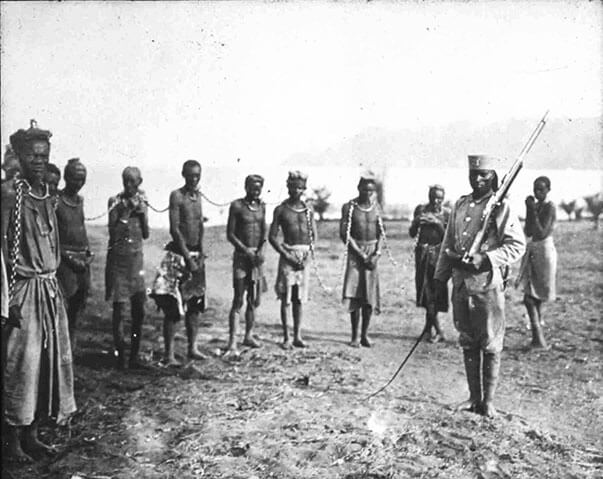
The Triangular Slave Trade**, also known as the **Transatlantic Slave Trade**, was a system of trade that involved three regions: Europe, Africa, and the Americas. Here's a concise overview of its causes and effects:

The **Triangular Slave Trade** was driven by several key factors:

1. **Economic Demand**: European colonies in the Americas required a large labor force to work on plantations growing cash crops like sugar, tobacco, and cotton. Enslaved Africans were seen as a solution to this labor shortage.

2. **Profit Motive**: The trade was highly profitable for European merchants and investors. They could buy enslaved people in Africa at a low cost and sell them at a high price in the Americas.

3. **European Expansion**: As European nations expanded their territories in the Americas, they needed more labor to exploit the resources of these new colonies.

4. **African Participation**: Some African leaders and merchants participated in the trade by capturing and selling people from rival communities or those captured in wars.

5. **Technological Advancements**: Improvements in shipbuilding and navigation made long sea voyages more feasible, facilitating the large-scale transport of enslaved people across the Atlantic.

The **Triangular Slave Trade** had profound and far-reaching effects on Africa, the Americas, and Europe. Here are some of the key impacts:

### Effects on Africa:
1. **Depopulation**: Millions of Africans were forcibly taken from their homes, leading to significant population loss, especially among young and able-bodied individuals¹.
2. **Social Disruption**: The trade caused widespread social instability, as communities were torn apart and traditional structures were disrupted¹.
3. **Economic Stagnation**: The loss of a large portion of the workforce hindered economic development and agricultural productivity in many regions¹.
4. **Increased Violence**: The demand for enslaved people fueled conflicts and wars among African states and communities, as they sought to capture and sell prisoners¹.

### Effects on the Americas:
1. **Economic Growth**: The labor of enslaved Africans was crucial to the economic development of the American colonies, particularly in the plantation economies of the Caribbean and the southern United States².
2. **Cultural Influence**: African cultures, traditions, and knowledge significantly influenced the cultural landscape of the Americas, contributing to music, cuisine, language, and religion².
3. **Social Stratification**: The establishment of a racial hierarchy and the systemic exploitation of enslaved people laid the foundations for long-lasting racial inequalities and social divisions².

### Effects on Europe:
1. **Wealth Accumulation**: European nations and merchants amassed great wealth from the trade, which helped finance the Industrial Revolution and further European expansion².
2. **Moral and Ethical Debates**: The brutality of the trade eventually sparked strong opposition and abolitionist movements, leading to the eventual end of the transatlantic slave trade².

Dec 19, 2024

BERLIN CONFERENCE

BERLIN CONFERENCE

The **Berlin Conference** of 1884-1885, also known as the **Berlin West Africa Conference**, was a significant event where European powers met to discuss and formalize their claims to African territory during the period of New Imperialism¹². The conference was organized by **Otto von Bismarck**, the Chancellor of Germany, and was attended by representatives from 14 countries¹.

### Key Points of the Berlin Conference:
1. **Regulation of Colonization and Trade**: The conference aimed to regulate European colonization and trade in Africa, particularly in the Congo River basin².
2. **General Act of Berlin**: This act declared the Congo River basin neutral, guaranteed freedom for trade and shipping, and forbade slave trading².
3. **Partition of Africa**: The conference is often seen as formalizing the "Scramble for Africa," where European powers divided the continent into spheres of influence¹³.
4. **Impact on Africa**: The decisions made at the conference led to increased colonial activity and significantly impacted the political and social structures of African societies¹.

The conference did not immediately set most of Africa's borders; many of these were established in the following decades¹. The outcomes of the Berlin Conference had long-lasting effects on the continent, contributing to the complex colonial history of Africa.

The **Berlin Conference** of 1884-1885 was primarily driven by several key factors:

1. **European Rivalries**: European powers were competing for control over African territories to expand their empires and secure resources¹².
2. **Economic Interests**: The industrial revolution increased the demand for raw materials and new markets, prompting European nations to seek control over African resources³.
3. **Strategic Concerns**: Control over certain regions in Africa was seen as strategically important for maintaining and expanding global influence².
4. **Humanitarian and Civilizing Missions**: Some European leaders, like King Leopold II of Belgium, promoted the idea of "civilizing" Africa, although this often masked economic and political motives¹.

These factors combined to create a situation where European powers felt the need to formalize their claims and avoid conflicts among themselves, leading to the Berlin Conference.

The **Berlin Conference** of 1884-1885 had profound and lasting impacts on Africa:

1. **Partition of Africa**: The conference formalized the division of Africa among European powers, leading to the establishment of colonial borders that often disregarded existing ethnic, cultural, and political boundaries¹².

2. **Colonial Rule**: The agreements made at the conference paved the way for increased European colonization, resulting in the exploitation of African resources and people¹³.

3. **Disruption of Societies**: Traditional social structures and governance systems were disrupted as European powers imposed their own administrative systems and values³.

4. **Economic Exploitation**: The colonial powers extracted vast amounts of resources from Africa, often with little regard for the well-being of local populations³.

5. **Cultural Impact**: The imposition of Western education, religion, and cultural practices eroded indigenous customs and traditions³.

6. **Long-term Conflicts**: The arbitrary borders drawn during the conference have contributed to ongoing conflicts and political instability in many African countries¹.

These impacts have shaped the historical and contemporary landscape of Africa, influencing its development and the challenges it faces today.


UFUNGAJI BORA WA KUKU
Published from Blogger Prime Android App
Ufugaji bora wa kuku unahitaji mbinu na uangalizi wa hali ya juu ili kuhakikisha uzalishaji mzuri na afya bora ya kuku wako. Hapa kuna baadhi ya vidokezo muhimu:

Kuku wanaweza kuathiriwa na magonjwa mbalimbali. Hapa kuna baadhi ya magonjwa ya kawaida ya kuku pamoja na dalili na tiba zake:

1. **Mdondo (Newcastle Disease)**:
   - **Dalili**: Kukohoa, kuhema kwa shida, ute kutoka mdomoni na puani, kizunguzungu, kuharisha kijani na njano, kuzubaa, na mabawa kushuka.
   - **Tiba**: Ugonjwa huu hauna tiba, lakini unaweza kuzuiwa kwa kuchanja kuku mara kwa mara².

2. **Kuharisha Damu (Coccidiosis)**:
   - **Dalili**: Kinyesi chenye damu, kudhoofika, mabawa kushuka.
   - **Tiba**: Dawa za sulphonamides (ESB3) au Amprolium kwa siku 3-4. Usafi wa banda ni muhimu kuzuia ugonjwa huu².

3. **Homa ya Matumbo (Fowl Typhoid)**:
   - **Dalili**: Uharo mweupe au wa kijani, vifo vya kuku, rangi ya minofu kuwa ya njano, viungo vya ndani kuvimba.
   - **Tiba**: Dawa za antibiotiki kama furazolidone. Usafi wa banda na vyombo vya kulishia ni muhimu².

4. **Mafua ya Kuku (Infectious Coryza)**:
   - **Dalili**: Kuvimba uso, macho kutoa machozi, kukohoa, na kupumua kwa shida.
   - **Tiba**: Dawa za antibiotiki kama sulfadimethoxine au erythromycin. Usafi wa banda na kutenga kuku wagonjwa ni muhimu¹.

5. **Ndui ya Kuku (Fowl Pox)**:
   - **Dalili**: Vidonda kwenye ngozi na mdomo, kupungua kwa uzito, na kushuka kwa uzalishaji wa mayai.
   - **Tiba**: Hakuna tiba maalum, lakini chanjo inaweza kusaidia kuzuia ugonjwa huu¹.

Ni muhimu kuhakikisha kuwa banda la kuku ni safi na kavu wakati wote, na kuchanja kuku mara kwa mara ili kuzuia magonjwa haya. 

Njia sahihi za kutunza kuku ili wawe bora

1. **Banda Bora**: Hakikisha banda linaingiza hewa na mwanga wa kutosha. Liwe safi na lenye nafasi ya kutosha kwa kuku wako¹.

2. **Chakula Bora**: Chakula kinachotolewa kinapaswa kuwa na virutubisho vyote muhimu kama vile wanga, protini, madini, na vitamini. Chakula bora huchangia asilimia kubwa ya mafanikio katika ufugaji².

3. **Afya na Usafi**: Ni muhimu kuwa na mtaalamu wa mifugo ambaye atahakikisha afya ya kuku wako. Pia, hakikisha unatoa chanjo na tiba zinazohitajika kwa wakati¹.

4. **Uleaji wa Vifaranga**: Vifaranga wanahitaji uangalizi maalum, ikiwa ni pamoja na joto la kutosha na chakula bora. Kitalu kinachotoa joto na mwanga ni muhimu kwa ukuaji wao².

5. **Kuzuia Magonjwa**: Magonjwa kama vile coccidiosis na minyoo yanaweza kuzuiwa kwa usafi wa mazingira na chakula bora. Pia, epuka kununua vifaranga kutoka vyanzo visivyoaminika².

6. **Soko**: Tafuta masoko ya uhakika kwa ajili ya kuku na mayai yako. Hii itakusaidia kupata faida nzuri na kuendeleza mradi wako¹.

Ufugaji bora wa kuku una faida nyingi, zikiwemo:

1. **Chanzo cha Kipato**: Ufugaji wa kuku unaweza kuwa chanzo kikubwa cha kipato kwa kuuza nyama na mayai¹.
2. **Lishe Bora**: Kuku hutoa nyama na mayai yenye protini nyingi, muhimu kwa lishe bora ya binadamu¹.
3. **Ajira**: Ufugaji wa kuku unaweza kutoa ajira kwa jamii, hasa kwa vijana na wanawake³.
4. **Gharama Ndogo za Uendeshaji**: Ufugaji wa kuku, hasa wa kienyeji, una gharama ndogo za uendeshaji kwani kuku wanajitafutia chakula wenyewe¹.
5. **Ustahimilivu wa Magonjwa**: Kuku wa kienyeji wanajulikana kwa ustahimilivu wao dhidi ya magonjwa, hivyo kupunguza gharama za matibabu¹.
6. **Urahisi wa Kuanzisha**: Ufugaji wa kuku unahitaji mtaji mdogo wa kuanzia na ni rahisi kuanzisha hata kwa watu wenye rasilimali chache¹.


UCHUMI WA KIKOLONI

UCHUMI WA KIKOLONI


Uchumi wa kikoloni
ni Mfumo wa uchumi ulioanzishwa na wakoloni wakati wa utawala wao AFRIKA.
Uchumi huu wa kikoloni ulianzishwa kutokana na Mapinduzi ya viwanda ulaya mwaka
 
Malengo ya uchumi wa kikoloni
-Kupata malighafi
-Kutafuta masomo
-Kupata wafanyakazi
-Kupata maeneo ya kuanzishia vitegauchumi vyao
-Kutafuta maeneo ya makazi

Tabia za uchumi wa kikoloni
-Kulipa Kodi
-Kurahisisha kilimo cha mazao ya biashara
-Kunyang'anya ardhi yenye rutuba
-Kulazimisha waafrika kufanya kazi katika miradi ya wakoloni
-Kuanzishwa kwa elimu ya kikoloni
-Ujenzi wa miundombinu
-Kuanzisha viwanda vya usindikaji

SEKTA KUU ZA UCHUMI WA KIKOLONI AFRIKA
(a) Kilimo
(b)Migodi
(c) Viwanda
(d) Biashara
(e) Miundombinu

MBINU ZILIZOTUMIKA KUIMARISHA UCHUMI WA KIKOLONI
-Kunyang'anya ardhi yenye rutuba
-Kurazimisha waafrika kufanya kazi katika miradi ya wakoloni
-Kutumia manamba
-Kuanzisha Kodi
-Kuanzisha Migodi
-Kuuza bidhaa toka ulaya
-Kuanzisha Kilimo cha mazao ya biashara

Athari chanya za uchumi wa kikoloni 
-kuanzisha matumizi ya fedha
-Kukua kwa miji mbalimbali Afrika
-Ujenzi wa miundombinu
-Kuanzisha mifumo ya utawala
-Kuanzishwa kwa viwanda
-Kuanzishwa kwa huduma za afya

Athari hasi za uchumi wa kikoloni
-Kuwepo kwa unyonyaji
-Kuwavuruga waafrika
-Kudumaza maendeleo ya viwanda vya waafrika
-Afrika ilifanywa kama soko la bidhaa toka ulaya
TAWALA ZA KIKOLONI AFRIKA
Published from Blogger Prime Android App
MIFUMO YA TAWALA ZA KIKOLONI
Mifumo ya utawala wa kikoloni iliyotumiwa katika kuwatawala waafrika
(i) Mfumo wa utawala wa moja kwa moja(direct rule)
(ii) Mfumo wa utawala wa mlango wa nyuma(indirect rule)
(iii) Mfumo wa utawala wa kulisha kasumba (Assimilation policy)
(iv) Mfumo wa kuheshimu utamaduni wa waafrika (A

I. MFUMO WA UTAWALA WA MOJA KWA MOJA (direct rule)
Ni Mfumo wa utawala ambao haukutumia viongozi wa jadi.

Sababu za kutumia Mfumo wa utawala wa moja kwa moja
-Wakoloni walifikiri Waafrika ni dhaifu katika uongozi
-Wakoloni walihisi waafrika si waaminifu
-Wakoloni waliwadharau waafrika na kuwaona si wastarabu
Mfumo huu wa utawala uliongozwa na Gavana aliyeitwa JULIUS VON SODEN

Sifa za Mfumo wa utawala wa moja kwa moja
-Mfumo ulitumiwa na Wajerumani
-Mfumo ulikuwa wa kikatili
-Mfumo ulitumia viongozi wachache wa kiafrika
-mfumo ulikuwa ghali kuuendesha
-mfumo haukuheshimu mila na desturi za Waafrika

ATHARI ZA MFUMO WA UTAWALA WA MOJA KWA MOJA
-mfumo Kuuwawa kikatili kwa waafrika
-Viongozi wa waafrika na wafuasi wa waafrika walibakwa,kukatwa viuongo na kuchapwa viboko hadharani
-mfumo Uliendeleza unyonyaji, ukandamizaji na unyanyasaji
-mfumo Ulivuruga Mfumo wa utawala wa kijadi

MFUMO WA UTAWALA WA MLANGO WA NYUMA
(Indirect rule)

Mfumo huu ulianzishwa mwaka 1914 na kapteni wa Uingereza aliyeitwa Frederick Lugard huko Nigeria kaskazini

Sababu za kutumia Mfumo wa utawala wa mlango wa nyuma
-Uchache wa viongozi wa kizungu
-Kuogopa gharama za mfumo wa moja kwa moja
-Tatizo la lugha ya kuwasiliana
-Kupunguza lawama kwa serikali ya kikoloni
-Kurahisisha utekelezaji wa sera za kikoloni
-Kuwepo kwa magonjwa ya kitropiki mfano malaria

Sifa za Mfumo wa utawala wa mlango wa nyuma
-Mfumo ulitumiwa na Waingereza
-mfumo haukuwa wa kikatili
-mfumo ulitumia viongozi wa jadi
-mfumo haukuwa na gharama
-mfumo uliheshimu mila na desturi za Waafrika

Athari za Mfumo wa utawala wa mlango wa nyuma
(a) Athari chanya(nzuri)
-Kuwepo kwa ufanisi katika utekelezaji wa maamuzi na malengo ya wakoloni
-Ulisaidia kupunguza gharama za utawala
-Uliheshimu tamaduni za AFRIKA
-Ulirahisisha mawasiliano kati ya wakoloni na waafrika

(b) Athari hasi(mbaya)
-Waafrika walipoteza uhuru wao
-Kuendeleza ukabaila
-Ulisababisha viongozi wa kiafrika walaumiwe

MFUMO WA UTAWALA WA KULISHA KASUMBA (ASSIMILATION POLICY)
Mfumo huu wa utawala ulitumiwa katika makoloni ya Wafaransa na wareno, Mfumo huu ulianzishwa huko Senegal baada ya Mapinduzi ya Ufaransa mwaka 1789

Sifa za Mfumo wa kulisha kasumba (Assimilation policy)
-Kubadilisha Mfumo wa maisha
-Kupunbaza Waafrika
-Waafrika wachache walisomeshwa
-Makoloni yalionekana kama majimbo ya Ufaransa
Matumizi ya lugha ya kifaransa

MFUMO WA UTAWALA WA KUHESHIMU UTAMADUNI WA MWAFRIKA
Katika mwaka 1910 Mfumo wa kulisha kasumba ulianza kukataliwa.

Sababu za kuanzisha Mfumo huu wa kuheshimu utamaduni wa waafrika
-Kuondoa upinzani wa waafrika
-Kupunguza gharama za utawala
-Baadhi ya Wafaransa hawakupenda kulinganishwa na waafrika

ATHARI ZA MFUMO WA UTAWALA WA KULISHA KASUMBA
-Ulidumaza mila na desturi za Waafrika
-Waafrika walifanywa wadharau na washindwe kuheshimu mila na desturi za Waafrika
-Waafrika walilazimishwa kufanya kazi
-Ulisababisha kuwepo kwa mazingira ya unyonyaji
-Kuzuka kwa migogoro kutokana na tofauti zao ususani Ukristo na Uislamu
-Waafrika waliopata elimu ya kifaransa walijiona ni Wafaransa


MAJIMAJI WAR (MAJIMAJI UPRISING)
Published from Blogger Prime Android App

                  MAJIMAJI WAR IN TANGANYIKA
(1905-1907)
>Was resistance which took place in southern part of Tanganyika from Songea to Rufiji in coastal area
>MajiMaji war start from 1905 to 1907 under KINJEKETILE NGWALE a madicine man who had believed to turn Germans bullet into water.
>MajiMaji war was derivet from Swahili word MAJI
PARTICIPANTS
>There were twenty tribes participating in MajiMaji war such as Ngoni,Luguru,Pogoro,Bena,Matumbi,Ngindo,Zarambo etc.

THE CAUSES OF MAJIMAJI WAR IN TANGANYIKA
>MajiMaji war had caused manythings which were includes the following ones
a) Taxation
>Germany had impose havy taxes in Tanganyika example head taxes, cattle taxes, Hut taxes etc.A person had to pay 3 rupees as a tax
b)Land alienation
>Fertile lands was taken by Germany hence they decided to fight as the way of protecting their land
c) Cotton growing
>Germany had forced Africans to grow cotton that was the cash crop hence the war occured
d) Forced labour
>Africans were sent in many Germany project like Railways construction and in plantation.example Railways from Dar es salaam to Kigoma
e) Cultural interference
>Africa were forced to inherd western culture and abandon their traditional like polygamy
f) Harshness
>Germany had treated African people in harsh and cruel way like beating and hanging of people in front of their families (public)

THE EFFECT/OUTCOMES OF MAJIMAJI RESISTANCE
i) Death
>Many tribes were totally killed which leading to the depopulation in the society
ii)Loss of land
>Many Africans in Tanganyika had lost their fertile lands because they were death in war
iii) Famine and Hunger
>Many Africans were spended in fighting than production activities like agriculture
iv)Loss of lives
>Many Africans house were burnt, food store were destroyed so as to make African starving
v) Separation of families
>Many Africans were separated here and there looking for safe area to hide themselves
vi) Eruption of disease
>Example flue, coughly and cholera
vii)African were defeated

SIGNIFICANCE OF MAJIMAJI WAR TO THE POLITICAL DEVELOPMENT OF TANZANIA
i) It was the lesson to the freedom fighter
ii)It strengthenal unity among the people
iii) It remains as a symbols for the people
iv)It conscioustized people (it make people awere)
v) Beginning of Nationalism among the people of Africa

REASONS FOR THE AFRICAN'S DEFEAT DURING MAJIMAJI RESISTANCE
a)Poor military weapons used by the Africans
b) Africa lacked military organization
c)Poor beliefs
d)African lacked fighting experience
e) Disunity among the Africans
f)The brutality of Germany

COLONIAL RULE

COLONIAL RULE

Published from Blogger Prime Android App
Colonial rule refers to the period when a foreign power takes control over a territory, often exploiting its resources and people. This practice was widespread from the 15th to the mid-20th century, with European powers colonizing large parts of Africa, Asia, and the Americas¹².

Colonialism had profound impacts on the colonized regions, including:

1. **Economic Exploitation**: Colonizers extracted valuable resources and wealth from the colonies, often leaving the local economies dependent and underdeveloped².
2. **Cultural Imposition**: Colonizers imposed their language, religion, and cultural practices on indigenous populations, often erasing or marginalizing local traditions².
3. **Political Control**: Colonies were governed by the colonizers, who often disregarded local governance structures and imposed their own systems¹.
4. **Social Hierarchies**: Colonial rule often established or reinforced social hierarchies, with the colonizers at the top and the local populations at the bottom¹.

Decolonization, the process of gaining independence from colonial rule, began in the 18th century and accelerated after World War II, leading to the independence of many colonies by the mid-20th century¹².

European powers used several methods to colonize Africa during the Scramble for Africa (1881-1914):

1. **Diplomatic Agreements**: European countries often signed treaties with African leaders, sometimes through coercion or deception, to gain control over territories².
2. **Military Conquest**: When diplomacy failed or was deemed unnecessary, European powers used military force to subdue African states and communities².
3. **Divide and Rule**: Europeans exploited existing rivalries and divisions among African ethnic groups to weaken resistance and establish control².
4. **Economic Pressure**: European powers used economic means, such as controlling trade routes and imposing taxes, to exert influence and control over African regions².
5. **Missionary Activities**: Christian missionaries often preceded or accompanied colonial administrations, spreading European cultural and religious values, which facilitated colonial control².

These methods allowed European powers to establish and maintain colonies across Africa, significantly impacting the continent's political, social, and economic structure

method was used extensively to colonies Africa

**Indirect rule** was a system of governance used by colonial powers, particularly the British, to control their colonies through existing local power structures¹. Here are some key aspects of indirect rule:

1. **Local Leaders**: Colonial authorities governed through traditional leaders, such as chiefs or kings, who retained some authority and were responsible for local administration¹.
2. **Cost-Effective**: This system was cheaper and required fewer European administrators, as it relied on the existing local governance structures².
3. **Cultural Preservation**: Indirect rule allowed for the preservation of local customs and traditions to some extent, as long as they did not conflict with colonial interests¹.
4. **Limited Autonomy**: While local leaders had some control over internal matters, the colonial powers retained ultimate authority, especially over external affairs, taxation, and major legal decisions¹.

This method was used extensively in British colonies like Nigeria and India, and it influenced the governance and social structures in these regions¹².

**Direct rule** is a system of governance where the central authority takes direct control over the administration of a colony, bypassing local leaders and institutions¹. Here are some key characteristics:

1. **Centralized Administration**: The colonial power directly administers the colony through its own officials and institutions, often imposing its own laws and policies¹.
2. **Limited Local Autonomy**: Local leaders and traditional governance structures are often sidelined or abolished, reducing the influence of indigenous systems¹.
3. **Uniform Policies**: The colonial power implements uniform policies across the colony, aiming for greater control and efficiency².
4. **Cultural Assimilation**: Direct rule often involves efforts to assimilate the local population into the culture of the colonizing power, including language, education, and legal systems².

An example of direct rule was the French colonial administration in West Africa, where French officials governed directly and sought to assimilate the local populations into French culture².

The **assimilation policy** was a strategy used by colonial powers to integrate indigenous populations into the colonizers' culture, often at the expense of the indigenous cultures and identities. Here are some key aspects:

1. **Cultural Erasure**: Indigenous people were encouraged or forced to adopt the language, religion, and customs of the colonizers, leading to the loss of traditional practices and identities¹.
2. **Education Systems**: Colonial governments established schools that taught the colonizers' language and values, often prohibiting the use of indigenous languages and practices².
3. **Legal and Social Integration**: Indigenous people were often required to follow the legal and social norms of the colonizers, which could include changes in dress, behavior, and social roles².
4. **Economic Changes**: Indigenous economies were often restructured to fit the needs of the colonial economy, which could involve changes in land ownership, labor practices, and trade².

The assimilation policy had long-lasting effects on indigenous communities, including the loss of cultural heritage and identity, social and economic marginalization, and intergenerational trauma¹².

Dec 18, 2024

DICTATORSHIP GOVERNMENT
Published from Blogger Prime Android App
dictatorship government** is a form of government where absolute power is concentrated in the hands of a single leader or a small group¹². This type of government is characterized by the lack of effective constitutional limitations on the ruler's authority². Dictators often maintain their power through force, intimidation, and the suppression of civil liberties².

Dictatorships can take various forms, such as military dictatorships, one-party states, or personalist regimes¹. They often use propaganda to sustain public support and may hold elections to create a facade of legitimacy, though these elections are typically not free or fair¹.

Dictatorships often arise due to various factors, including political, social, and economic conditions. Here are some reasons why dictatorships might emerge or persist:

1. **Political Instability**: In times of political chaos or instability, a strong leader might seize power, promising to restore order and stability¹.
2. **Economic Hardship**: Severe economic problems can lead people to support a dictator who promises economic reforms and improvements¹.
3. **Weak Institutions**: In countries with weak political institutions, it is easier for a single leader or a small group to take control and maintain power².
4. **Cultural Factors**: In some societies, there might be a historical or cultural acceptance of authoritarian rule, making it easier for dictators to gain and hold power².
5. **Military Influence**: Military coups often lead to dictatorships, as military leaders take control of the government³.
6. **Propaganda and Control**: Dictators often use propaganda to maintain their image and control over the population, suppressing dissent and opposition³.
7.**Economic reform.fascist government carried out significant economic reforms to create self-- sustaining economics of the countries win mass support and prepare for war against enemies.
8.**Outbreak of the second world war; The fascist state were the member of aggressive alliance of the axis powers which fought against the alliance power of Britain,France,Russia and USA
9.**Controlled the spread of communism;All fascist system were ant-communism.They suppressed communist parties and persecuted their leaders and followers
10.**Spread of dictatorship and racist system in the World; Many government adopted totalitarianism and racist policies in emulation of the fascist regime in Italy,Germany and Japan
11.***Weakness of the League of Nations; The dictatorship government stressed an nationalism higher than the internationalism of the League of Nations
12.**Formation of aggressive alliance; Fascist government entered into alliance which each other to meet their common agenda mainly two notable alliance were formed.The name-Berlin pact(axis) of Italy and Germany in 1936 and ant-cinvinted pact of Italy,Germany and Japan which formed the name-Berlin.Tokyo(Italy-Germany, Japan axis in 1937.

While dictatorships can sometimes bring short-term stability or rapid decision-making, they often lead to human rights abuses, lack of political freedoms, and long-term instability³.

Dictatorships can have profound and varied effects on a country and its people. Here are some key impacts:

1. **Suppression of Civil Liberties**: Dictatorships often limit freedoms such as speech, assembly, and the press. This suppression can stifle dissent and prevent citizens from expressing their views².

2. **Human Rights Violations**: Many dictatorships are marked by human rights abuses, including arbitrary arrests, torture, and extrajudicial killings².

3. **Economic Impact**: The economic effects of dictatorships can vary. Some dictatorships may achieve rapid economic growth through centralized control, while others may suffer from corruption and mismanagement, leading to economic decline¹.

4. **Political Stability**: Dictatorships can bring short-term political stability by eliminating political opposition. However, this stability is often fragile and can lead to long-term instability if the dictator is overthrown².

5. **Social Control**: Dictatorships often use propaganda and control over education and media to maintain their power and influence public opinion².

6. **Innovation and Efficiency**: In some cases, dictatorships can implement policies quickly without the delays of democratic processes. This can be beneficial in emergencies but can also lead to poorly considered decisions¹.

While dictatorships can sometimes bring about certain short-term benefits, they often do so at the cost of personal freedoms and long-term stability. 
RUSSIAN REVOLUTION IN 1917
Published from Blogger Prime Android App
In 1917, Russian underwent two great revolutions.
The first was in February (march) overthrow Tsar Nicholas II and completely ended the Tsar regime and set up a moderate provisional government of Prince Lvay and Alexander Kerensky.
The second was in October (November) which replaced the provisional government by the Bolsheviks led by Vladimir I Lenin

THE SITUATION IN RUSSIA BEFORE THE REVOLUTION
(i) Russian lived under despotic rule of Tsars
(ii) Russia was largely feudal
(iii) Russia had a small industrial based and most of the industries were foreign owned
(iv) Lack of basic education
(v) Influence of church
(vi) Russia had a small middle class
(vii) Russians were subjected to heavy taxation majority
(viii) The Tsarina, Alexander had more influence in state affairs.
(ix) Peasant had at least been given land after the emancipation of serfs of 1860.

CAUSE OF THE RUSSIAN REVOLUTION
(i) Despotic rule of Tsars regime
(ii) The Russia feudal system
(iii) Industrialization of Russia
(iv) The Russian-Japanese war of 1904-1905
(v) The Blood Sunday 1905
(vi) The impact of the World War I
(vii) Person weakness of Tsar Nicholas II
(viii) The leadership role of Lenin was a known
(ix) The failure of the provisional government

EFFECT OF THE REVOLUTION ON RUSSIA 
(i)End of Tsadom
(ii) Establishment of the first socialist state
(iii) Russians withdrawal from the war
(iv) Civil war
(v) The Bolsheviks government made new economic policies and plans for development
(vii) Formation of the Union of Soviet Socialist Republic(USSR)
(viii) The socialist encourage Atheism in Russia
(ix) Great education and Cultural advanced
(x) Isolation of Russia by the Capitalist power

IMPACT OF RUSSIAN REVOLUTION IN AFRICA 
(i) Boost to liberation movement
(ii) Rise of African socialism
(iii) The Cold War
(iv) Spread of Marxism in Africa
(v) Single party state
(vi) Provisional of Aid
(vii) Encouraged formation of works movement
(viii) Encourage forceful regime change in Africa state

IMPACT OF RUSSIAN REVOLUTION IN THE WORLD 
(i) Establishment of the first socialist state in the World
(ii) Emergence of Russia as a World power
(iii) Spread of communism in the World
(iv) Division of the World into two rival group
(v) Contributed to the rise of dictatorship regime in Italy and Germany
(vi)The revolution was a blow to imperialism 

Dec 17, 2024

Proper way for saving money
Published from Blogger Prime Android App
Here is the proper way for saving you money so you can follow this strategie
Saving money can be a rewarding habit that helps you achieve your financial goals. Here are some effective strategies:

1. **Create a Budget**: Track your income and expenses to understand where your money is going. This helps you identify areas where you can cut back.

2. **Set Savings Goals**: Whether it's for an emergency fund, a vacation, or a big purchase, having clear goals can motivate you to save more.

3. **Automate Savings**: Set up automatic transfers from your checking account to your savings account. This way, you save without even thinking about it.

4. **Cut Unnecessary Expenses**: Review your subscriptions and memberships. Cancel those you don't use regularly. Also, consider cooking at home more often instead of dining out.

5. **Shop Smart**: Look for discounts, use coupons, and compare prices before making purchases. Buying in bulk can also save money in the long run.

6. **Pay Off Debt**: High-interest debt can eat into your savings. Focus on paying off debts as quickly as possible to free up more money for saving.

7. **Use Cashback and Rewards Programs**: Take advantage of credit card rewards, cashback apps, and loyalty programs to get a little extra back on your purchases.

8. **Energy Efficiency**: Save on utility bills by using energy-efficient appliances, turning off lights when not in use, and insulating your home properly.

9. **DIY When Possible**: For minor repairs or projects, consider doing it yourself instead of hiring someone. There are plenty of tutorials online to help you.

10. **Review Your Insurance Policies**: Shop around for better rates on insurance policies. Sometimes, bundling different types of insurance can save you money.

These tips can help you build a solid financial foundation and reach your savings goals more effectively¹²³. Do you have any specific savings goals in mind?