Jan 25, 2025

UTUNZI WA MASHAIRI

UTUNZI WA MASHAIRI

Ushairi

Ushairi ni utungo wa kisanaa unaotumia lugha teule na mpangilio fulani wa maneno badala ya kutumia lugha natharia(mflulizo).

Ushairi unaweza kuwa kipera cha fasihi simulizi (nyimbo) na pia katika fasihi andishi kwa sababu mashairi yanaweza kuwasilishwa kwa njia ya kukariri na pia kwa njia ya maandishi. Mashairi yanayoghanwa badala ya kuimbwa huitwa maghani.


Uchambuzi

Katika ushairi, tutaangalia:

  • Kuainisha mashairi kulingana na idadi ya mishororo katika kila ubeti.
  • (i) Tarbia:haya ni mashairi yenye jumla ya mishororo minne katika ubeti(mistari)
  • (ii)Thathnia:Haya ni mashairi yenye jumla ya mishororo miwili katika ubeti (mistari)
  • (iii)Tathrisa:Haya ni mashairi yenye jumla ya mishororo mitatu katika ubeti (mistari)
  • (iv)Thakmisa:Haya ni mashairi yenye jumla ya mishororo mitano katika ubeti (mistari)
  • (v)Sudusi:Haya ni mashairi yenye jumla ya mishororo sita na zaidi
  • Bahari za Ushairi - Muundo wa shairi kulingana vina, idadi ya mizani, vipande, mpangilio wa maneno n.k.
  • Uchambuzi wa Mashairi - Mambo muhimu unayohitajika kuzingatia unapochambua shairi
  • Uhuru wa Mshairi - Ukiukaji wa kanuni za sarufi
  • Istilahi za Kishairi - Msamiati unaotumika katika ushairi km vina, mizani n.k
  • Sifa za Ushairi - Sifa zinazobainisha ushairi kutokana na aina nyingine za sanaa.
  • Umuhimu wa Ushairi - Umuhimu wa ushairi katika jamii.

Istilahi za Kishairi

Haya ni baadhi ya maneno ambayo hautakosa kukutana nayo unapozingatia ushairi. Ni muhimu mwanafunzi kuyajua vizuri.

Shairi - ni sanaa ya maneno (utunzi maalum wa lugha ya kisanaa) unaotumia mpangilio na uteuzi maalum wa maneno na sauti ili kupitisha ujumbe fulani.
  • Vina - ni silabi za mwisho katika kila kipande.
  • Mizani - ni idadi ya silabi katika kila mshororo.
  • Mshororo - ni msitari mmoja wa maneno katika shairi.
  • Ubeti - ni kifungu cha mishororo kadhaa.
  • Vipande - ni visehemu vya mshororo vilivyogawanywa kwa alama ya kituo(,)
  • Ukwapi- kipande cha kwanza katika mshororo
  • Mwandamo - Kipande cha tatu katika mshororo
  • Ukingo - kipande cha nne katika mshororo
  • Utao - kipande cha pili katika mshororo
  • Mwanzo - mshororo wa kwanza katika ubeti
  • Mloto - mshororo wa pili katika ubeti
  • Mleo ni mshororo wa tatu katika ushairi
  • Kimalizio/Kiishio - mshororo wa mwisho katika ubeti usiorudiwarudiwa katika kila ubeti.
  • Kibwagizo - mshororo wa mwisho katika ubeti unaorudiwarudiwa kila ubeti.

Sifa za Ushairi

  • Huwa na vina, mizani, mishororo na beti
  • Hutumia lugha teule
  • Hufupisha au kurefusha maneno ili kutosheleza idadi ya mizani
  • Mashairi hayazingatii kanuni za kisarufi. (Angalia uhuru wa mshairi)
  • Hutumia mbinu za lugha

Umuhimu wa Mashairi

  • Kuburudisha
  • Kuhamasisha jamii
  • Kukuza sanaa na ukwasi wa lugha
  • Kuliwaza
  • Kuelimisha
  • Kuonya, kutahadharisha, kunasihi na kuelekeza
  • Kupitisha ujumbe fulani
  • Kusifia mtu au kitu
  • Kukejeli au kukemea mambo yanayoenda kinyume na maadili ya jamii
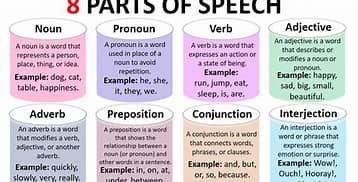
PART OF SPEECH IN ENGLISH

Published from Blogger Prime Android App
Parts of speech are the fundamental building blocks of language, each serving a unique purpose. 

Here are the main parts of speech with examples:

1. **Noun**: Nouns are essential building blocks in language as they name people, places, things, or ideas. 

Here are the different types of nouns:

1. **Proper Noun**: Names a specific person, place, or thing.
   - *Examples*: Alice, Paris, Toyota

2. **Common Noun**: Names any one of a class of people, places, or things.
   - *Examples*: girl, city, car

3. **Concrete Noun**: Names something that can be perceived by the senses.
   - *Examples*: apple, dog, building

4. **Abstract Noun**: Names an idea, quality, or state.
   - *Examples*: love, freedom, happiness

5. **Countable Noun**: Names something that can be counted.
   - *Examples*: book, apple, car

6. **Uncountable Noun**: Names something that cannot be counted.
   - *Examples*: water, sand, information

7. **Collective Noun**: Names a group of people or things.
   - *Examples*: team, flock, bunch

8. **Compound Noun**: Formed from two or more words joined together to create a new meaning.
   - *Examples*: toothpaste, basketball, mother-in-law

2. **Pronoun**: Pronouns are words that take the place of nouns to avoid repetition and make sentences smoother.

 Here are the different types of pronouns:

1. **Personal Pronouns**: Refer to specific people or things.
   - *Examples*: I, you, he, she, it, we, they

2. **Possessive Pronouns**: Indicate ownership or possession.
   - *Examples*: mine, yours, his, hers, its, ours, theirs

3. **Reflexive Pronouns**: Refer back to the subject of the sentence.
   - *Examples*: myself, yourself, himself, herself, itself, ourselves, yourselves, themselves

4. **Demonstrative Pronouns**: Point to specific things.
   - *Examples*: this, that, these, those

5. **Relative Pronouns**: Introduce relative clauses and connect them to the main clause.
   - *Examples*: who, whom, whose, which, that

6. **Interrogative Pronouns**: Used to ask questions.
   - *Examples*: who, whom, whose, which, what

7. **Indefinite Pronouns**: Refer to non-specific people or things.
   - *Examples*: someone, anyone, everyone, nobody, each, few, many, all, some

8. **Reciprocal Pronouns**: Indicate a mutual relationship or action.
   - *Examples*: each other, one another

Pronouns make our sentences more concise and less repetitive, making communication clearer and more efficient.

3. **Verb**: Verbs are words that express actions, occurrences, or states of being. They are an essential part of a sentence, often indicating what the subject is doing or experiencing. 

Here are the main types of verbs:

1. **Action Verbs**: Describe physical or mental actions.
   - *Examples*: run, jump, think, write

2. **Linking Verbs**: Connect the subject to more information about the subject.
   - *Examples*: am, is, are, was, were, seem, become

3. **Helping (Auxiliary) Verbs**: Used with the main verb to form a verb phrase, indicating tense, mood, or voice.
   - *Examples*: have, has, had, do, does, did, can, could, will, would, shall, should, may, might, must

4. **Transitive Verbs**: Require a direct object to complete their meaning.
   - *Examples*: eat (an apple), read (a book), give (a gift)

5. **Intransitive Verbs**: Do not require a direct object to complete their meaning.
   - *Examples*: sleep, arrive, go, die

6. **Modal Verbs**: Express necessity, possibility, permission, or ability.
   - *Examples*: can, could, may, might, must, shall, should, will, would

4. **Adjective**:Adjectives are words that describe or modify nouns and pronouns, adding detail and specificity to make our communication richer and more precise.

 Here are different types of adjectives:

1. **Descriptive Adjectives**: Describe the qualities or states of being of nouns.
   - *Examples*: beautiful, tall, happy, blue

2. **Quantitative Adjectives**: Indicate the quantity of something.
   - *Examples*: some, many, few, several, two

3. **Demonstrative Adjectives**: Point out specific items.
   - *Examples*: this, that, these, those

4. **Possessive Adjectives**: Show ownership or possession.
   - *Examples*: my, your, his, her, its, our, their

5. **Interrogative Adjectives**: Used in questions.
   - *Examples*: which, what, whose

6. **Distributive Adjectives**: Refer to individual elements within a group.
   - *Examples*: each, every, either, neither

7. **Proper Adjectives**: Formed from proper nouns and typically capitalized.
   - *Examples*: American, African, Shakespearean

8. **Compound Adjectives**: Consist of two or more words joined together.
   - *Examples*: well-known, high-speed, full-time

5. **Adverb**:Adverbs are words that modify verbs, adjectives, or other adverbs, often providing more detail about how, when, where, or to what extent something happens. 

Here are different types of adverbs:

1. **Adverbs of Manner**: Describe how an action is performed.
   - *Examples*: quickly, slowly, carefully, loudly

2. **Adverbs of Time**: Indicate when an action occurs.
   - *Examples*: now, later, yesterday, tomorrow

3. **Adverbs of Place**: Indicate where an action occurs.
   - *Examples*: here, there, everywhere, inside

4. **Adverbs of Frequency**: Indicate how often an action occurs.
   - *Examples*: always, never, often, rarely

5. **Adverbs of Degree**: Indicate the intensity or extent of an action.
   - *Examples*: very, quite, almost, too

6. **Adverbs of Affirmation and Negation**: Confirm or negate an action or statement.
   - *Examples*: yes, no, certainly, not

7. **Relative Adverbs**: Introduce clauses that provide more information about a noun.
   - *Examples*: when, where, why

8. **Interrogative Adverbs**: Used to ask questions.
   - *Examples*: how, when, where, why

Adverbs help add precision and detail to our sentences, making our descriptions and actions clearer and more vivid.

6. **Preposition**: Prepositions are words that show the relationship between a noun (or pronoun) and other words in a sentence. They often indicate direction, location, time, or manner. 

Here are some common prepositions and their uses:

1. **Prepositions of Place**: Indicate where something is located.
   - *Examples*: in, on, at, under, above, between, behind
   - *Sentence*: The book is on the table.

2. **Prepositions of Time**: Indicate when something happens.
   - *Examples*: at, on, in, during, before, after
   - *Sentence*: She will arrive at noon.

3. **Prepositions of Direction**: Indicate where something is going.
   - *Examples*: to, towards, into, through, across
   - *Sentence*: He walked towards the park.

4. **Prepositions of Manner**: Indicate how something is done.
   - *Examples*: by, with, like, as
   - *Sentence*: She wrote the letter with a pen.

5. **Prepositions of Agent**: Indicate who or what caused something.
   - *Examples*: by, with
   - *Sentence*: The book was written by the author.

6. **Prepositions of Cause**: Indicate the reason for something.
   - *Examples*: because of, due to
   - *Sentence*: The event was canceled because of the rain.

Prepositions are crucial for creating clear and precise sentences. They help establish the relationships between different parts of a sentence, making it easier to understand. 

7. **Conjunction**: Conjunctions are words that connect words, phrases, or clauses in a sentence, helping to make our speech and writing more fluid and cohesive. 

There are three main types of conjunctions:

1. **Coordinating Conjunctions**: Connect words, phrases, or independent clauses that are equal in importance.
   - *Examples*: and, but, or, nor, for, so, yet
   - *Sentence*: She likes apples and oranges.

2. **Subordinating Conjunctions**: Connect an independent clause with a dependent clause, showing a relationship such as cause and effect, time, or condition.
   - *Examples*: because, although, since, unless, if, while, when
   - *Sentence*: I will go to the park if it stops raining.

3. **Correlative Conjunctions**: Work in pairs to connect words or phrases that have equal importance in a sentence.
   - *Examples*: either...or, neither...nor, both...and, not only...but also
   - *Sentence*: Either you can come with us, or you can stay home.

Conjunctions are essential for creating complex and interesting sentences. They help to link ideas together and make our writing more coherent. 

8. **Interjection**: Interjections are words or phrases that express strong emotions or sudden bursts of feelings. They are often used in exclamatory sentences and can stand alone. 

Here are some common interjections and their uses:

1. **Expressing surprise**: 
   - *Examples*: Wow! Oh! Ah! 
   - *Sentence*: Wow! That's amazing!

2. **Expressing pain**: 
   - *Examples*: Ouch! Ow! 
   - *Sentence*: Ouch! That hurt!

3. **Expressing joy**: 
   - *Examples*: Yay! Hurray! Woohoo! 
   - *Sentence*: Yay! We won the game!

4. **Expressing disgust**: 
   - *Examples*: Yuck! Ew! 
   - *Sentence*: Yuck! This tastes awful!

5. **Expressing greeting**: 
   - *Examples*: Hello! Hi! Hey! 
   - *Sentence*: Hey! It's good to see you!

6. **Expressing disappointment**: 
   - *Examples*: Oh no! Alas!
   - *Sentence*: Oh no! I forgot my keys!

Interjections add emotion and emphasis to our sentences, helping to convey the speaker's feelings more vividly. 

Jan 24, 2025

RATIBA ZA NECTA

RATIBA ZA NECTA

 Baraza la mitihani Tanzania Necta latoa ratiba ya mitihani ya kumaliza elimu ya msingi ingia hapa kupakua ratiba hiyo 


DOWNLOAD HERE


Jan 21, 2025

BERLIN CONFERENCE

BERLIN CONFERENCE

THE PARTITION OF AFRICA DURING THE BERLIN CONFERENCE IN 1884-1885
What is Berlin conference?
Was the Imperialist meeting which was hold among European power in Berlin (the capital city of Germany) for the aim of dividing up the Africa continent peacefully.
>The conference was hold by chancellor OTTO VON BISMARCK of Germany from November 1884 to February 1885

THE ATTENDANTS
The attendants of Berlin conference were fourteen (14) European power who had interested in Africa such as British, Portugal, Spain, Germany, France, Belgium, Italy, Russia, Sweden, Norway,U.S.A, Denmark, Austria-Hungary and Netherland
Note:U.S.A and Denmark attended in Berlin conference as observes, while Africans were not attended in the meeting because they were main agenda of the conference.

MOTIVES/REASONS/OBJECTIVES OF THE BERLIN CONFERENCE OF 1884-1885
(Why was the conference convened?)
Addressive the problems in Europe
To provide guideline for future acquisition of colonies in Africa
To find the ways of partition of Africa
To look the way of controlling Africa
To prevent war
To identify richness area
To solve some claims.exaple Portugal claims over Congo
To confirm the information brought by agent
OTTO VON BISMARCK wanted to pat himself in the world of history

EVENT LEADING TO BERLIN CONFERENCE OF 1884-1885
>The event were
Scramble for Africa
The roles of agent
Industrialization in Europe
The role of Otto von Bismarck
Conflict among European power

THE PRINCIPAL/TERMS AGREEMENT/RESOLUTION REACHED DURING BERLIN CONFERENCE
**All Europe an power agree on the following terms.
a) Abolition of slave trade
->All agree to stop slave trade to favor regitimate trade
b) Notification of other power
>This agreed inorder to reduce conflicts
c) Freedom of Navigation
>The major water bodies like lakes, rivers and ocean should be used to All power for trading activities
d) Freedom of trade
>The area with high like Congo,Niger and Egypt where to be used by all power for trading activities
e) Effective occupation
>Any European nations which have claimed in Africa should occupy the colonies immediately.
f) Missionary Tolerance
>The Missionary in the colonies were allowed to conduct their preaching without being interfered
g)To suppress the Africa resistance

THE EFFECT/OUTCOMES/THE CONSEQUENCE OF THE BERLIN CONFERENCE TO AFRICA
i) Drawing of boundaries
>The boundaries between country were established
ii) Formation of modern state
>Example Gold coast (Ghana), Nyasaland (Malawi), Tanganyika (Tanzania)
iii) Introduction of legitimate trade
>The trade based on the collection of minerals and other natural products.The trade which replaced slave trade.
iv) Total colonization of Africa
>The Berlin conference had led to the African continent to be partitioned and colonised by European power easily
v) Total abolition of slave trade
>The Berlin conference had resulted to total abolition of slave trade within many parts of African colonies
vi) Formation of other treaties
>Example Delimitation and Heligoland treat between Germany, British and Sultan since both were struggling for those area and were not satisfied
vii) Separation of tribes
>Example Kurya and Masai who fell in Tanganyika and Kenya.
viii)Influx of trading company
>Example IBEACO GEACO BSACO
ix) Introduction of European language in Africa eg.Franco phase,Anglo phese,Luso phese

PARTITION OF EAST AFRICA
>The partition of East Africa was done through signing two treaties namely Delimitation treat of 1886 and Heligoland treat of 1890

A.DELIMINATION TREAT (First Anglo-Germany Agreement of 1886)
>This was agreement signed on October 1886 between British and Germany to occupy East Africa
>The two parts or power had agreed on the following
i) Sultan took Zanzibar,Pemba, Mafia and Lamu
ii) Germany took Tanganyika
iii) British took Uganda and Kenya
iv)Witu area in Kenya was taken by Germany
v) Sultan was added ten coastal from mainland except Dar es salaam
>These above are called terms/agreement/resolution/effects/impact of Delimitation treat 1886

B. HELIGOLAND TREAT (The second Anglo-Germany Agreement of 1890
>It was the second treat signed between British and Germany to occupation of EAST AFRICA.it took place in 1890.the results of this agreement were
i) Germany took Tanganyika,Rwada, and Burundi
ii) British took Kenya and Uganda
iii) Sultan took only Zanzibar
iv) Germany lost witu in Kenya
v) British was made a protectorate of Zanzibar
vi) Political boundaries were differed

ESTABLISHMENT OF COMPANY RULE IN AFRICA
THE ESTABLISHMENT OF COMPANY RULE IN AFRICA
What is company rule?
>This was the Imperialist chartered companies which established in Africa to main colonial activities.The company rule were introduced during the 19th century
>Example of company rule were
i) British East Africa Company (BEACO)-1886
>Under William Macknon
ii) Germany East Africa Company (GEACO)-1884
>Under Carl Peters
iii) British Royal Niger Company -1884
>Under George Goldie
iv) British South Africa Company (BSACO)-1884
>Under Cecil Rhodes
v) Africa International Association
>Form by King Leopard ii.
vi) Livingston Central Africa Company-1878
>Formed James Stephen from Scotland

FUNCTION/OBJECTIVE/AIMS OF COMPANY IN AFRICA
i) To build infrastructure
>Example roads, railways place to place so as to ensure good transportation
ii) To suppress African resistance
>Done it perfectly so as to ensure peace and harmony
iii)To supervise production
>Aimed at surpeviced production activities such as Agriculture within boundaries
iv)To maintain peace and order
>This to ensure colonial government gona well
v) To open up plantation
>Example sisal plantation in morogoro, cotton plantation and other projects
v) signing fake treaties
>They done on behalf of their government

REASONS/THE FACTORS FOR THE FAILURE OF COMPANY RULE IN AFRICA
i) Misuse of fund
>Leaders of the company were mis-use of the company's money for the own interest that is why they failed
ii) Strong African resistance
>Many areas in Africa opposed company rule
iii) Tropical disease
>Example malaria whore many European were killed
iv)Poor geographical knowledge
>Most of them had little knowledge leading them got lost being killed by insect and animals like lion and other did not attend in the specific area
v) Language barrier
>The poor communication between white and Africans leading to the failure of company rule
vi) Financial problem
>The leaders had a shortage of money to run the company activities

Jan 20, 2025

Jan 19, 2025

TENCHOLOGICAL INNOVATIONS

 Technological innovation refers to the process of developing and applying new or improved technologies to create significant advancements or breakthroughs in various fields¹². This can involve new products, processes, or services that solve problems, improve efficiency, and drive progress.


### Key Aspects of Technological Innovation

1. **Creation and Application**: It involves both the invention of new technologies and the practical application of these technologies to meet specific needs¹.

2. **Improvement**: It can also mean enhancing existing technologies to make them more effective or efficient².

3. **Impact**: Technological innovations often lead to significant changes in industries, economies, and societies by improving quality of life, boosting economic growth, and addressing complex challenges¹.

Examples

- **Internet**: Revolutionized communication, information sharing, and commerce².

- **Smartphones**: Combined multiple technologies into a single device, transforming how we communicate and access information².

- **Renewable Energy**: Innovations in solar and wind energy are helping to combat climate change and reduce reliance on fossil fuels¹.


Technological innovation is a continuous journey driven by human ingenuity and the pursuit of efficiency and excellence².


Technological innovations are driven by a variety of factors that encourage the development and application of new technologies. Here are some key causes:y

 Causes of tenchological innovations

1. **Scientific Research and Discovery**: Advances in scientific knowledge often lead to new technologies. For example, research in physics and chemistry has led to innovations in electronics and materials science².

2. **Economic Incentives**: The potential for profit and economic growth motivates companies and individuals to invest in new technologies. Market competition also drives innovation as businesses strive to gain a competitive edge².

3. **Government Policies and Funding**: Governments often support technological innovation through funding for research and development, tax incentives, and policies that encourage innovation. For instance, space exploration and defense projects have led to numerous technological advancements².

4. **Social Needs and Challenges**: Innovations often arise in response to societal needs and challenges, such as healthcare, environmental sustainability, and communication. For example, the development of renewable energy technologies is driven by the need to address climate change².

5. **Technological Convergence**: The combination of different technologies can lead to new innovations. For example, the convergence of computing, telecommunications, and media technologies has led to the development of smartphones and the internet².


These factors create an environment that fosters creativity and the development of new technologies, leading to continuous advancements and improvements in various fields.

Technological innovations have had profound effects on various aspects of society. Here are some key impacts:


### Positive Effects

1. **Healthcare Improvements**: Technology has revolutionized healthcare through advancements like electronic health records, telemedicine, and AI-powered diagnostics. These innovations have improved patient care, accessibility, and treatment outcomes¹.

2. **Educational Transformation**: Technology has enabled personalized learning and global access to education through online platforms. This has enhanced student engagement and educational attainment, particularly in underserved regions¹.

3. **Enhanced Communication**: The internet and smartphones have transformed communication, making it instantaneous and global. This has fostered collaboration and understanding across cultures¹.

4. **Economic Growth**: Technological advancements have boosted productivity and efficiency in various industries, leading to economic growth and job creation².

5. **Environmental Solutions**: Innovations in renewable energy and sustainable technologies are helping to combat climate change and reduce environmental impact².


### Negative Effects

1. **Job Displacement**: Automation and AI can lead to job losses in certain sectors, requiring workers to adapt and acquire new skills³.

2. **Privacy Concerns**: Increased digital connectivity raises concerns about data privacy and security³.

3. **Digital Divide**: Not everyone has equal access to technological advancements, leading to disparities in opportunities and benefits³.


Overall, while technological innovations have brought significant benefits, they also present challenges that need to be addressed to ensure equitable and sustainable progress.


Jan 18, 2025

INDUSTRIAL REVOLUTION

 The Industrial Revolution was a transformative period from the late 18th to the early 19th centuries, marked by a shift from agrarian economies to industrialized ones¹². Here are some key aspects:


### Causes

1. **Technological Innovations**: Inventions like the steam engine, spinning jenny, and power loom revolutionized production processes¹.

2. **Economic Factors**: The rise of capitalism and the availability of capital for investment in new technologies and factories².

3. **Agricultural Improvements**: Advances in farming techniques increased food production, supporting a growing population and freeing labor for industrial work².

4. **Natural Resources**: Abundant coal and iron ore in Britain provided the raw materials needed for industrialization¹.


### Effects

1. **Urbanization**: Massive migration from rural areas to cities as people sought work in factories².

2. **Economic Growth**: Significant increases in productivity and economic output¹.

3. **Social Changes**: The rise of a new industrial working class and the expansion of the middle class².

4. **Environmental Impact**: Increased pollution and environmental degradation due to industrial activities¹.

The Industrial Revolution began in Britain and spread to other parts of Europe and North America, profoundly changing societies and economies worldwide¹².


Jan 16, 2025

NGONI MIGRATION

NGONI MIGRATION

 The Ngoni migration was a significant movement of people in Southern Africa during the early 19th century. The Ngoni people, originally part of the Nguni ethnic group from KwaZulu-Natal in South Africa, were displaced due to the rise of the Zulu empire under Shaka Zulu¹².


Key points about the Ngoni migration include:


- **Leadership of Zwangendaba**: One of the prominent leaders, Zwangendaba, led a group of Ngoni northward through Mozambique and Zimbabwe, eventually settling around Lake Tanganyika¹².

- **Formation of New States**: The Ngoni established several independent states in present-day Malawi, Zambia, and Tanzania. They used Zulu military techniques to conquer and integrate local populations¹².

- **Impact on Local Societies**: The migration and subsequent conquests led to significant social and political changes in the regions they settled. The Ngoni integrated many of the people they conquered, creating a diverse and complex society².


The Ngoni migration is a fascinating example of how the rise of powerful states can lead to widespread displacement and cultural transformation.

The Ngoni migration was driven by several interconnected factors during the early 19th century¹²:


1. **Zulu Expansion and Conflicts**: The rise of the Zulu kingdom under King Shaka led to significant military conflicts and territorial expansion. This forced many groups, including the Ngoni, to flee their homelands to avoid subjugation¹².

2. **Population Pressure**: Increasing population density in the Ngoni's original territories created competition for resources, prompting them to seek new lands².

3. **Drought and Environmental Stress**: Severe droughts and environmental challenges made it difficult to sustain their livelihoods, pushing the Ngoni to migrate in search of more fertile areas².

4. **Slave Trade**: The demand for slaves in the region led to increased raids and conflicts, contributing to the instability and displacement of communities².

5. **Search for Livelihood**: As pastoralists and skilled warriors, the Ngoni relied on cattle herding. They migrated to find better grazing lands and to raid for cattle, which were central to their economy and social structure².


The Ngoni migration had several significant effects on the regions they settled in¹²:


1. **Cultural Syncretism**: The Ngoni migration led to the blending of their culture with those of the local populations. This resulted in new cultural practices, traditions, and languages².

2. **Conflict and Displacement**: As the Ngoni moved into new territories, they often engaged in conflicts with existing communities. This led to the displacement of local populations and disruption of social structures¹.

3. **Economic Impact**: The Ngoni introduced new agricultural techniques, trade networks, and economic practices, which often led to economic growth and development in the areas they settled¹.

4. **Political Changes**: The Ngoni established new chiefdoms and kingdoms, altering the political landscape and power dynamics in the regions they inhabited².

5. **Social Integration**: The migration facilitated social integration and intercultural exchange between different ethnic groups, leading to the sharing of knowledge, ideas, and technologies¹.


Overall, the Ngoni migration had a profound impact on the cultural, economic, political, and social dynamics of the regions they settled in.