Mar 21, 2025

kuakisiwa kwa mwanga katika kioo bapa

Kioo bapa ni aina ya kioo kilichotengenezwa kuwa tambarare, kisicho na makunyanzi wala umbo lolote la ziada. Kioo hiki hutengenezwa kwa kughushi au kukata kioo cha kioo cha kijito (float glass), kisha kukifanya kuwa tambarare na laini ili kiweze kutumika kwa madhumuni mbalimbali.

Kioo bapa hutumika katika maeneo mengi, ikiwa ni pamoja na madirisha, milango ya kioo, samani za kioo, vioo vya magari, na kwenye mapambo ya majengo. Kioo hiki kinaweza kuwa wazi au cha giza kulingana na matumizi yake, na pia kinaweza kufanyiwa matibabu kama kuimarishwa au kupakwa mipako ili kuzuia uharibifu au kuboresha ufanisi wake.

Sifa za Kioo Bapa (Plane Mirror) 

1. Uso Laini na Wima – Kioo bapa kina uso laini na tambarare, kinachowezesha kuakisi mwanga kwa utaratibu.

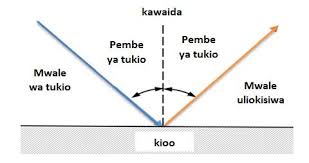
2. Huakisi Mwanga kwa Sheria ya Kuakisiwa – Pembe ya mwanga unaoingia (angle of incidence) ni sawa na pembe ya mwanga unaoakisiwa (angle of reflection).

3. Huunda Picha Halisi ya Mtu au Kitu – Kioo bapa huunda picha inayofanana na kitu halisi lakini inaonekana upande wa kulia na kushoto vikiwa vimebadilishwa (lateral inversion).

4. Picha Inakuwa ya Ukubwa Uleule – Picha inayoundwa na kioo bapa huwa na ukubwa sawa na kitu halisi, bila kupanuliwa au kupunguzwa.

5. Picha Iko Umbali Sawa na Kitu Halisi – Kitu kilicho mbele ya kioo bapa huonekana kwa umbali sawa na umbali wake halisi kutoka kwenye kioo.

6. Picha ni ya Kidhahania (Virtual Image) – Picha haipo katika uhalisia na haiwezi kuakisiwa kwenye skrini.

7. Hutumiwa Sana katika Maisha ya Kila Siku – Kama vile vioo vya nyumbani, magari, maduka, na vifaa vya maabara.

Kuakisiwa kwa mwanga katika kioo bapa 

Ni mchakato ambapo mwanga unapogonga uso wa kioo laini na kurudi nyuma bila kupenya ndani ya kioo. Huu ni mfano wa kuakisiwa kwa nuru (reflection of light).

Sheria za Kuakisiwa kwa Mwanga

Kuakisiwa kwa mwanga katika kioo bapa hufuata sheria mbili kuu:

  1. Mwanga unaoingia (angle of incidence, θi) na mwanga unaoakisiwa (angle of reflection, θr) huwa na pembe sawa kulingana na mstari wa wima kwa uso wa kioo (normal line).
    • Hii inamaanisha kuwa θi = θr.
  2. Mwanga unaoingia, mstari wa wima (normal), na mwanga unaoakisiwa wote wako kwenye ndege moja (same plane).Published from Blogger Prime Android App

Aina za Kuakisiwa kwa Mwanga

  1. Kuakisiwa kwa Nuru Kawaida (Regular Reflection)

    • Hutokea kwenye uso laini kama kioo bapa.
    • Mwanga unaoakisiwa huunda picha halisi na ya wazi.
    • Hutumika kwenye vioo vya kawaida.
  2. Kuakisiwa Kusiko na Mpangilio (Diffuse Reflection)

    • Hutokea kwenye nyuso mbaya (zisizo laini).
    • Mwanga hutawanyika kwa pembe tofauti, hivyo picha haiundwi vizuri.
    • Mfano: Ukuta wa chumba, karatasi, au maji yenye mawimbi.

Matumizi ya Kuakisiwa kwa Mwanga katika Kioo Bapa

Kioo bapa (flat glass) hutumika katika maeneo mbalimbali kutokana na sifa zake za kudumu na uwezo wa kuakisi mwanga. Hapa ni baadhi ya matumizi yake:

1. Madirisha na milango ya kioo – Kioo bapa hutumika kutengeneza madirisha na milango katika nyumba, ofisi, na majengo mengine. Hutoa mwangaza wa asili na mtindo wa kisasa.

2. Vioo vya magari – Kioo bapa hutumika kutengeneza vioo vya magari, kama vile vioo vya mbele, vya pembeni, na vya nyuma.

3. Vioo vya samani – Kioo bapa hutumika kutengeneza sehemu za samani kama vile meza, rafu, na vitabu vya sakafuni.

4. Vioo vya mapambo – Hutumika katika mapambo ya nyumba kama vile taa za kioo, milango ya mapambo, na madirisha ya mapambo.

5. Vioo vya kuakisia – Kioo bapa hutumika kutengeneza vioo vya kuakisia (mirrors), ambayo hutumika katika bafu, vioo vya magari, na maeneo mengine.

6. Vioo vya ujenzi wa majengo – Kioo bapa hutumika katika ujenzi wa majengo ya kibiashara au nyumba za kisasa, ambapo hutumika kama sehemu ya kuta za kioo, vilevile kioo cha makadirio ya mwanga.

7.Vyombo vya sayansi kama periskopu na darubini

Matumizi haya yanahitaji kioo bapa kuwa na ubora wa juu na uwezo wa kustahimili shinikizo na hali ya mazingira
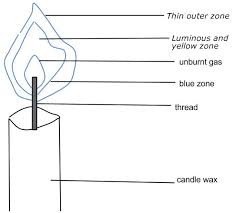
chemistry form three topic flame

Published from Blogger Prime Android App

A flame is the visible, glowing part of a fire. It is created when a material undergoes combustion, a chemical reaction between a fuel (like wood, gas, or oil) and oxygen, producing heat and light. Flames can have different colors depending on the temperature and the substances being burned.

For example:


  • Blue flames indicate complete combustion with high temperatures.
  • Yellow or orange flames suggest incomplete combustion with lower temperatures.
  • Red flames are usually cooler.

Flames can be categorized based on their combustion characteristics, fuel type, and color. Here are the main types:

1. Based on Combustion

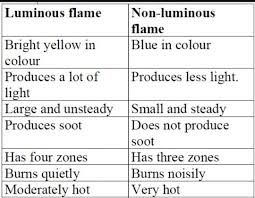
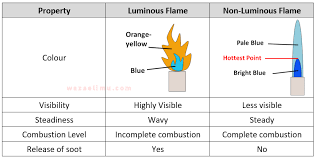
A. Luminous Flame (Yellow Flame)

  • Incomplete combustion due to insufficient oxygen.
  • Produces soot (unburnt carbon particles).
  • Yellow or orange in color.
  • Example: Candle flame, gas stove on a low setting.
  • Published from Blogger Prime Android App

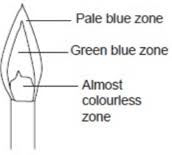
B. Non-Luminous Flame (Blue Flame)

  • Complete combustion with sufficient oxygen.
  • No soot production, burns cleanly.
  • Blue in color and hotter than luminous flames.
  • Example: Bunsen burner with open air vents, gas stove on high.
  • Published from Blogger Prime Android App
  • Different between luminous flame and non luminous flame
  • Published from Blogger Prime Android App

2. Based on Fuel Type

A. Solid Fuel Flames

  • Occur when burning wood, coal, or paper.
  • Produce a mix of yellow, orange, and red flames due to incomplete combustion.

B. Liquid Fuel Flames

  • Occur when burning gasoline, alcohol, or kerosene.
  • Often produce blue flames with varying intensities.

C. Gas Fuel Flames

  • Found in LPG (propane/butane) or natural gas burners.
  • Can be either blue (complete combustion) or yellow (incomplete combustion).

3. Based on Temperature and Color

  • Red Flames (Lowest temperature, around 600–800°C)
  • Orange Flames (Medium temperature, around 1100°C)
  • Yellow Flames (Hotter than orange, around 1200°C)
  • Blue Flames (Very hot, around 1400–1600°C, complete combustion)
  • White Flames (Extremely hot, around 1600–1800°C)

Flames are essential in various aspects of life and technology. Here are some key importance of flames:

1. Daily Life and Cooking

  • Used in stoves and ovens for cooking food.
  • Essential for heating water and homes in colder regions.

2. Industrial Uses

  • Used in welding, metal cutting, and forging.
  • Essential in power plants for generating electricity.
  • Crucial for burning fuels in engines (e.g., gas turbines, jet engines).

3. Scientific and Laboratory Applications

  • Used in Bunsen burners for heating substances in chemistry labs.
  • Helps in sterilization of lab equipment.

4. Energy Production

  • Flames are used to burn fossil fuels (coal, oil, gas) for energy.
  • Used in combustion engines (cars, motorcycles, generators).

5. Safety and Defense

  • Fire is used in emergency flares and signal fires.
  • Controlled flames are used in firefighting training and rescue operations.

6. Cultural and Religious Significance

  • Flames are symbolic in rituals, prayers, and celebrations.
  • Used in Olympic torches, candles, and festival lanterns.

7. Environmental and Agricultural Uses

  • Helps in controlled burning for forest management.
  • Used for waste disposal in incinerators.

Flames have both positive and negative effects, depending on how they are controlled and used.

1. Positive Effects

Energy Production – Flames are essential for generating power in industries, homes, and vehicles.
Cooking and Heating – Used for preparing food and providing warmth in cold climates.
Industrial Applications – Used in welding, metal cutting, and manufacturing.
Scientific Uses – Helps in chemical reactions, sterilization, and laboratory experiments.
Cultural and Religious Significance – Used in ceremonies, rituals, and celebrations.
Agriculture and Waste Disposal – Controlled burning helps in land clearing and waste management.

2. Negative Effects

1.Fire Hazards – Uncontrolled flames can cause house fires, wildfires, and explosions.
2.Air Pollution – Flames produce smoke, carbon monoxide, and other harmful gases.
3.Health Issues – Exposure to flames and smoke can cause burns, respiratory problems, and eye irritation.
4.Environmental Damage – Wildfires destroy forests, wildlife habitats, and contribute to climate change.
5.Property Destruction – Fires can damage homes, businesses, and infrastructure.


things that cause a woman to experience severe pain during her days (Menstruation)
Published from Blogger Prime Android App

 Menstruation is a natural process of a woman's body in which the inner walls of the womb (uterus) are drained of blood through the vagina.  This happens every month if there is no pregnancy, and is part of the menstrual cycle.

 Important Facts About Menstruation:

1. Occurs Every Month: Normally, menstruation occurs every 21-35 days, but the average is 28 days.

2. Lasts 2-7 Days: Every woman has a different length of period.

3. Blood Source: It is a mixture of blood, cervical mucus, and tissue from the walls of the uterus.

4. Controlled by Hormones: Hormones like estrogen and progesterone control the menstrual process.

5. It can be accompanied by various symptoms: such as stomach pain, back pain, mood swings, fatigue, and breast swelling.

 Severe pain during menstruation (dysmenorrhea) can be caused by various reasons, including:

 1. Increased Prostaglandins

 These are chemicals produced by the body to help the muscles of the womb (uterus) contract and produce menstrual blood.

 High levels of prostaglandins can cause severe cramps and severe pain.

 2. Endometriosis

 A condition where tissues similar to those inside the uterus grow outside the uterus.

 It can cause severe pain before, during, and even after menstruation.

 3. Fibroids

 It is a non-cancerous tumor that can grow on the walls of the uterus.

 It can cause heavy menstruation and severe pain.

 4. Adenomyosis

 A condition where tissue inside the uterus grows inside the muscles of the uterus.

 This leads to more painful and heavier periods.

 5. Hormonal problems

 Unbalanced levels of hormones, especially estrogen and progesterone, can cause more pain during menstruation.

 6. Reproductive Problems

 Genitourinary tract infection (PID) can cause swelling and severe pain during menstruation.

 7. Use of Family Planning Methods

 Some contraceptive methods, such as sticks or intrauterine devices (IUDs), can increase pain during menstruation.

 8. Stress and Depression

 Stress can make menstrual cramps worse because of its effects on hormones and the body as a whole.

 9. Lifestyle

 Lack of exercise, poor diet, excessive alcohol or caffeine consumption, and lack of sleep can increase menstrual cramps.

 If the pain is very severe and does not go away even after using pain relievers, it is better to see a doctor for further examination.
vitu vinavyosababisha mwanamke apate maumivu makali wakati wa siku zake(hedhi)

Published from Blogger Prime Android App 

Hedhi ni mchakato wa asili wa mwili wa mwanamke ambapo kuta za ndani za mfuko wa uzazi (uterasi) hutoka kwa njia ya damu kupitia uke. Hii hutokea kila mwezi ikiwa hakuna ujauzito, na ni sehemu ya mzunguko wa hedhi.

Mambo Muhimu Kuhusu Hedhi:

  1. Hutokea Kila Mwezi: Kawaida, hedhi hujirudia kila siku 21-35, lakini wastani ni siku 28.
  2. Hudumu kwa Siku 2-7: Kila mwanamke ana urefu tofauti wa hedhi.
  3. Chanzo cha Damu: Ni mchanganyiko wa damu, ute wa uzazi, na tishu kutoka kwenye kuta za mfuko wa uzazi.
  4. Inadhibitiwa na Homoni: Homoni kama estrogeni na projesteroni hudhibiti mchakato wa hedhi.
  5. Inaweza Kuambatana na Dalili Mbalimbali: Kama maumivu ya tumbo, maumivu ya mgongo, mabadiliko ya hisia, uchovu, na kuvimba kwa matiti.

Maumivu makali wakati wa hedhi (dysmenorrhea) yanaweza kusababishwa na sababu mbalimbali, ikiwa ni pamoja na:

1. Kuongezeka kwa Prostaglandins

  • Hizi ni kemikali zinazozalishwa na mwili kusaidia misuli ya mfuko wa uzazi (uterasi) kujikunja na kutoa damu ya hedhi.
  • Viwango vya juu vya prostaglandins vinaweza kusababisha mikakamao mikali na maumivu makali.

2. Endometriosis

  • Hali ambapo tishu zinazofanana na zile za ndani ya mfuko wa uzazi hukua nje ya uterasi.
  • Inaweza kusababisha maumivu makali kabla, wakati, na hata baada ya hedhi.

3. Fibroids (Uvime wa Kizazi)

  • Ni uvimbe usio wa saratani unaoweza kukua kwenye kuta za mfuko wa uzazi.
  • Unaweza kusababisha hedhi nzito na maumivu makali.

4. Adenomyosis

  • Hali ambapo tishu za ndani ya mfuko wa uzazi hukua ndani ya misuli ya uterasi.
  • Hii husababisha hedhi yenye maumivu makali na uzito zaidi.

5. Matatizo ya Homoni

  • Kiwango kisicho sawa cha homoni, hasa estrogeni na projesteroni, kinaweza kusababisha maumivu zaidi wakati wa hedhi.

6. Matatizo ya Via vya Uzazi

  • Maambukizi ya via vya uzazi (PID) yanaweza kusababisha uvimbe na maumivu makali wakati wa hedhi.

7. Matumizi ya Njia za Uzazi wa Mpango

  • Baadhi ya njia za uzazi wa mpango, kama vile vijiti au vifaa vya ndani ya kizazi (IUD), vinaweza kuongeza maumivu wakati wa hedhi.

8. Mfadhaiko na Msongo wa Mawazo

  • Msongo wa mawazo unaweza kufanya maumivu ya hedhi kuwa makali zaidi kwa sababu ya athari zake kwenye homoni na mwili kwa ujumla.

9. Mtindo wa Maisha

  • Kukosa mazoezi, lishe duni, unywaji wa pombe au kafeini kupita kiasi, na ukosefu wa usingizi vinaweza kuongeza maumivu ya hedhi.

Ikiwa maumivu ni makali sana na hayaishi hata baada ya kutumia dawa za kupunguza maumivu, ni vyema kumuona daktari kwa uchunguzi zaidi.

Mar 18, 2025

Mambo muhimu ya kuzingatia unapotaka kuanzisha biashara

1. Maana ya Biashara

Biashara ni shughuli yoyote inayofanywa kwa lengo la kuzalisha faida kwa kuuza bidhaa au kutoa huduma kwa wateja. Biashara inaweza kuwa ya mtu binafsi, kikundi, au kampuni na inaweza kufanyika kwa njia ya moja kwa moja au mtandaoni.


2. Aina za Biashara

A) Biashara Kulingana na Umiliki

  1. Biashara ya mtu mmoja (Sole Proprietorship)

    • Inamilikiwa na mtu mmoja.
    • Mfano: Duka la rejareja, mgahawa mdogo.
  2. Ubia (Partnership)

    • Inamilikiwa na watu wawili au zaidi wanaoshirikiana faida na hasara.
    • Mfano: Kampuni ya ushauri, kampuni ya sheria.
  3. Kampuni (Corporation)

    • Inamilikiwa na wanahisa na inatambuliwa kisheria kama taasisi tofauti na wamiliki wake.
    • Mfano: Kampuni za uzalishaji, benki.
  4. Shirika Lisilo la Kiserikali (NGO) au Biashara ya Kijamii

    • Haifanyi kazi kwa faida, bali inasaidia jamii.
    • Mfano: Mashirika ya misaada, vikundi vya kijamii.

B) Biashara Kulingana na Aina ya Bidhaa au Huduma

  1. Biashara ya Rejareja (Retail Business)

    • Uuzaji wa bidhaa moja kwa moja kwa wateja wa mwisho.
    • Mfano: Supermarket, maduka ya nguo.
  2. Biashara ya Jumla (Wholesale Business)

    • Uuzaji wa bidhaa kwa wafanyabiashara wengine kwa wingi.
    • Mfano: Wauzaji wa bidhaa za viwandani.
  3. Biashara ya Huduma (Service Business)

    • Kutoa huduma badala ya bidhaa halisi.
    • Mfano: Huduma za usafirishaji, saluni, ushauri wa kibiashara.
  4. Biashara ya Uzalishaji (Manufacturing Business)

    • Utengenezaji wa bidhaa kutoka malighafi na kuuza kwa soko.
    • Mfano: Viwanda vya chakula, viwanda vya nguo.
  5. Biashara ya Kilimo (Agribusiness)

    • Kutoa bidhaa za kilimo na mifugo.
    • Mfano: Ufugaji wa kuku, kilimo cha mboga.
  6. Biashara ya Mtandaoni (E-commerce Business)

    • Biashara inayofanyika kwa njia ya mtandao.
    • Mfano: Uuzaji kupitia Amazon, Jumia, au Instagram.

3. Faida za Biashara

  1. Kupata Faida – Biashara inaleta kipato kwa mmiliki.
  2. Uhuru wa Kifedha – Mtu anaweza kujitegemea badala ya kutegemea ajira.
  3. Kubuni Ajira – Inasaidia kuajiri watu wengine na kupunguza ukosefu wa ajira.
  4. Uhuru wa Kufanya Maamuzi – Mmiliki anakuwa na mamlaka juu ya biashara yake.
  5. Kuleta Maendeleo ya Kiuchumi – Biashara inachangia uchumi wa nchi kupitia kodi na ajira.
  6. Kujifunza Ujuzi Mpya – Mfanyabiashara anajifunza kuhusu masoko, usimamizi wa fedha, na mahusiano na wateja.
  7. Kupanuka kwa Mtandao wa Biashara – Kupata fursa za kushirikiana na wafanyabiashara wengine.

4. Hasara za Biashara

  1. Hatari ya Hasara ya Kifedha – Biashara inaweza kupata hasara iwapo haitasimamiwa vizuri.
  2. Kushindana na Biashara Nyingine – Ushindani mkubwa unaweza kupunguza mauzo.
  3. Mabadiliko ya Soko – Mahitaji ya wateja na bei za bidhaa hubadilika mara kwa mara.
  4. Gharama za Uendeshaji – Kodi, mishahara, na gharama za uzalishaji zinaweza kuwa mzigo.
  5. Mkazo na Majukumu Mengi – Mfanyabiashara anaweza kuwa na msongo wa mawazo kwa sababu ya changamoto nyingi.
  6. Hatari ya Kushindwa kwa Biashara – Ikiwa hakuna mipango mizuri, biashara inaweza kufungwa.
  7. Kucheleweshwa kwa Malipo – Wateja wanaoweza kuchelewa kulipa wanapunguza mtiririko wa fedha.

Kuanzisha biashara kunahitaji mipango na maandalizi mazuri ili kuhakikisha mafanikio yake. Hapa ni mambo muhimu ya kuzingatia:

1. Utafiti wa Soko

  • Elewa mahitaji ya wateja wako na changamoto zilizopo.
  • Chunguza washindani wako na tofautishe bidhaa au huduma yako.
  • Fahamu mwenendo wa soko na mahitaji yanayoongezeka.

2. Mpango wa Biashara

  • Eleza lengo kuu la biashara yako.
  • Bainisha mtaji unaohitajika na vyanzo vya mapato.
  • Pangilia gharama za uendeshaji na faida unayotarajia.
  • Unda mikakati ya masoko na jinsi ya kuwafikia wateja.

3. Mtaji wa Biashara

  • Amua ikiwa utatumia akiba yako, mkopo, au uwekezaji kutoka kwa wadau wengine.
  • Hakikisha una bajeti ya kutosha kwa gharama za mwanzo na uendeshaji.

4. Usajili wa Biashara

  • Sajili biashara yako kwa mamlaka husika ili kuepuka matatizo ya kisheria.
  • Pata leseni na vibali vinavyohitajika.
  • Hakikisha unafuata sheria za kodi.

5. Eneo na Jukwaa la Biashara

  • Chagua eneo lenye wateja wengi au uanzishe biashara mtandaoni.
  • Ikiwa ni biashara ya mtandaoni, hakikisha unatumia mitandao ya kijamii na tovuti bora.

6. Mkakati wa Masoko

  • Tumia mbinu bora za matangazo kama vile mitandao ya kijamii, SEO, na matangazo ya kulipia.
  • Unda chapa (brand) yenye mvuto na inayotambulika kwa urahisi.
  • Weka mikakati ya kuwashirikisha wateja na kujenga uaminifu.

7. Usimamizi wa Fedha

  • Fungua akaunti ya benki kwa ajili ya biashara.
  • Weka kumbukumbu sahihi za mapato na matumizi.
  • Panga jinsi ya kudhibiti gharama na kuongeza faida.

8. Huduma kwa Wateja

  • Toa huduma bora kwa wateja ili kujenga uaminifu na kudumisha mahusiano mazuri.
  • Sikiliza maoni ya wateja na yafanyie kazi ili kuboresha biashara.

9. Kujifunza na Kubadilika

  • Endelea kujifunza kuhusu mwenendo wa soko na teknolojia mpya.
  • Fanya marekebisho kulingana na mahitaji ya wateja na mabadiliko ya soko.

Hitimisho

Biashara ni njia nzuri ya kujipatia kipato na kukuza uchumi, lakini inahitaji utafiti, mipango mizuri, na uvumilivu ili kufanikiwa. Je, una mpango wa kuanzisha biashara fulani? Naweza kusaidia kwa mawazo zaidi!

mambo 10 yatakayo kufanya ufanikiwe
Ili ufanikiwe, unahitaji kufanya mambo kadhaa muhimu:


1. Kuwa na Malengo Yenye Ufafanuzi – Elewa unachotaka kufanikisha na weka malengo yaliyo wazi, yanayopimika, yanayoweza kufikiwa, yanayohusiana na maisha yako, na yenye muda maalum (SMART goals).
2. Jitahidi na Fanya Kazi kwa Bidii – Hakuna mafanikio bila juhudi. Kuwa tayari kufanya kazi kwa nidhamu na uvumilivu hata mambo yanapokuwa magumu.
3. Jifunze na Jiboreshe Kila Siku – Elimu na maarifa ni nguvu. Soma vitabu, tafuta ushauri, na endelea kujifunza kutoka kwa wale waliotangulia.
4. Kujiamini na Kuweka Mtazamo Chanya – Imani katika uwezo wako ni muhimu. Epuka mawazo hasi na amini kuwa unaweza kufanikisha malengo yako.
5. Kuwa na Mpangilio na Nidhamu – Pangilia muda wako vizuri, tengeneza ratiba, na fuata utaratibu unaokupeleka kwenye mafanikio.
6. Epuka Kuzungukwa na Watu Wenye Mawazo Hasi – Chagua marafiki na watu wanaokutia moyo, wanaokupa maarifa, na wanaokusukuma kuwa bora zaidi.
7. Chukua Hatua Bila Kuchelewa – Watu wengi hushindwa kwa sababu wanangoja muda mwafaka. Anza na ulicho nacho sasa, jifunze njiani.
8. Jifunze Kutatua Changamoto – Mafanikio huja kwa wale wanaoweza kushinda matatizo. Badala ya kukata tamaa, tafuta suluhisho kwa kila changamoto inayojitokeza.
9. Uvumilivu na Ustahimilivu – Safari ya mafanikio si rahisi. Utakutana na vikwazo, lakini usikate tamaa. Endelea kusonga mbele.
10. Omba Msaada na Jenga Mtandao wa Mafanikio – Pata ushauri kutoka kwa watu wenye uzoefu, shiriki na wenzako, na jenga mahusiano yenye manufaa katika sekta yako.

Mafanikio ni matokeo ya mchanganyiko wa juhudi, nidhamu, na mtazamo sahihi. Wewe mwenyewe ndiyo ufunguo wa mafanikio yako!


FOREST AND THEIR ADVANTAGE
  •  Meaning of Forests
    A forest is an area with a collection of trees and other plants that support an ecosystem that supports living things like animals, birds, and insects.  Forests also provide important resources such as timber, natural medicines, and food.

     Types of Forests

     Forests can be divided into different types based on the climate, location, and available plants.  The main types of forests are:

    1. Equatorial Forests (Tropical Rainforests) - Found in hot and humid areas such as the Amazon, Congo, and Southeast Asia.

    2. Miombo Forests (Savanna Woodlands) – Found in Africa, with trees with leaves that fall in summer.

    3. River and Valley Forests (Riparian Forests) – Grows along rivers and valleys, with plants that tolerate a lot of water.

    4. Mountain Forests (Montane Forests) - They are found in areas with high altitudes like Mount Kilimanjaro.

    5. Temperate Forests - Found in areas with four seasons such as Europe, North America, and Asia.

    6. Boreal Forests (Taiga Forests) - Forests with tall coniferous trees, found in cold regions such as Canada and Russia.

     Importance of Forests

     Forests have many benefits for the environment and humans, including:
    1. Protecting the environment – ​​It prevents soil erosion and regulates the climate.
    2. Source of fresh air – Trees absorb carbon dioxide and release oxygen.
    3. Habitat for living organisms - Forests are habitats for animals, birds, insects, and various plants.
    4. Resource source – Provides wood, fruit, herbal medicine, and raw materials for industries.
    4. Water sources – Forests help conserve water sources and regulate the rainfall cycle.
    4. Tourism and income - Forests attract tourists and thus contribute to the country's economy.

     Methods of Deforestation

     Deforestation can be done in a variety of ways, including:
    1. Deforestation – Cutting down trees without replanting them.
    2. Forest burning - Deliberate fire for agriculture or housing.
    3. Shifting agriculture - Farmers cutting forests to get land for farming.
    4. Urban expansion – The construction of housing, roads, and industries affects forests.
    5. Overgrazing – Many animals eat grass, causing drought and land degradation.
    6. Mining – Mining activities destroy forests and cause environmental pollution.

     Effects of Deforestation

     Deforestation has a negative impact on the environment and living organisms, such as:

    1. Climate change - Global warming due to the reduction of trees that absorb carbon dioxide gas.
    2. Biodiversity loss – Animals and plants lose their habitat, and some disappear completely.
    3. Soil erosion – The soil becomes weak and can cause landslides.
    4. Depletion of water sources – Forests are disappearing, water sources are drying up.
    5. Rainfall – Forests help absorb rain;  its destruction causes drought.
    6. Diseases and health problems - Polluted air increases due to the reduction of trees that filter air pollution.

     Conclusion
     Forests are an important part of our environment and our daily lives.  Protecting forests ensures the survival of future generations and helps combat environmental challenges such as climate change and soil erosion.  It is our responsibility to ensure forests are preserved through tree planting, sustainable use of forest resources, and prevention of uncontrolled deforestation.
    MISITU NA UMUHIMU WAKE KATIKA MAZINGIRA


    Maana ya Misitu
    Misitu ni eneo lenye mkusanyiko wa miti na mimea mingine ambayo inashikilia mfumo wa ikolojia unaosaidia viumbe hai kama wanyama, ndege, na wadudu. Misitu pia hutoa rasilimali muhimu kama mbao, dawa za asili, na chakula.

    Aina za Misitu

    Misitu inaweza kugawanywa katika aina mbalimbali kulingana na hali ya hewa, eneo, na mimea inayopatikana. Aina kuu za misitu ni:

    1. Misitu ya Ikweta (Tropical Rainforests) – Inapatikana katika maeneo ya joto na unyevunyevu kama Amazon, Kongo, na Asia ya Kusini Mashariki.
    2. Misitu ya Miombo (Savanna Woodlands) – Inapatikana Afrika, ikiwa na miti yenye majani yanayoanguka wakati wa kiangazi.
    3. Misitu ya Mito na Mabonde (Riparian Forests) – Inakua kando ya mito na mabonde, ikiwa na mimea inayostahimili maji mengi.
    4. Misitu ya Milimani (Montane Forests) – Inapatikana katika maeneo yenye miinuko mikubwa kama Mlima Kilimanjaro.
    5. Misitu ya Hali ya Kati (Temperate Forests) – Inapatikana katika maeneo yenye majira manne ya mwaka kama Ulaya, Amerika Kaskazini, na Asia.
    6. Misitu ya Boreal (Taiga Forests) – Misitu yenye miti mirefu ya aina ya coniferous, hupatikana katika kanda za baridi kama Kanada na Urusi.

    Umuhimu wa Misitu

    Misitu ina faida nyingi kwa mazingira na binadamu, zikiwemo:

    • Kuhifadhi mazingira – Inazuia mmomonyoko wa udongo na kudhibiti hali ya hewa.
    • Chanzo cha hewa safi – Miti huchukua kaboni dioksidi na kutoa oksijeni.
    • Makazi ya viumbe hai – Misitu ni makazi ya wanyama, ndege, wadudu, na mimea mbalimbali.
    • Chanzo cha rasilimali – Inatoa mbao, matunda, dawa za asili, na malighafi kwa viwanda.
    • Vyanzo vya maji – Misitu husaidia kuhifadhi vyanzo vya maji na kudhibiti mzunguko wa mvua.
    • Utalii na mapato – Misitu huvutia watalii na hivyo kuchangia uchumi wa nchi.

    Njia za Kuharibu Misitu

    Uharibifu wa misitu unaweza kufanywa kwa njia mbalimbali, zikiwemo:

    1. Ukataji miti hovyo – Ukataji wa miti bila upandaji wa mingine upya.
    2. Uchomaji misitu – Moto wa makusudi kwa ajili ya kilimo au makazi.
    3. Kilimo cha kuhama hama – Wakulima kukata misitu ili kupata ardhi ya kulima.
    4. Upanuzi wa miji – Ujenzi wa makazi, barabara, na viwanda unavyoathiri misitu.
    5. Ufugaji wa kupindukia – Wanyama wengi hula nyasi na kusababisha ukame na uharibifu wa ardhi.
    6. Uchimbaji wa madini – Shughuli za uchimbaji zinaharibu misitu na kusababisha uchafuzi wa mazingira.

    Madhara ya Uharibifu wa Misitu

    Uharibifu wa misitu una athari mbaya kwa mazingira na maisha ya viumbe, kama vile:

    • Mabadiliko ya tabianchi – Ongezeko la joto duniani kutokana na kupungua kwa miti inayonyonya gesi ya kaboni dioksidi.
    • Kupotea kwa viumbe hai – Wanyama na mimea hupoteza makazi yao, na baadhi hupotea kabisa.
    • Mmomonyoko wa udongo – Udongo unakuwa dhaifu na huweza kusababisha maporomoko ya ardhi.
    • Kupungua kwa vyanzo vya maji – Misitu inapotea, vyanzo vya maji vinakauka.
    • Upungufu wa mvua – Misitu husaidia kuvuta mvua; uharibifu wake husababisha ukame.
    • Magonjwa na matatizo ya kiafya – Hewa chafu huongezeka kutokana na kupungua kwa miti inayochuja uchafuzi wa hewa.

    Hitimisho

    Misitu ni sehemu muhimu ya mazingira yetu na maisha yetu ya kila siku. Kulinda misitu kunahakikisha uhai wa vizazi vijavyo na husaidia kupambana na changamoto za mazingira kama mabadiliko ya tabianchi na mmomonyoko wa udongo. Ni jukumu letu kuhakikisha misitu inahifadhiwa kupitia upandaji miti, matumizi endelevu ya rasilimali za misitu, na kuzuia ukataji miti usiodhibitiwa.

    EDUCATION TESTING

    EDUCATION TESTING

    Educational Testing
    The concept of educational testing is a process used in obtaining data and changes that the facilitator can know the student's abilities and skills and behavioral changes.
     Objectives of Educational Assessment
    (a) To check the level at which the objectives of the topic have been achieved by the student
     (b) To awaken the student's motivation to learn more (c) to give the facilitator a vision to guide him in improving teaching
     (d) to help in the keeping of each student's records (e) to get information about changes in skills, skills Student Trend
    Importance of Testing In Education Student

    Development Testing is done to know the student's progress and especially to know how much the student has acquired the skills and knowledge that will enable him to live a better life and be useful in the society he lives in. Importance of student progress testing
    1. To enable the facilitator to make a decision of daily teaching.
    2. To know if the curriculum and teaching are appropriate to meet the needs of the student to help in organizing the students so that they can be taught according to their ability to know if the students are ready for new training to show the student's progress in general to awaken the spirit of the students in learning to identify the specific areas that need to be repeated to discover the problems or difficulties faced by the students In learning to discover students who are behind to show the quality or badness of teaching to know the amount that the student has been able to acquire the necessary skills 3. To help him improve teaching
    4. To show the responsibility of the teacher and the student
    5. To help the choice of the student and the issuance of certificates.
    The student. Those types are:
    1. Preliminary Testing
    2. Continuous Testing
    3. Final Testing or Ending Testing
    4. Tests Testing


    1.Preliminary testing:This type of test helps the teacher to understand where the student should start from learning. So you should consider all aspects of education such as diagnosis, behavior and actions he can handle when the student is enrolled in school. Here you can prepare questions Asking them for an example will put a picture and rule them to explain what they see in the picture and ask them one by one to answer.

    2.Continuous Testing form This type of testing is provided while the teacher continues to teach. For example, when a teacher teaches a certain topic, then he can give an exercise or an experiment after each teaching one element.
     1. List of professional testing is one of the testing tools used to measure the change and direction of the student in the direction, skill and knowledge.
     2. Exercises are another tool that the teacher can use to measure the student's progress. Practice can be given as questions and implementation instructions to measure the student's level of understanding in relation to the lesson taught. Also, exercises can be used as a way to emphasize the new knowledge taught for each topic.
    3. Experiments Experiments measure the level of understanding, understanding and changes in the student's behavior and skills/actions in various matters. Experiments can be given before teaching or after teaching. This tool enables the student to understand his abilities and give him the motivation to be more active in learning.

    3.Final Testing or Ending Testing
     This completion testing is used to find out if the students have acquired knowledge, skills and directions in all educational fields as listed in the relevant subject summary. This type of testing is given at the end of the training period or after the student completes a certain level of education. For continuing advanced training as well as awarding a student certificate.

    4.Tests Testing
    Testing Solutions Students differ in learning. There are students who quickly understand and others who are serious about learning. When these differences arise, the teacher should try to do the testing so to see what problems the student has in learning and then solve them. That. The goal of this type of testing is to find in detail the reasons why the student is serious about learning so that a strategy can be set up. The fields of educational testing and its levels are the main areas of knowledge, actions and directions that the student is expected to have after the training.

    Mar 17, 2025

    entrepreneurship and its benefits


    Entrepreneurship
    is the process of identifying a business opportunity, taking the initiative to start and manage a business, and assuming financial risks in order to make a profit. Entrepreneurs create and innovate new products, services, or business models to meet market needs.

    Key Aspects of Entrepreneurship:

    1. Innovation – Developing new ideas, products, or services.
    2. Risk-taking – Investing time, money, and effort with no guaranteed success.
    3. Opportunity Recognition – Identifying and seizing market opportunities.
    4. Business Management – Organizing resources, finances, and operations to ensure growth.
    5. Problem-Solving – Finding solutions to customer or societal challenges.

    Types of Entrepreneurship:

    • Small Business Entrepreneurship – Local businesses like shops, restaurants, or service providers.
    • Scalable Startup Entrepreneurship – High-growth businesses that attract investors, like tech startups.
    • Social Entrepreneurship – Businesses focused on solving social or environmental problems.
    • Corporate Entrepreneurship (Intrapreneurship) – Innovation within large companies.
    • Agricultural Entrepreneurship – Farming and agribusiness ventures. Entrepreneurship plays a crucial role in economic development by creating jobs, fostering innovation, and driving competition.
    • Joining entrepreneurial groups offers numerous benefits that can help business owners and aspiring entrepreneurs grow their ventures. Here are some key advantages:
    1. Networking and Business Connections
    Provides opportunities to meet like-minded entrepreneurs.
    Helps in building valuable partnerships and collaborations.
    Increases chances of finding investors, suppliers, or clients.
    2. Access to Resources and Knowledge
    Members share insights, strategies, and business advice.
    Groups often provide training, workshops, and mentorship programs.
    Exposure to industry trends and best practices.
    3. Support and Motivation
    Encouragement from fellow entrepreneurs helps overcome challenges.
    Sharing experiences reduces stress and boosts confidence.
    Provides accountability to stay focused on business goals.
    4. Easier Access to Funding
    Many groups connect members with funding opportunities like grants, loans, or investors.
    Some groups offer pooled resources to support members' businesses.
    5. Increased Visibility and Market Access
    Groups often promote their members’ businesses through events and referrals.
    Access to new markets and customer bases.
    6. Improved Problem-Solving and Innovation
    Brainstorming with peers leads to creative solutions.
    Exposure to different perspectives helps refine business strategies.
    7. Business Growth and Scaling Opportunities
    Learning from successful entrepreneurs can help scale businesses faster.
    Access to joint ventures and expansion opportunities.
    By joining an entrepreneurial group, you gain knowledge, support, and opportunities that can accelerate your business success.